Fans of a pronounced mint flavour
You’re after a fresh, aromatic cup at lunchtime rather than a subtle plain green tea. The mint-flavoured blends described by Lipton and Twinings combine green tea, mint and mint flavouring.


For a cup with a pronounced mint flavour during a short lunch break, compare green teas labelled ‘intense’ or ‘extreme’ by checking their ingredients rather than relying on those words alone. If you’re mainly looking for the taste of green tea, choose a plain tea and follow its brewing instructions. Steeping it for longer can also make it more bitter, but won’t tell you how much caffeine is in your cup.
You’re after a fresh, aromatic cup at lunchtime rather than a subtle plain green tea. The mint-flavoured blends described by Lipton and Twinings combine green tea, mint and mint flavouring.
You prefer an individually wrapped tea bag and simple brewing instructions, so your tea doesn’t end up steeping throughout your meal. Compare the recommended brewing time for each product.
You want to tell the difference between a strong flavour and the caffeine you consume. The Anses notes that tea naturally contains caffeine and that people’s sensitivity to it varies.
For a cup to take with you at lunchtime, first decide whether ‘full-bodied’ means a pronounced mint flavour or a stronger green tea taste. The format and brewing instructions can then help you choose the right product for your break.
| What to consider | What to check | Who is it for? |
|---|---|---|
| Pronounced mint flavour | Compare the types of mint, flavourings and their proportions in the ingredients list; ‘intense’ is not a measure of caffeine. | If I want to clearly taste the mint from my first cup, a flavoured blend meets my main need. Around 36% of consumers prefer this minty profile. |
| Quick to prepare | Check the tea bag format, along with the recommended amount of water and brewing time for the product you choose. | When I’m short on time and don’t have anything to measure loose-leaf tea, a simple preparation matters most. This is a priority for around 29% of consumers. |
| Green tea flavour | Tell a plain tea apart from a mint-and-flavouring blend, and start by following the recommended brewing time. | If I’d rather taste the tea itself, I can forgo the instant freshness of a mint blend. Around 21% of consumers put this flavour first. |
| Caffeine | Don’t infer the caffeine content from the word ‘strong’; take your other caffeinated drinks into account. | If I’m sensitive to caffeine, my total daily intake matters more than the advertised flavour intensity. Around 14% of consumers say this is their main concern. |
These terms can’t be used to rank blends by flavour or caffeine content. The published ingredient lists for mint teas from Lipton, Twinings and Auchan differ.
Compare the ingredients and proportions in each product, then choose according to whether you’re mainly looking for mint or the taste of tea.
Recommended brewing times aren’t interchangeable: Lipton recommends 2 minutes for its Green Tea Intense Mint, while Twinings recommends 3 minutes for its Intense Mint green tea and 4 minutes for a plain green tea with a stronger character.
Start with the instructions for the product you’ve bought before adjusting the brewing time for another cup, and bear in mind that it may become bitter.
A pronounced mint flavour doesn’t tell you how much caffeine is in the drink. According to the Anses, tea naturally contains caffeine, and its effects vary depending, among other things, on individual sensitivity and consumption habits.
If caffeine is a concern for you, consider your overall intake rather than the tea’s marketing name.
A tea bag option for anyone looking for a green tea with mint described as ‘intense’.
Two distinct options: an intense mint blend or a plain green tea whose brewing time can be adjusted.
A green tea and mint blend in a box of 25 tea bags, worth considering if the format suits your lunch break.
A green tea with mint to compare by its ingredients rather than a claim about its strength.
These tea bag options offer two ways to enjoy a more pronounced cup during your lunch break: choose a mint blend or brew a plain green tea. Their names and ingredients alone aren’t enough to rank how strong the flavour will be in your cup.
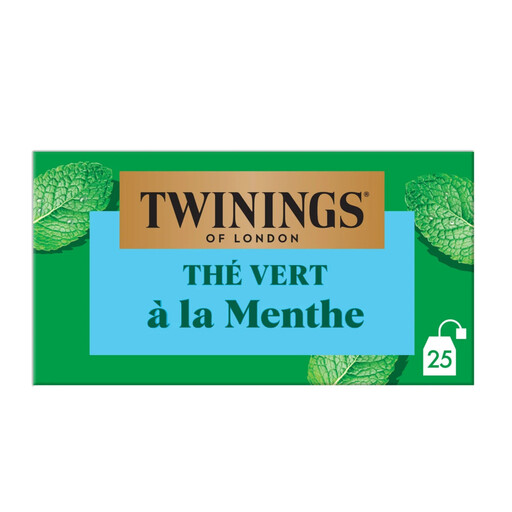 Image unavailable
Worth considering if you’d like a green tea and mint blend in individual tea bags to enjoy at lunchtime.
Box of 25 tea bags, 50 g. Check the brewing instructions on the packaging before making your cup.
 Image unavailable
Worth considering if you’d like to combine mint and matcha in a green tea bag blend, without assuming it will make a stronger-tasting cup.
Box of 20 tea bags. Follow the preparation instructions on the packaging.
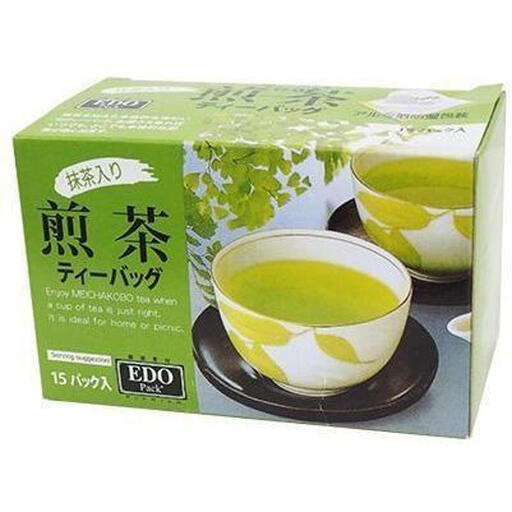 Image unavailable
Worth considering if you’d prefer a plain green tea in tea bags rather than a mint blend for your lunch break.
Box of 20 tea bags, 40 g. To adjust the strength of your cup, start with the brewing instructions on the packaging rather than assuming a longer brew will suit your taste.
The word ‘intense’ doesn’t tell you how much caffeine it contains. For the mint blends described by Lipton, Twinings and Auchan, compare the ingredients to understand the flavour profile. If you’re concerned about caffeine, consider your overall intake of tea and other caffeinated drinks.
Follow the recommended brewing time for the product you’re taking with you. Lipton recommends 2 minutes for its Intense Mint green tea, Twinings 3 minutes for its Intense Mint blend, and Auchan 2 to 3 minutes for its Extreme Mint green tea. Also check the recommended amount and temperature of the water on your packaging.
Check the product name and ingredients list to distinguish plain tea from blends containing mint and flavourings, then look at the brewing instructions. For food products sold in France, the DGCCRF notes that labelling must be visible, legible and written in French at a minimum.
Tea naturally contains caffeine, regardless of how its flavour strength is described. The Anses says that people’s sensitivity and the effects, particularly on sleep, vary, and may depend on their health, habits and certain medicines. Ask a healthcare professional for advice if your circumstances call for it.