People who are mindful of their sleep
If you have a drink shortly before bed, its caffeine content matters more than whether it’s organic. Anses says that caffeine’s effects on sleep vary from person to person.


To go with a late-night snack, choose plain organic green tea if you’re looking for a simple recipe and will be drinking it well before bedtime. Organic certification doesn’t remove the caffeine from green tea. If you want to avoid caffeine from tea leaves just before bed, compare organic herbal teas that don’t contain tea, checking the ingredient list.
If you have a drink shortly before bed, its caffeine content matters more than whether it’s organic. Anses says that caffeine’s effects on sleep vary from person to person.
If you’re looking for a short ingredient list, compare the ingredients to distinguish tea made with green tea alone from blends containing flavourings or herbs.
If you’re drawn to mint, spices or other herbs, check how much green tea the blend contains and read the full ingredients list. A blend that still contains green tea isn’t caffeine-free.
For a late-night snack, first decide whether you’re happy to drink green tea despite its natural caffeine content. Then compare the organic labelling and the exact recipe.
| Criteria | What to check | Who it matters to |
|---|---|---|
| How close it is to bedtime | Look for green tea, matcha, mate or guarana in the ingredients. To avoid caffeine from tea, consider herbal teas made without tea leaves. | When I have my snack just before bed, I’d rather avoid a drink that might keep me awake for longer. Around 50% of consumers may prioritise how close it is to bedtime. |
| Checking organic status | Check the organic designation, ingredient information and AB or EU organic leaf logos where they appear on the packaging. | I want to distinguish a clear organic claim from packaging that simply evokes nature. Around 30% of consumers may put this check first. |
| Recipe and flavour | Compare the ingredients list and, where stated, the proportion of green tea in blends. | I’m looking either for the taste of plain green tea or a recipe with other herbs, without confusing the two. This may be the main concern for around 20% of consumers. |
Organic certification tells you about how a product is made, not whether it contains caffeine. According to Anses, caffeine can delay falling asleep and reduce both sleep duration and quality.
If you want to avoid caffeine from tea as bedtime approaches, look for an herbal tea whose ingredients list contains neither tea nor any other ingredient containing caffeine.
A statement on the packaging or a separate initiative, such as Rainforest Alliance, doesn’t replace identifying the product as organic.
Read the product description and ingredients, then check the organic information on the exact packaging you’re buying.
Matcha is still green tea. An organic recipe may also contain guarana, as shown on a Carrefour France product page, so the name alone isn’t enough to tell whether it’s suitable for drinking late in the day.
Compare all the ingredients and consider how sensitive you are to caffeine before choosing a drink close to bedtime.
Carrefour France lists Lipton Organic Plain Green Tea in a box of 20 bags, with green tea from China, grown using organic farming methods, as its only declared ingredient.
E.Leclerc describes Bio Village organic green tea, 36 g in 20 bags, as containing green tea from organic farming as its stated ingredient.
Auchan France describes its Auchan Bio Plain Green Tea, 36 g in 20 bags, as made from 100% organic green tea of Asian origin.
Carrefour France lists Carrefour Bio matcha, 55 g, as made from 100% matcha green tea from organic farming.
The range of green teas featured by Twinings France includes plain and flavoured recipes, making it useful for comparing different tastes.
These products let you compare plain green tea, a tea-free herbal infusion and a green tea and matcha blend. If you’re buying organic, check the information on the packaging of the item you choose. For a snack close to bedtime, the key difference is between the herbal infusion and the two drinks containing green tea.
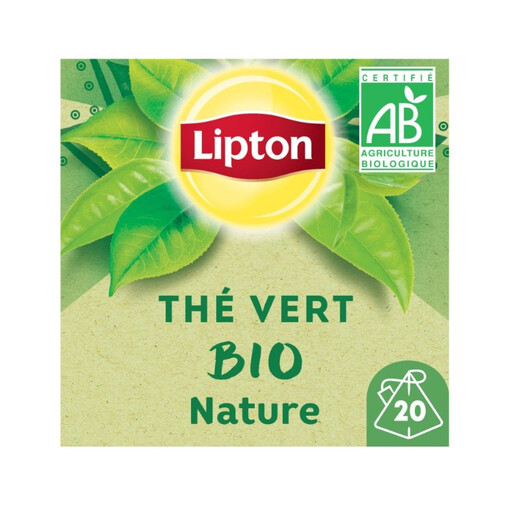 Image unavailable
Worth considering if you’re looking for plain green tea and plan to drink it well before bedtime. Green tea naturally contains caffeine. If organic certification matters to you, check the packaging for this product.
 Image unavailable
This verbena and mint herbal tea is another option if you want to avoid caffeine from tea leaves close to bedtime: it isn’t green tea. Check the ingredients and organic information on the packaging; a list without tea doesn’t tell you the drink’s total caffeine content.
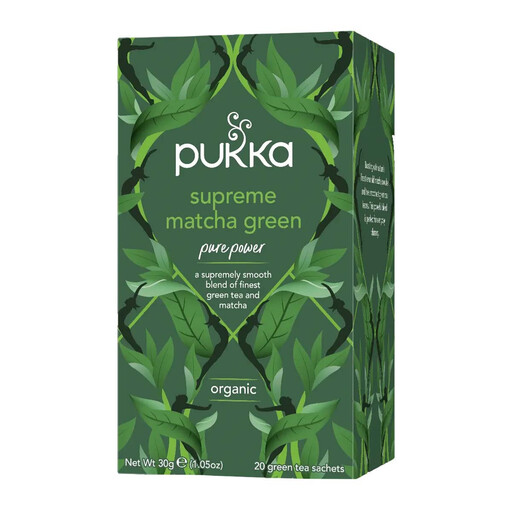 Image unavailable
Worth a look if you want a green tea recipe that includes matcha, rather than a tea-free drink. Green tea and matcha contain caffeine, so consider when you’ll be drinking it and check the organic information on the exact packaging.
Check the organic designation and ingredient information, as well as the AB or EU organic leaf logos where they appear on the product. The DGCCRF states that at least 95% of the agricultural ingredients in a processed product must be organic. You can then use the ingredients list to tell plain green tea from a blend.
Organic certification doesn’t mean that green tea is suitable at that time: it naturally contains caffeine. Anses says caffeine can disrupt sleep, although its effects vary from person to person. If you want to avoid caffeine from tea, compare herbal teas made without tea leaves.
No. Adding mint doesn’t remove the caffeine from the green tea in the blend. Read the ingredients to see whether you’re buying flavoured green tea or a tea-free herbal infusion.
Yes, especially if you have your snack close to bedtime. Anses highlights that caffeine’s effects vary from person to person and advises particular caution during pregnancy or breastfeeding. If you have concerns relating to your circumstances or medication, ask a healthcare professional for personalised advice.