People preparing an Easter meal with little time to spare
You’re looking for a vegetable side that fits in with the rest of the meal and comes in a format suited to the number of guests.


For an Easter meal, choose the green bean format that best suits the number of portions, your preparation time and your storage space. Plain tinned beans are already cooked and can be kept in the cupboard unopened; a frozen bag needs to be stored in a freezer. If you’re looking for a lower sugar content, compare the ‘of which sugars’ figures per 100 g on similar products, as well as the salt and ingredients. The words ‘reduced sugar’ alone don’t prove that the sugar content has been reduced.
You’re looking for a vegetable side that fits in with the rest of the meal and comes in a format suited to the number of guests.
You want to check the nutritional values per 100 g without mistaking the sugar content of a plain product for a proven reduction compared with another product.
You prioritise a declared origin or an organic product, while checking that its ingredients, format and storage requirements suit your meal.
Choose this if: you want a ready-cooked side that can be kept in the cupboard unopened and served quickly.
Bear in mind: the drained net weight determines how many beans you can serve, and storage instructions change once the tin has been opened.
Choose this if: you have a freezer and prefer to cook only the amount you need for the meal.
Bear in mind: you’ll need to cook them according to the instructions on the bag and follow the storage guidance. Frozen beans aren’t automatically lower in sugar or salt than tinned beans.
Once you’ve chosen a format, compare quantities and nutritional information across similar products. Origin or organic status can then help you choose between products that meet your other criteria.
| Criteria | What to check | Who is this for? |
|---|---|---|
| Format and preparation | Drained net weight for a tin or the weight of the bag; preparation method shown. | When the rest of the meal already takes time, I want an amount that suits the number of guests without making preparation more complicated. Around 37% of consumers would put this need first. |
| Sugar and salt | ‘Of which sugars’ and ‘salt’ figures per 100 g, as well as the ingredients in similar products. | If I’m looking for a lower sugar content, I want to compare the figures rather than rely on a claim on the packaging. This would be the main criterion for around 27% of consumers. |
| Origin and organic status | The declared origin and organic status of the product you’ve chosen, as shown on its product page or packaging. | For my Easter meal, I want to choose based on the stated origin or organic status first, without making assumptions about the product’s ingredients. Around 18% of consumers would prioritise this criterion. |
| Leftovers and storage | How much to serve and the manufacturer’s instructions for storing the product after opening or keeping it frozen. | I prefer to plan how much will be eaten so I don’t open a pack that’s too large for the meal. Managing leftovers would be the top priority for around 18% of consumers. |
The sugar content of plain green beans doesn’t, on its own, prove a reduction compared with another product. Sugar and salt values also vary from one product to another.
Compare the ‘of which sugars’ and salt figures per 100 g across products of the same type, then check their ingredient lists.
For a tin with covering liquid, the total weight isn’t the same as the weight of the beans once drained. This matters when you’re working out portions for your meal.
Check the drained net weight of the product you’ve chosen and estimate how much you’ll need before deciding how many tins to buy.
The storage conditions given for a tin before opening no longer apply in the same way once it has been opened.
Follow the temperature and time limit shown on the packaging. The French Ministry of the Economy advises following the manufacturer’s recommendations for storage after opening.
A stated origin or organic status doesn’t, on its own, tell you the sugar content, salt level or all the ingredients in a product.
Check these details on the product you’re buying, then read its ingredient list and nutritional information.
These brands showcase different green bean formats. The details below apply to the specific products mentioned, not to each brand’s entire range.
The products reviewed include steam-cooked tinned beans and a pre-cooked frozen bag, allowing you to compare two ways of preparing a side dish.
The Carrefour Extra product reviewed is a 750 g bag of extra-fine steam-pre-cooked green beans.
The products reviewed include extra-fine tinned green beans, including an organic option.
The extra-fine tin from France featured by Auchan has a drained net weight of 440 g.
These products include frozen bags and tins for putting together an Easter side dish. If you’re looking for plain green beans only, check which recipes also contain tomato or onion.
 Image unavailable
This frozen bag is a good choice if you have a freezer and want to cook enough green beans for several portions. Make sure you have enough space for the 750 g pack and follow the product’s cooking and storage instructions.
 Image unavailable
This tin is a handy cupboard option for a side dish, ready to serve cold or warmed through once opened. To work out portions, check its drained net weight rather than relying on the 440 g shown in its name. Then follow the instructions for storage after opening.
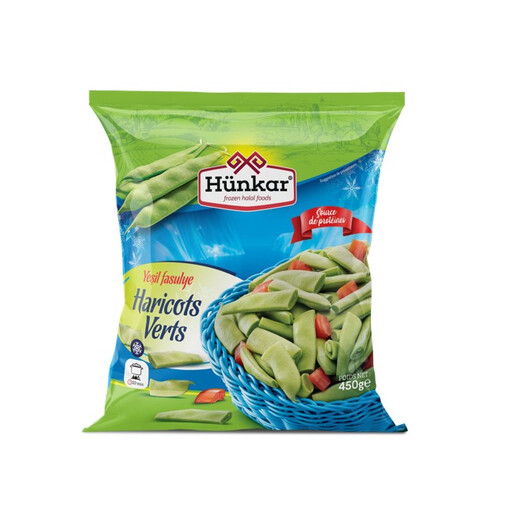 Image unavailable
This 450 g frozen bag may suit your side dish if you’re happy with a recipe that also contains tomato. If you want green beans on their own, choose a different product. Check the preparation instructions before buying, too.
 Image unavailable
This 220 g tin is for anyone looking for green beans with onion as a side, rather than a recipe made with green beans alone. Check the drained net weight to work out how much to serve, and follow the instructions for storage after opening.
No. Their sugar content doesn’t, on its own, prove a reduction compared with a similar product. To choose between two products of the same type, compare the ‘of which sugars’ and salt figures per 100 g, then check their ingredients.
Tinned beans are a good choice if you want a ready-cooked side that can be stored in the cupboard unopened. A frozen bag is suitable if you have a freezer and want to cook only the amount you need. In either case, check the pack size and the product-specific instructions: the storage method doesn’t tell you how much sugar or salt the product contains.
Check the drained net weight: this is the amount of beans to consider once they’ve been separated from the covering liquid. If you’re comparing tins, also check the ingredients and nutritional information per 100 g.
Follow the time limit and temperature shown on the tin you’ve bought. Some Auchan and Bonduelle products reviewed advise refrigerating the beans and eating them within two days of opening. Don’t automatically apply this guidance to a different product.