Parents preparing several lunches in advance
A large tin can provide enough for several lunchboxes, as long as you plan to use up the remainder within the time stated after opening.


For several school lunchboxes, choose a format that suits the quantities you’re preparing and how easily you can use up any leftovers. A large tin works well if you can portion out its contents promptly, while smaller tins or a bag of frozen beans make it easier to adjust the quantities. Whichever format you choose, check the instructions for storing it once opened and plan how to keep the prepared lunch chilled until it’s time to eat.
A large tin can provide enough for several lunchboxes, as long as you plan to use up the remainder within the time stated after opening.
Small tins or a bag of frozen beans let you choose an amount to suit the meals you have planned, without opening a large tin straight away.
If you prepare the beans the night before or in the morning, keeping the lunch chilled and transporting it safely matter just as much as the format you buy.
First, work out how many lunches you’re preparing and how you’ll keep them chilled. Then compare the amount of beans you can use and the instructions for each type of packaging.
| Criteria | What to check | Who is this for? |
|---|---|---|
| Keeping the lunch chilled | Instructions for storage after opening, and whether you can refrigerate and transport it while keeping it chilled. | I prepare lunch in advance and need to keep it chilled until lunchtime. Around 36% of consumers put storage first. |
| Amounts to prepare | The size of the tins or the amount to take out before cooking, based on the meals you have planned. | The amount I need changes from day to day, and I want to avoid leaving a large tin open. For around 29% of consumers, portioning comes before other criteria. |
| Family-size format | The drained weight of a tin or the weight of a bag, considered against the number of meals you’ll prepare. | I prepare several lunchboxes and want an amount my family can realistically use. Pack size would be the top priority for around 21% of consumers. |
| Ingredients and texture | The ingredients list, allergen information and whether your child likes the way the beans are presented. | If my child doesn’t like the recipe or texture, the food may go uneaten. Around 14% of consumers would prioritise the ingredients and presentation. |
A large tin is only practical for several meals if you can use its contents within the time stated after opening. For its 2 × 440 g product, Auchan advises refrigerating the remainder and using it within 48 hours.
Count the meals you have planned before opening the tin. If you’ll only use some of it, consider smaller portions or a bag of frozen beans.
The drained weight lets you compare how much beans the tins contain. For example, Carrefour lists a drained weight of 440 g for its Classic' product.
Check this information on each tin before working out how many meals you can prepare.
Anses recommends keeping food between 0 and +4 °C in the coldest part of the fridge. DGCCRF recommends using an insulated bag to transport chilled food.
Plan how you’ll cool and refrigerate the lunch, then check what storage is available at school and what conditions you’ll face on the journey.
Information varies from one product to another. For example, the 750 g Bonduelle frozen bag featured by the brand carries a warning that it may contain celery.
Read the ingredients list and allergen information on the product you buy, especially if you have an allergy.
Bonduelle offers extra-fine green beans in a steam-cooked tin, as well as a 750 g frozen bag.
The range includes a tin of extra-fine green beans with a drained weight of 440 g, as well as a 1 kg frozen bag.
Auchan offers, among other products, a pack of two tins of extra-fine green beans, each weighing 440 g.
Notre Jardin offers a tin of extra-fine green beans with a drained weight of 440 g.
ALDI offers extra-fine frozen green beans under the ALL SEASONS® brand.
These options include a large tin, a smaller format and products to keep in the freezer. Choose according to the quantities you have planned, the ingredients you’re looking for and how you’ll prepare the school lunches.
 Image unavailable
This format is a good choice if you plan to divide one tin between several meals. Check the drained weight and instructions for storage after opening before planning your portions.
 Image unavailable
This 750 g bag is worth considering if you want to prepare different quantities using frozen beans. Check the cooking and storage instructions on the bag before preparing the lunchboxes.
 Image unavailable
The 220 g tin is an option if you’d prefer a smaller format. This recipe contains onion, so check the ingredients and drained weight if you need a precise amount of beans.
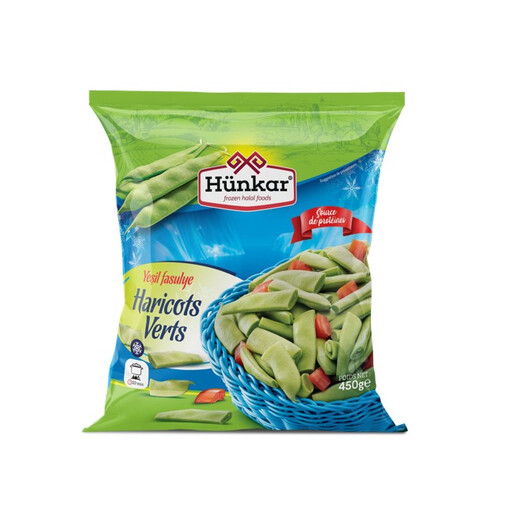 Image unavailable
This 450 g format may suit you if you’re looking for an in-between quantity. The product is described as a mix that also contains tomato. Check the ingredients list and cooking instructions if you want to prepare plain green beans for a lunchbox.
Yes, if you can use its contents within the recommended time after opening and keep the prepared lunches chilled. For its pack of two 440 g tins, Auchan advises refrigerating the remainder and using it within 48 hours of opening.
Keep the prepared lunch chilled until it’s time to eat. Anses recommends keeping food between 0 and +4 °C in the coldest part of the fridge. For transporting chilled food, DGCCRF recommends an insulated bag. Also check what storage is available at school.
Check the drained weight: this tells you how much beans you’ll have once the liquid has been removed. For example, Carrefour lists a drained weight of 440 g for its Classic' tin. Then adjust the amount to suit each meal rather than estimating the number of portions from the weight alone.