Parents who need to prepare a cold lunchbox quickly
Tinned beans are already cooked, so you can drain them and add them to a salad. Frozen beans need to be cooked and cooled before you put the meal together.


For a secondary school lunchbox, don’t choose green beans based solely on a ‘less sugar’ claim. Compare the sugars and salt per 100 g, then check the ingredients. Tinned beans are already cooked, making them easy to prepare for a cold salad; frozen beans need to be cooked and cooled before being added to the meal. In either case, how you store the lunchbox matters, especially if it also contains foods that need careful temperature control.
Tinned beans are already cooked, so you can drain them and add them to a salad. Frozen beans need to be cooked and cooled before you put the meal together.
The ‘of which sugars’ line doesn’t tell you everything about a product. The DGCCRF points out that nutrition information for prepacked foods is given per 100 g or 100 ml, so check the salt content and ingredients list too.
A bag of frozen beans lets you take out the amount you need to cook. You’ll need a freezer, and you’ll need to follow the instructions for cooking, cooling and storing the prepared meal.
First, choose between ready-to-serve tinned beans and frozen beans that need cooking. Then compare the labels of products that fit your routine.
| What to consider | What to check | Who it’s for |
|---|---|---|
| Sugars, salt and ingredients | Compare the ‘of which sugars’ and ‘salt’ figures per 100 g, as well as the ingredients lists of the specific products. | I don’t want to mistake a ‘less sugar’ claim for a comparison between recipes, or overlook the salt. Around 40% of consumers are said to prioritise checking this nutritional information. |
| Preparation | Check whether the beans are already cooked or need cooking, then see how much you can use for your portions. | If I’m preparing the meal in the morning, I want an option I can drain quickly; if I’m cooking in advance, I can plan time for cooking. Ease of preparation is said to be the priority for around 30% of consumers. |
| Storage | Follow the instructions after opening or defrosting. Keep the meal chilled if it contains foods that need careful temperature control. | If I’m putting a meal together in advance, I need to be able to store and transport it safely. This is said to be the main concern for around 30% of consumers. |
A low figure on a label doesn’t, by itself, show that a product contains less sugar than a comparable one.
To compare two products, check the sugars and salt per 100 g, followed by their ingredients, rather than relying on a claim on the front of the pack.
Tinned beans are handy for a cold meal, but they can also contain salt. Bonduelle lists 0.58 g of salt per 100 g for the extra-fine variety reviewed.
Check the value on the tin you’re buying: the information for one product doesn’t apply to all tinned beans.
Preparing frozen beans in advance doesn’t remove the need to store the assembled meal properly. Anses highlights the importance of keeping food at a low temperature to limit the growth of micro-organisms.
Follow the cooking instructions, cool the meal in suitable conditions and keep it chilled during transport if it contains a cooked dish or other foods that need careful temperature control.
A tin may show both a net weight and a drained weight, while a bag of frozen beans gives the weight of its contents. These figures don’t show the amount you’ll serve in the same way.
For tinned beans, check the drained weight; for a bag, start with the amount you plan to cook for each portion.
The range includes a tin of extra-fine green beans and a frozen organic option.
The extra-fine green beans reviewed come in a 1 kg frozen bag and need to be cooked.
The product reviewed is a 600 g bag of very fine organic green beans.
These bags of green beans are worth considering if you can cook them before preparing the lunchbox. The 450 g HÜNKAR product also contains tomatoes, so it won’t meet the same need as a recipe made with plain green beans.
 Image unavailable
This bag is suitable for preparing a meal in advance if you can cook and cool the beans, then store the meal in appropriate conditions.
Joybuy says to store the product at −18 °C before opening.
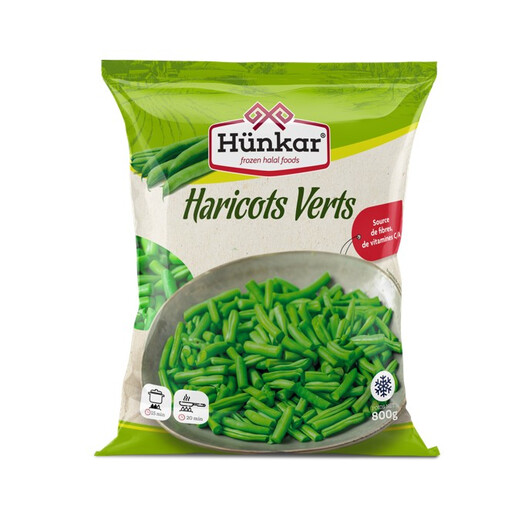 Image unavailable
The 800 g pack could work well if you’re preparing several portions. Check the cooking instructions on the packaging before planning your meal.
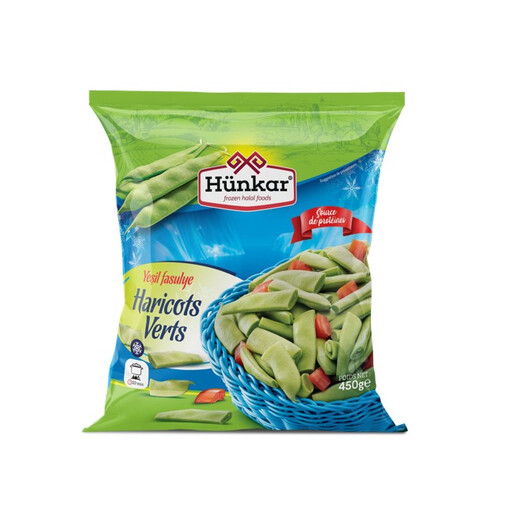 Image unavailable
This 450 g preparation could be part of a meal cooked in advance, but it also contains tomatoes, so don’t choose it if you’re looking for plain green beans. Check the cooking instructions on the packaging.
No. Compare the ‘of which sugars’ figures per 100 g, then check the salt and ingredients of the specific products you’re considering. The DGCCRF points out that nutrition information per 100 g or 100 ml makes products easier to compare. A low figure alone doesn’t prove that a product contains less sugar than another.
Follow the instructions on the tin you’ve bought. For the extra-fine green beans reviewed, Bonduelle says to store them at a maximum of 4 °C and eat them within 48 hours of opening. Don’t automatically apply this advice to every product.
Yes, once you’ve cooked them according to the instructions and made suitable plans for cooling and storing the meal. If the lunchbox also contains a cooked dish or other foods that need careful temperature control, keep it chilled during transport. Don’t refreeze a defrosted product if the packaging says not to.
No. These factors may matter to you, but they don’t tell you the sugar or salt content, the other ingredients or how to store the product. Always compare the specific products and pack sizes you’re actually considering.