People avoiding added sugars
You want to distinguish a ‘no added sugars’ claim from the total amount of sugars. Read the ingredients list, then check the ‘of which sugars’ line: green beans can contain naturally occurring sugars.


To avoid added sugars, look for the relevant claim on the product you’re considering and check its ingredients list: a low sugar value alone doesn’t prove that no sugars have been added. For an occasional meal, a small tin can help keep leftovers to a minimum. If you cook green beans regularly, a frozen bag lets you take out one portion at a time, provided you have space to store it in the freezer. Also compare sugars and salt per 100 g.
You want to distinguish a ‘no added sugars’ claim from the total amount of sugars. Read the ingredients list, then check the ‘of which sugars’ line: green beans can contain naturally occurring sugars.
If you expect to finish the contents in one meal, a small tin is worth considering. If you cook this vegetable regularly and have a freezer, a frozen bag lets you take out the amount you need.
Don’t focus on sugars alone: compare the salt per 100 g and check whether the product you choose carries a ‘no added salt’ claim.
Start with the label to distinguish added sugars from the sugars declared in the nutrition information. Then choose a format that suits how often you’ll use it and how you can store it.
| Criteria | What to check | Who is it for? |
|---|---|---|
| Added sugars | The claim on the exact product and its ingredients list; also check ‘of which sugars’ per 100 g. | If I want to avoid added sugars, a low declared sugar content isn’t enough to answer my question. Around 33% of consumers would put this check first. |
| Format and preparation | The weight of the pack and, for frozen products, the cooking instructions for each portion. | For a single portion, I want to prepare the amount I need without building up leftovers. Around 27% of consumers would make this their priority. |
| Storage | Freezer space and the storage instructions for the product you choose. | If I cook it for several meals, I’d rather be able to take out one portion at a time and store the rest correctly. Around 20% of consumers would value this flexibility. |
| Salt | The salt content per 100 g and whether the product carries a ‘no added salt’ claim. | If I’m also trying to avoid added salt, I can’t base my choice on the sugars line alone. Salt would be the main criterion for around 20% of consumers. |
The amount of sugars shown in the nutrition information includes naturally occurring sugars. The NOTRE JARDIN tin described by E.Leclerc carries the claim ‘no added sugars or salt’, while declaring 0.8 g of sugars per 100 g.
Check the wording on the product you buy, its ingredients list and the ‘of which sugars’ line. Don’t treat ‘no added sugars’ as the same as ‘sugar-free’.
A 750 g or 1 kg frozen bag lets you portion out what you need, but you’ll need freezer space and several occasions to use it. A small tin may be more convenient if you want to finish the contents in one meal.
Choose a format that suits how often you eat green beans, and follow the transport and storage instructions for frozen food. Anses recommends not refreezing food once it has been defrosted.
Two products that meet your requirements for sugars can have different salt contents. According to their respective product information, the 225 g NOTRE JARDIN tin declares 0.0 g of salt per 100 g, while the 1 kg VERDI frozen green beans contain 0.05 g per 100 g.
If salt matters to you too, compare values on the same 100 g basis and check any claims about added salt.
These examples relate to specific products: check the pack size and nutrition information for the one you’re thinking of buying.
A small tin to consider if a ‘no added sugars or salt’ claim is your top priority.
A 750 g frozen product to consider if you’d like to take out portions for several meals.
A 600 g organic frozen bag for use across several meals.
A 345 g jar of organic green beans to consider if no added salt matters to you as well.
A 1 kg bag of plain frozen green beans for people who cook them regularly.
This selection includes tins in different sizes and bags to consider for several meals. If avoiding added sugars is essential, check the wording on each product’s label before you choose.
 Image unavailable
For a single meal, consider whether you’ll use the whole 440 g tin at once. Check the label for information about added sugars and the salt content.
 Image unavailable
The 220 g size may suit you if you want a small portion with onions. As this isn’t plain green beans, check the ingredients, any claim about added sugars and the salt content before you choose.
 Image unavailable
If you’re preparing portions for several meals, this 750 g frozen pack means you’ll need a freezer. Check the preparation instructions and label if you’re looking for a specific claim about added sugars.
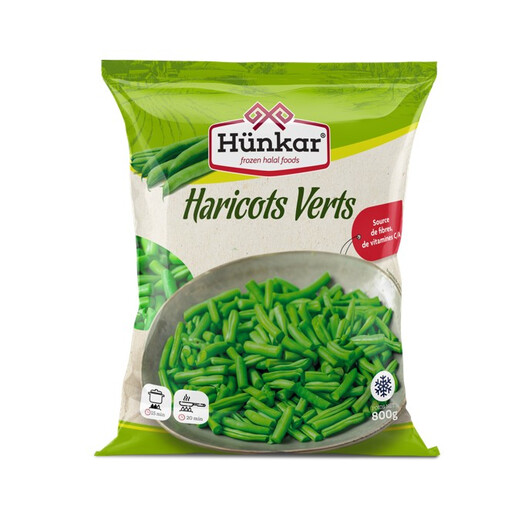 Image unavailable
If you plan to use green beans over several meals, check that you have enough room to store this 800 g frozen bag. Read the preparation instructions and nutrition information for the product you buy.
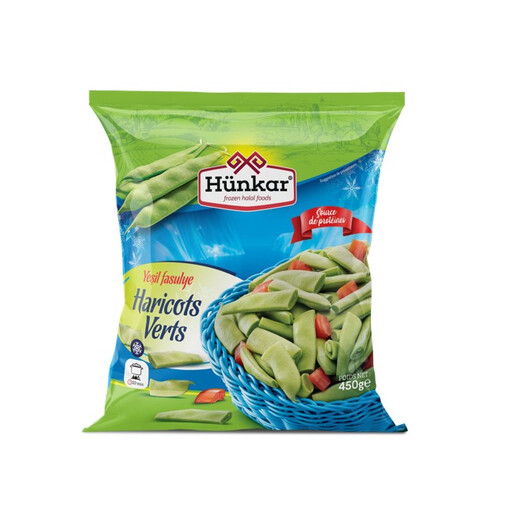 Image unavailable
This 450 g pack is smaller than the 750 g and 800 g bags featured here. Check the ingredients if you want green beans on their own: the information for this product also mentions tomatoes.
No. According to E.Leclerc, the 225 g NOTRE JARDIN tin carries the claim ‘no added sugars or salt’, but still declares 0.8 g of sugars per 100 g. Check the claim, ingredients and ‘of which sugars’ line together on the product you choose.
A small tin is suitable if you want to use almost all of it in one meal. Frozen green beans are worth considering if you cook them regularly and can keep the bag in the freezer. For its 750 g frozen product, Bonduelle says to microwave a 150 g portion for three minutes at 800 W: follow the instructions on the product you buy.
Anses recommends not refreezing food once it has been defrosted, and eating it promptly, within three days at the latest. If you choose frozen green beans so you can take out portions, make sure the rest of the bag stays frozen.
Yes, if added salt matters to your choice too: the sugars information doesn’t tell you about salt. Compare the ‘salt’ line per 100 g and check for any ‘no added salt’ claim on the products you’re considering.