What should you check before buying?
Start with the salt content and ingredients, then choose a format based on how much preparation time you have and how many beans you need to serve.
| What to consider |
What to check |
Who is it for? |
| Salt and ingredients |
Compare the salt content per 100 g and the ingredients list; don’t rely on the words ‘no added salt’ alone. |
If other dishes on the New Year’s Eve menu are already salty, I want to choose the beans and control the seasoning myself. Keeping salt in check is the top priority for around 50% of the consumers concerned. |
| Preparation and quantity |
Check the preparation instructions and, for beans in liquid, the drained net weight. |
When the kitchen is busy just before dinner, I prefer a format that suits the time I have available. Around 30% of the consumers concerned would put quick serving first. |
| Presentation and origin |
Check whether the beans are whole or cut, as well as any organic and origin claims that matter to you. |
For a dish to share, I might prefer a jar or a particular cut of bean, without taking that as an indication of its salt content. Around 20% of the consumers concerned would put these preferences first. |
Green beans available on Joybuy
These two formats of green beans could both work as a side dish to season for New Year’s Eve. Choose the amount you need for your meal and check the preparation instructions on the pack.
 Image unavailable
Bonduelle extra-fine green beans, 750 g
This 750 g pack could suit you if you’re planning to prepare the beans before seasoning them when you serve. Follow the cooking instructions on the pack and check how much seasoning you add if you want to limit salt.
View on Joybuy
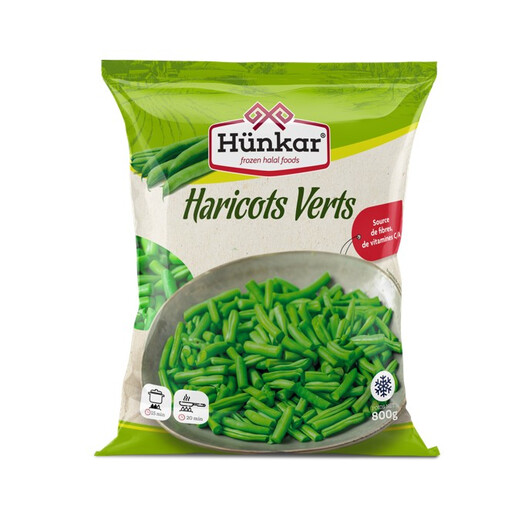 Image unavailable
HÜNKAR green beans, 800 g
This 800 g pack is another quantity to consider for a side dish. Check the preparation method and cooking time on the packaging before planning when to serve it.
View on Joybuy
Frequently asked questions
Does ‘no added salt’ mean 0 g of salt?
No. This claim doesn’t replace the salt content per 100 g or the ingredients list. E.Leclerc gives a salt content of 0.0 g per 100 g for the Notre Jardin tin mentioned above, while an Auchan listing for a d’aucy product uses the words ‘no added salt’ but also lists sea salt and gives a salt content of 0.46 g per 100 g. Check the packaging of the product you choose.
Should you rinse tinned beans to reduce the salt?
Start by choosing a tin whose ingredients and salt content suit your needs, rather than relying on rinsing to change the salt content. Follow the product’s preparation instructions; Manger Bouger recommends tasting tinned food before adding salt.
Jar, tin or frozen: which format should you choose for New Year’s Eve?
A jar or tin works well if you want to drain the beans before preparing and seasoning them; frozen beans need to be cooked as part of your serving plan. For its 1 kg bag of steam-pre-cooked beans, Bonduelle recommends cooking a 150 g portion for 3 minutes. Don’t apply this cooking time to a different product or format.
Which weight should you check to work out how many beans to serve?
For beans in liquid, check the drained net weight rather than just the total weight of the container. The DGCCRF says the drained net weight must appear on the labels of these food products. Compare it with the number of guests and the other side dishes you’re planning.
How long can you keep a jar after opening it?
Follow the instructions on the jar you buy, as the storage time for one product won’t necessarily apply to all of them. The Auchan listing for the d’aucy jar mentioned here recommends keeping it in the fridge after opening and preferably eating it within 2 days.


