People looking to limit the fat in their meal
You’re looking for plain vegetables to serve with a meal and want to control how much oil, butter or sauce you add during cooking.


To keep the fat content of a meal down, choose plain green beans and compare the nutrition information per 100 g. Then factor in any oil, butter or sauce added during preparation. If you’re also keeping an eye on sugars, check the ‘of which sugars’ line: ‘no added sugars’ doesn’t mean ‘sugar-free’, and you can’t assume a product is ‘reduced sugar’ based on a search term. The ingredients list and salt content can then help you choose between tinned and frozen options to suit your priorities.
You’re looking for plain vegetables to serve with a meal and want to control how much oil, butter or sauce you add during cooking.
You want to check the sugar content per 100 g without confusing this figure with the claim ‘no added sugars’.
You compare the ingredients in tinned and plain frozen options, as a product may contain only green beans, or green beans with water and salt.
The format mainly affects how the beans are prepared and which ingredients you need to check. Then compare the information per 100 g for the product you’re considering, rather than assuming the figures for one product apply to all green beans.
Worth considering: if you want to start with a one-ingredient product, such as the extra-fine frozen green beans from NOTRE JARDIN featured by E.Leclerc.
Bear in mind: you’ll need freezer space and will have to prepare the beans and keep track of any fat you add to the dish.
Worth considering: if you prefer a product you can drain and a recipe made with green beans and water, such as the NOTRE JARDIN tin featured by E.Leclerc.
Keep in mind: this product still contains 0.8 g of sugars per 100 g.
Worth considering: if you’re looking for a tin you can drain and added salt isn’t your main concern.
Compare: the extra-fine D'AUCY tin featured by Auchan contains salt and has 0.55 g of salt per 100 g.
| What to consider | What to check | Who is it for? |
|---|---|---|
| Fat in the meal | The figures per 100 g, followed by any fat added during preparation. | If I’m serving green beans as a side, I want to be able to control how much oil or butter I use, rather than judging the whole dish by the packet label alone. Around 40% of consumers would put this first. |
| Sugars listed | The ‘of which sugars’ figure per 100 g and the exact wording of any claim on the packaging. | To choose between two products, I need to know how much sugar each one contains, even if one says ‘no added sugars’. Around 30% of consumers would prioritise this comparison. |
| Ingredients, salt and format | The ingredients list, the ‘salt’ line and the storage instructions for the format you choose. | If I want a simple recipe, I need to distinguish plain green beans from a tin that also contains salt, while choosing a format I can store and prepare. Around 30% of consumers would prioritise this need. |
The NOTRE JARDIN tin featured by E.Leclerc says ‘no added sugars or salt’, but contains 0.8 g of sugars per 100 g.
To compare two products, check the ‘of which sugars’ figure per 100 g as well as the ingredients list.
The nutrition information on the packet doesn’t tell the whole story if you add oil, butter, cream or a sauce to your dish.
Choose how you’ll prepare the beans and measure any fat you add if you want to keep it under control.
The NOTRE JARDIN tin featured by E.Leclerc has 0.0 g of salt per 100 g, compared with 0.55 g per 100 g in the D'AUCY tin featured by Auchan. These figures apply to these specific products.
Check both the ingredients and the ‘salt’ line for the product you’re buying, using the same 100 g serving basis.
Auchan notes that the ingredients in some products may vary depending on the selected Drive location.
Check the ingredients, nutrition information and storage instructions on the product you actually choose.
The products featured by Bonduelle include extra-fine tinned and frozen green beans. Ingredients and instructions vary from product to product.
The French-origin extra-fine product featured by Auchan is a tin containing green beans, water and salt.
The products featured by E.Leclerc include a tin containing green beans and water, as well as plain extra-fine frozen green beans.
These products let you compare green beans in different formats, as well as a mix with tomatoes. For your meal, check the ingredients, nutrition information per 100 g and preparation instructions for the packet you choose.
 Image unavailable
If you want to control the seasoning of your side dish, compare the fat and sugar figures on the packet. Follow the storage and cooking instructions.
 Image unavailable
If you prefer a tin to serve as a side, compare its salt content with that of other recipes, too. Check the storage instructions after opening.
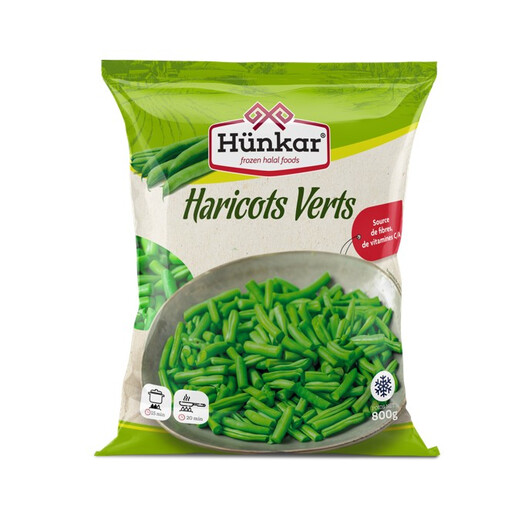 Image unavailable
To prepare a side dish and choose what to add yourself, check the ingredients and the sugar and fat figures per 100 g. Refer to the packaging for preparation instructions.
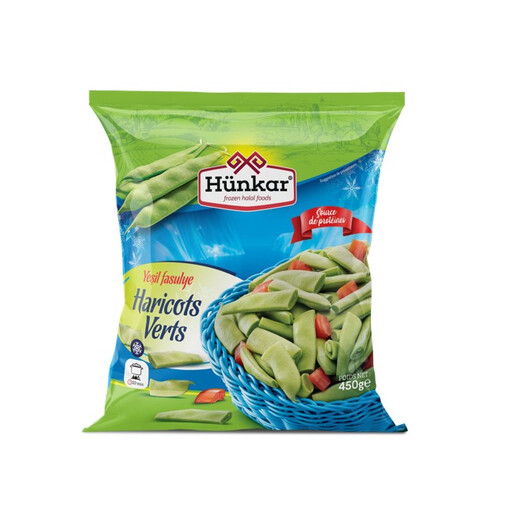 Image unavailable
This mix also contains tomatoes, so bear that in mind if you’re looking for plain green beans. Read the ingredients list and preparation instructions on the packet before choosing it.
No. The NOTRE JARDIN tin featured by E.Leclerc says ‘no added sugars or salt’, but contains 0.8 g of sugars per 100 g. To compare products, read the ‘of which sugars’ line.
No, these terms don’t mean the same thing. The DGCCRF notes that nutrition claims are regulated. Check the exact wording on the packaging and the sugar content per 100 g, rather than assuming a product has a particular attribute based on the term used in a search.
Count the fat you add to the green beans, not just the amount listed for the plain product. Steaming or boiling the beans, for example, lets you choose separately how much oil, butter or sauce to serve with them.
Follow the instructions on the packet for the format you’ve bought. For the tin mentioned, Bonduelle advises using it within 48 hours of opening. For frozen products, also check the storage and preparation instructions on the packaging.