When choosing green beans while shopping gluten-free, start with the format that suits your meal, then check the ingredients and labelling for the exact product. A short ingredients list alone doesn’t establish that a product can be labelled ‘gluten-free’. If you’re also comparing sugars, check the value per 100 g. The claim ‘reduced in sugars’ refers to a regulated comparison with a similar product, not simply the value shown.
Who is this guide for?
People who need to check gluten carefully
You need to be able to check the information that applies to the product you’re buying, rather than infer its status from the ingredients list alone. EU Regulation No 828/2014 governs the ‘gluten-free’ claim. Always check the label and allergen information for each product.
People comparing sugar content
You want to read the ‘of which sugars’ line without confusing a nutritional value with the claim ‘reduced in sugars’. As France’s National Consumer Institute explains, this claim requires a comparison with a similar product.
People choosing a format to suit how they cook
You may be deciding between frozen beans that need cooking, a jar with a short ingredients list and a tin that’s ready to heat. The ingredients, declared salt content and storage instructions can help you choose the products that fit your routine.
What should you check before buying?
First, choose a format you can store and prepare. Then check the exact product for gluten information, sugars and any other ingredients that matter to you.
| What to check |
Look for |
Who is this for? |
| Gluten-free information |
The claim applicable to the exact product, its ingredients list and its allergen information. Under EU Regulation No 828/2014, ‘gluten-free’ means the finished product contains less than 20 mg/kg of gluten. |
If I need to avoid gluten strictly, a short ingredients list isn’t enough: I want information that applies specifically to the product I’m buying. Around 42% of consumers would make this their top priority. |
| Declared sugars |
The ‘of which sugars’ value per 100 g and, if it appears on the packaging, the basis for comparison behind the ‘reduced in sugars’ claim. France’s National Consumer Institute explains that this claim requires at least 30% less sugar than a similar product. |
When comparing two recipes, I want to check their sugar content on the same basis, without treating one figure as a comparative claim. This would be the main criterion for around 33% of consumers. |
| Format and recipe |
The ingredients, the ‘salt’ line and the storage instructions: frozen, jarred and tinned products don’t all need to be prepared in the same way. Carrefour, for example, states that the Carrefour Classic' frozen product reviewed should be stored at −18 °C. |
If I’m short on freezer space or want to serve the green beans quickly, the format matters just as much as the ingredients I need to check. Around 25% of consumers would make this their priority. |
Common misconceptions to avoid
-
Assuming ‘reduced in sugars’ means low in sugar
‘Reduced in sugars’ compares a food with a similar product. According to France’s National Consumer Institute, the reduction must be at least 30%. The ‘of which sugars’ line alone doesn’t prove that comparison.
Compare the values per 100 g, then check any claim on the packaging separately and see which product it refers to.
-
Assuming a short ingredients list means ‘gluten-free’
A list containing only green beans and water is easy to read, but it doesn’t prove by itself that the finished product meets the requirements for the ‘gluten-free’ claim under EU Regulation No 828/2014.
If this check is essential, review the labelling and allergen information for the product you’re buying. If needed, ask the manufacturer to confirm the status of that specific product.
-
Forgetting the storage requirements for frozen products
Choose a format that suits your storage facilities. For its Carrefour Classic' extra-fine frozen green beans, Carrefour says to store the product at −18 °C and not to refreeze it once thawed.
Before choosing a large bag, check that you can transport and store it as instructed on the packaging.
Brands to consider by product
These brands offer examples of different recipes and formats. Check the details on the specific product you’re considering before you buy.
Bonduelle
Bonduelle offers frozen green beans, as well as extra-fine green beans cooked in a tin.
- Bonduelle’s product information for the 750 g extra-fine frozen beans lists green beans as an ingredient.
- The same product information warns that the beans may contain celery. The steamed tinned version also contains salt and concentrated lemon juice, among other ingredients, so check each recipe separately.
Carrefour Classic'
The product reviewed is a 1 kg bag of extra-fine frozen green beans.
- Carrefour says this product can be cooked in a pan or in the microwave.
- It should be stored at −18 °C and not refrozen after thawing. Choosing a frozen product doesn’t mean you can skip checking its gluten information.
Jardin Bio étic
The product reviewed is a jar of organic extra-fine green beans, described as having no added salt.
- The ingredients list published by Carrefour names extra-fine green beans and water.
- The ‘organic’ and ‘no added salt’ claims don’t, by themselves, tell you whether the ‘gluten-free’ claim applies.
Cassegrain
The product reviewed is a tin of hand-picked extra-fine green beans.
- Carrefour’s product information lets you check the ingredients in this tinned recipe.
- It also lists water, salt and pearl onions, so it isn’t made from green beans alone.
Green beans available on Joybuy
This selection includes green beans that need to be kept in the freezer and a tin that’s ready to serve. Choose the format that suits how you plan to prepare them, then check the packaging for the information you need when shopping gluten-free.
 Image unavailable
Bonduelle extra-fine green beans 750 g
If you’re looking for a bag of green beans to cook, check the storage and preparation instructions for this product to make sure they suit your needs.
If gluten is a must-check for you, also review the labelling and allergen information on the product you buy.
View on Joybuy
 Image unavailable
Bonduelle extra-fine green beans 440 g
This tinned product doesn’t need to be kept in the freezer. If you’re comparing it with plain green beans, check the ingredients list.
To compare recipes, check the ‘of which sugars’ and ‘salt’ values per 100 g on the relevant packaging.
View on Joybuy
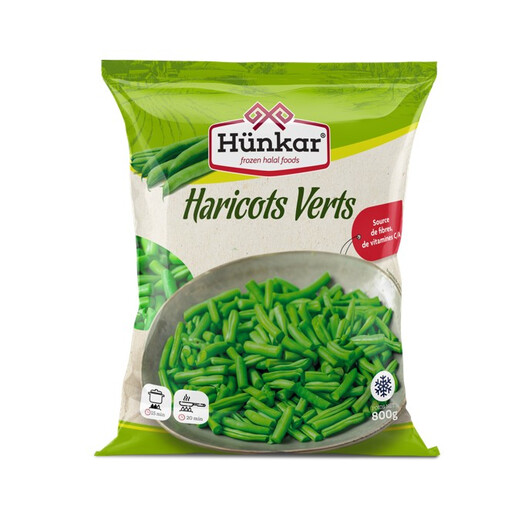 Image unavailable
HÜNKAR green beans 800 g
Before choosing this frozen product, check that its storage and cooking instructions suit your equipment.
A short ingredients list doesn’t replace checking the labelling if you need to confirm whether this specific product is gluten-free.
View on Joybuy
Frequently asked questions
Are plain green beans automatically ‘gluten-free’?
No. The name of the vegetable or a short ingredients list isn’t enough to establish the status of the finished product. EU Regulation No 828/2014 governs the ‘gluten-free’ claim, which means the finished product contains less than 20 mg/kg of gluten. Check the information that applies to the product you’re buying, as well as its allergen information.
What does ‘reduced in sugars’ mean on a food product?
According to France’s National Consumer Institute, this claim means the product has at least 30% less sugar than a similar product. It doesn’t mean ‘sugar-free’, or that the food has the lowest value among all the products you’re comparing.
Why compare the ‘of which sugars’ value per 100 g?
The value per 100 g gives you a consistent basis for comparing the nutritional information of two products. The ‘of which sugars’ line alone doesn’t distinguish between naturally occurring and added sugars, so check the ingredients list too.
How should I store Carrefour Classic' frozen green beans?
Carrefour says to store the Carrefour Classic' product reviewed at −18 °C and not to refreeze it after thawing. Follow the instructions and use-by date on the bag you buy.


