What should you look at first?
Start by distinguishing a purée suited to the weaning stage from whole vegetables. Then choose between a product that’s already cooked and one that needs cooking, and compare the labels of products that meet your needs.
| Criteria |
What to check |
Who is it for? |
| Texture and acceptance |
Smooth purée or whole beans; whether frozen beans need cooking. |
If my child mainly refuses pieces, I look for a texture they’ll accept without turning mealtimes into a battle. Around 33% of consumers are said to prioritise this. |
| Ingredients and salt |
Ingredients, ‘salt’ and ‘of which sugars’ per 100 g, using the same basis for comparison. |
When choosing a simple recipe, I want to know what comes with the beans and compare the salt content across products. Ingredients are said to be the top priority for around 27% of consumers. |
| Preparation and portions |
Whether the product is ready-cooked or needs cooking, how much to prepare and how to store it after opening. |
When I need to get a meal ready quickly, I prefer to be able to serve a small amount without wasting the rest. Convenience is said to come first for around 27% of consumers. |
| Age and weaning |
Age stated, whether there are pieces and instructions for what to do with the rest of a small jar. |
For a baby who’s being weaned, I check that the recipe and texture are right for the stage stated on the packaging. Around 13% of consumers are said to put this suitability first. |
Green beans and purées to consider on Joybuy
These products offer a choice of textures and preparation methods: whole green beans to cook or tinned beans, as well as an assortment of baby purées. First choose the format that suits your child, then check the ingredients of the product you select.
 Image unavailable
Bonduelle Extra-fine frozen green beans 750 g
Worth considering if your child accepts whole beans and you can store the pack in the freezer, then cook the amount you need. The Joybuy listing for this product shows 1.7 g of sugars and 0.01 g of salt per 100 g. Follow the cooking instructions and don’t refreeze the product after defrosting.
View on Joybuy
 Image unavailable
Bonduelle Extra-fine green beans 440 g
Worth considering if you want to serve ready-cooked green beans to a child who accepts this texture. The Joybuy listing says they can be eaten cold or reheated; once opened, keep them in the fridge and eat them within two days. Check the nutrition label if salt is a factor in your decision.
View on Joybuy
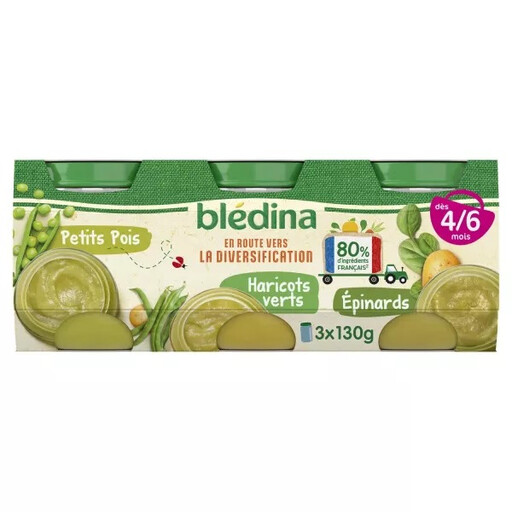 Image unavailable
BLEDINA Vegetable purée assortment, 4–6 months, 3 × 130 g
Consider this for a baby only if the age and weaning stage shown on the packaging are right for them. The assortment includes a green bean and potato variety; the other jars contain different recipes, so this isn’t a multipack of whole green beans. Check the age guidance on the packaging and the nutrition information for the variety you choose.
View on Joybuy
 Image unavailable
Cassegrain Extra-fine green beans with onion, 1/2-size tin, 220 g
Worth considering if you’re looking for green beans with onion rather than a plain recipe. The title specifies a 1/2-size 220 g tin; check the ingredients and texture on the packaging before offering it to your child.
View on Joybuy
Frequently asked questions
Should you look for ‘reduced sugar’ green beans for a fussy eater?
No. This claim isn’t a requirement for choosing a texture your child will accept. The Bonduelle and Jardin Bio Étic products mentioned here show different amounts of sugars per 100 g, but these values don’t demonstrate a reduction compared with a reference product. The DGCCRF points out that nutrition claims are regulated.
How can you offer green beans to a child who refuses them?
Choose a texture that’s right for their age, then offer a small amount without insisting or turning the vegetable into a reward. Manger Bouger says vegetables are among the foods children often refuse, so one refusal doesn’t predict what they’ll accept at another meal.
Can baby purée replace whole green beans?
Not like for like: the texture and recipe may be different. Check the age and weaning stage shown on the jar. The NaturNes purée featured by Auchan is smooth and also contains potato and rapeseed oil.
How long can you keep green beans after opening?
Follow the storage time shown on the packaging you buy, as it varies by product. The Joybuy listing for Bonduelle 440 g green beans says to keep them in the fridge and eat them within two days of opening. If your child has eaten directly from a small jar, follow the instruction to throw away any leftovers.
Tinned or frozen: which should you choose for small portions?
Frozen beans let you cook the amount you need if you have a freezer, but they do need cooking. Tinned beans are already cooked, so there’s no extra cooking step, but you’ll need to follow the storage instructions after opening. In either case, check that your child is happy with the texture of whole beans.


