A 1 kg bag of plain frozen green beans is a good choice for families who prepare them for several meals and can store the remainder at −18 °C. If you don’t have room in the freezer, a tin may be more convenient, but it’s worth comparing the ingredients and salt content. Whichever format you choose, cook the beans and adjust their texture to suit your child’s abilities, following Manger Bouger’s advice.
Who is this choice for?
Parents still adapting food textures
You’re preparing green beans for a child who is gradually learning to eat more solid textures. Manger Bouger recommends adapting the texture to your child’s pace: depending on their abilities, cooked vegetables can be puréed, mashed or chopped.
Families cooking for several meals
You’d like to take out the amount you need for dinner and keep the rest for other meals. A 1 kg bag of frozen beans suits this approach if you can follow the product’s storage instructions and keep it at −18 °C.
People who check ingredients carefully
You compare ingredients, salt content and any allergen warnings before buying. These details vary by product, so always check the label on the one you choose.
What should you look for?
First, choose a texture you can adapt to your child, then pick a format that suits your storage space. Finally, compare the ingredients and nutritional information for each product.
| Criteria |
What to check |
Who it matters to |
| Texture |
Check the cooking instructions and plan to purée, mash or chop the beans to suit your child’s abilities; ‘extra-fine’ doesn’t necessarily mean they’re suitable as they are. |
If my child is still getting used to pieces of food, I want to be able to adapt cooked green beans to what they can eat comfortably. Around 36% of consumers would put this first. |
| Format and storage |
Compare the net weight with the space available in your freezer and follow the storage instructions on the bag. |
When preparing several dinners, I’d rather take out only the amount I need and store the rest properly. This would be the priority for around 28% of consumers. |
| Ingredients and salt |
Check the ingredients list, salt per 100 g and allergen information for the exact product. |
Before choosing between plain frozen beans and a tin, I want to know whether the recipe contains salt or carries an allergen warning. Around 36% of consumers would make this their first check. |
Mistakes to avoid
-
Assuming ‘extra-fine’ means they’re ready to serve as they are
The description on the pack doesn’t tell you whether your child can eat the beans whole. Manger Bouger reminds parents that children should get used to pieces of food gradually.
Cook the beans, then purée, mash or chop them according to your child’s observed abilities.
-
Choosing a large bag without planning how to store it
A 1 kg bag is suitable for preparing several meals only if you can store the remainder as directed on the pack.
Check the space available in your freezer and the product instructions. The product information for Auchan’s 1 kg bag says to store it at −18 °C and not to refreeze it once thawed.
-
Assuming a tin of green beans contains no salt
Auchan’s 220 g tin lists green beans, water and salt in its ingredients; the product information shows 0.41 g of salt per 100 g. This figure won’t apply to every tinned product.
Compare the ingredients and salt per 100 g for the specific products you’re considering buying.
-
Overlooking allergen warnings
Bonduelle’s product information for its 750 g bag of extra-fine frozen green beans warns that it may contain traces of celery.
If this warning matters to your household, check the exact packaging, even when you switch to a different format or product.
Brands to consider for this type of product
Bonduelle
Bonduelle offers, among other products, 750 g bags of extra-fine frozen green beans; Auchan also has a 1 kg option.
- Bonduelle’s product information for its 750 g bag lists green beans as the ingredient and 0.01 g of salt per 100 g.
- The same product information warns that it may contain traces of celery; check the packaging for the product you’re buying.
Carrefour Classic'
Carrefour offers a 1 kg bag of extra-fine frozen green beans, ideal for meals prepared over several days.
- Carrefour’s product information says they can be cooked in a saucepan or in the microwave.
- The bag needs to be stored at −18 °C; check the instructions for the product you buy.
Auchan
Auchan offers a 1 kg bag of extra-fine frozen green beans and a 220 g tin: two formats to compare depending on your storage space.
- The 1 kg bag is labelled as containing five portions. This is a guide for shoppers, not a recommended serving size for a toddler.
- The 220 g tin contains water and salt and has 0.41 g of salt per 100 g; check the ingredients for the product you choose.
Notre Jardin / Marque Repère E.Leclerc
E.Leclerc offers 1 kg bags of Notre Jardin extra-fine frozen green beans.
- E.Leclerc’s product information states that the main ingredient is from France.
- Check the product stocked by your chosen store or available through its online shopping service.
ALL SEASONS® / ALDI
ALDI offers 1 kg bags of extra-fine frozen green beans.
- At 1 kg, this bag is comparable with the other family-sized options mentioned here.
- Check the ingredients and cooking and storage instructions on the pack before choosing it.
Joybuy products related to this choice
These products let you compare formats of green beans for several meals, a tin to keep in the cupboard until it’s opened, and a bag that also contains tomatoes. They’re different weights from the 1 kg bag of frozen beans mentioned above.
 Image unavailable
BONDUELLE extra-fine green beans, 750 g
This bag is a good choice if you’d like to prepare green beans over several meals and adjust the texture after cooking. It contains 750 g, not 1 kg; if it matters to your household, check the packaging for the warning about traces of celery.
View on Joybuy
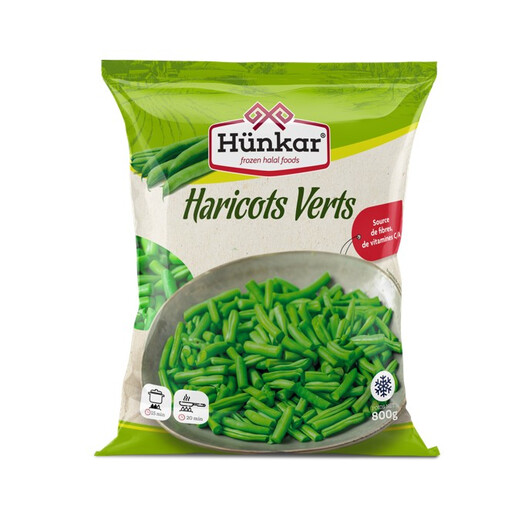 Image unavailable
HÜNKAR green beans, 800 g
This 800 g bag may suit a household that prepares green beans for several meals and has a freezer. Before serving them to a toddler, follow the cooking instructions on the pack and adjust the texture to suit your child’s abilities.
View on Joybuy
 Image unavailable
BONDUELLE extra-fine green beans, 440 g tin
This 440 g tin may suit you if you don’t want to store a bag in the freezer. It contains salt, so compare its label with that of plain frozen beans if this matters to you. Once opened, follow the storage and use-by instructions.
View on Joybuy
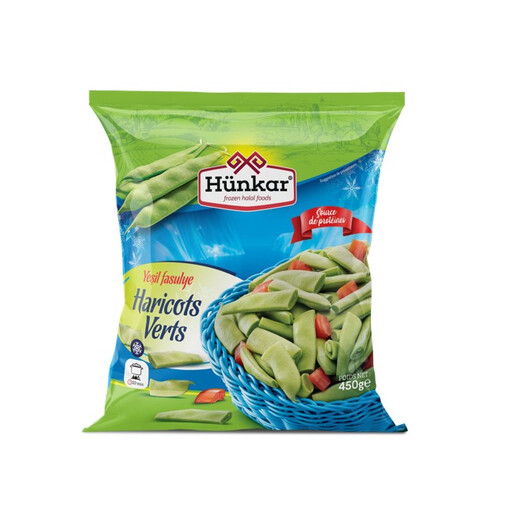 Image unavailable
HÜNKAR green beans, 450 g
This 450 g bag is a smaller option for a meal at home. It also contains tomatoes, so check the ingredients list if you’re looking for green beans on their own. Follow the cooking instructions on the pack and adjust the texture before serving them to your child.
View on Joybuy
Frequently asked questions
Are extra-fine green beans suitable as they are for all toddlers?
No: ‘extra-fine’ describes the product, not the texture every child can manage. Manger Bouger says children should move on to more solid textures gradually. Cook the beans and adapt them to your child’s abilities. If your child was born prematurely or there is a family history of allergies, ask a doctor or your local PMI (mother and child health service) for advice on introducing solid foods.
Does a 1 kg bag tell you how much to serve a toddler?
No: the bag’s weight and the stated number of portions describe the pack size, not how much to give your child. Auchan says its 1 kg bag of frozen beans contains five portions; prepare an amount that’s suitable for the meal and store the rest according to the product instructions.
Should you choose frozen or tinned green beans?
Plain frozen beans let you take out and cook the amount you need, as long as you can keep the rest in the freezer. A tin avoids the need for freezer storage before opening. Compare specific products rather than the categories as a whole: Auchan’s product information gives less than 0.01 g of salt per 100 g for the frozen bag mentioned, and 0.41 g per 100 g for its 220 g tin.
How should you store the rest after opening the product?
Follow the instructions on the pack you’ve bought. The product information for Auchan’s 1 kg bag of frozen beans says to store it at −18 °C and not to refreeze it once thawed. For its 220 g tin, Auchan advises transferring the contents to another container after opening, refrigerating them and using them within 48 hours.


