Cyclists keeping an eye on added salt in their meals
If you prepare your meals regularly, the ‘no added salt’ label, ingredients list and salt content can help you choose a specific product rather than relying on the format alone.


If you’re choosing green beans for a cyclist’s meal and want to control the amount of added salt, pick a jar or tin whose specific product is labelled ‘no added salt’, or plain frozen green beans if you’d rather cook and season them yourself. A standard tin can also be suitable, but check its ingredients and salt content. These formats alone don’t tell you what you need in terms of sodium and hydration during exercise.
If you prepare your meals regularly, the ‘no added salt’ label, ingredients list and salt content can help you choose a specific product rather than relying on the format alone.
A jar is ready to drain. Plain frozen green beans need cooking, but let you take out the portions you need and choose how to season them.
You can look for these details alongside an ingredient list that suits you. They don’t replace checking the salt content: the details Auchan gives for the D’Aucy ‘Le bio engagé’ product apply to that specific jar.
When choosing between a jar, a tin and frozen green beans, first decide whether ingredients, quick preparation or growing information matters most for your meal. A jar labelled ‘no added salt’ is ready to drain; plain frozen beans need cooking and must be kept frozen.
| What to consider | What to check | Who it matters to |
|---|---|---|
| Added salt | Compare the ingredients list and the ‘salt’ value per 100 g for the product you’re considering; don’t assume you know what’s in it from the brand name alone. | I want to decide how to season my meals without assuming a tin contains no added salt. Around 50% of shoppers might put this check at the top of their list. |
| Preparation | Choose between a product that’s ready to drain and frozen beans that need cooking; check the pack size and preparation instructions. | When I’m preparing several portions, I look for a format that suits the time and space I have. Convenience could be the top priority for around 30% of shoppers. |
| Organic status and origin | Check the organic label, the stated origin and the specific product’s ingredients separately. | I want to take production methods or origin into account without confusing them with information about salt. These criteria could come first for around 20% of shoppers. |
This label can help you choose a vegetable for a meal, but it doesn’t define your sodium or hydration needs during a ride. INSEP notes that sports nutrition plans take the sport and the individual’s profile into account.
If you have questions about long rides, hot weather, heavy sweating, a medical condition or medication, ask a qualified professional for advice tailored to you.
E.Leclerc’s product listing for its 225 g Notre Jardin green beans states that they contain green beans and water, with 0.0 g of salt per 100 g. Another D’Aucy product listed by Auchan includes salt in its ingredients.
Check the exact product, its ingredients and its nutritional information, even if two products carry the same brand or have the same cut.
Seasoning you add at home also contributes to the amount of salt in your meal, even when the green beans are sold as having no added salt.
Taste the beans after cooking before adding salt; you could also use herbs or spices in your recipe.
Marque Repère sells a 225 g tin of cut extra-fine green beans at E.Leclerc, labelled ‘no added sugars or salt’.
A 345 g jar of organic extra-fine green beans is labelled ‘no added salt’ on Carrefour and Auchan product listings.
Auchan lists a 290 g organic ‘Le bio engagé’ jar with no added salt, made with green beans stated to be grown in France.
The brand lists a 750 g pack of plain frozen extra-fine green beans, pre-cooked by steaming.
These products are for anyone looking for a frozen option to cook for their meals. Compare pack sizes and check the ingredients on the packaging; the 450 g HÜNKAR pack also contains tomatoes.
 Image unavailable
A frozen option to cook if you’d like to choose how to season your portions.
The pack contains 750 g. The preparation instructions for this product suggest cooking the beans in salted water, so bear that in mind if you want to control the added salt in your meal.
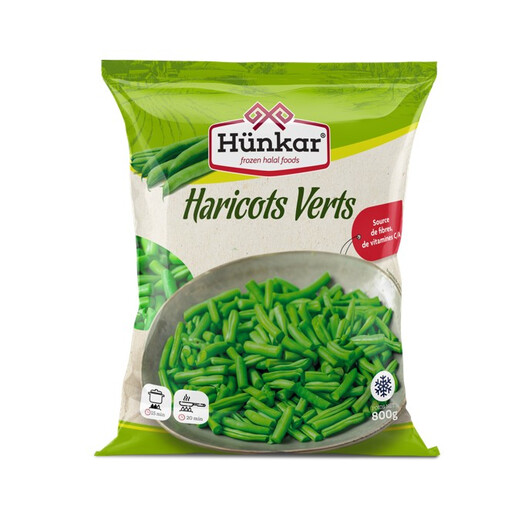 Image unavailable
This frozen option is ideal if you’d rather cook your portions and season them yourself.
The pack contains 800 g. Check the cooking instructions on the packaging before preparing your meal.
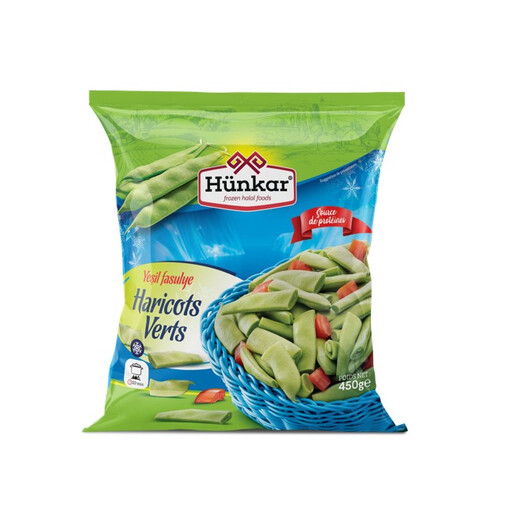 Image unavailable
Consider this 450 g frozen option if a vegetable mix would work in your recipe.
It also contains 7% tomatoes, so don’t choose it assuming it contains only green beans. Check the cooking instructions on the packaging.
No. This label relates to choosing a product for a meal, not your sodium needs during a ride. INSEP says sports nutrition plans take the sport and each person’s profile into account; if you have specific needs, ask for advice tailored to you.
Read the ingredients list and the ‘salt’ value per 100 g for the product you’re considering. E.Leclerc’s listing for the 225 g Notre Jardin tin gives green beans and water as the ingredients, with 0.0 g of salt per 100 g. By contrast, a D’Aucy tin listed by Auchan includes salt in its ingredients.
Green beans in a jar are ready to drain, while frozen beans need cooking and must be kept frozen. If you choose frozen beans so you can control the seasoning, check the preparation instructions too.
No. Organic status and added salt are two separate things to check. The D’Aucy ‘Le bio engagé’ product listed by Auchan is labelled ‘no added salt’, but that doesn’t automatically apply to the brand’s other products.