Parents looking to limit salt at dinner
If seasoning is your main concern, compare the ingredients list and the ‘salt’ figure per 100 g. Two tins of green beans can have different ingredients, even when their on-pack claims sound similar.


For a child who already eats pieces of food, choose based on the ingredients, the ‘salt’ figure per 100 g and the texture. A tin containing green beans and water meets a different need from one that contains salt. For a baby starting weaning, first check the age guidance and texture; Manger Bouger says you shouldn’t add salt to food offered to children under one. Organic and ‘no preservatives’ claims are no substitute for checking the label.
If seasoning is your main concern, compare the ingredients list and the ‘salt’ figure per 100 g. Two tins of green beans can have different ingredients, even when their on-pack claims sound similar.
Before choosing a family-sized jar, check that the age guidance and texture are suitable for your child. Manger Bouger says you shouldn’t add salt to food offered to a child under one.
Tinned green beans can make dinner easier to prepare. You’ll still need to choose between whole and cut beans, check how much you need and read the ingredients: a convenient option may also contain added salt.
For a child’s dinner, start with their age and the textures they already eat, then compare the ingredients and the ‘salt’ figure. The format and availability matter too, but they don’t tell you everything about what’s in the product.
| What matters | What to check | Who is it for? |
|---|---|---|
| Added salt | Compare the ingredients list and the ‘salt’ figure per 100 g, even when a claim appears on the front of the pack. | If I want to stay in control of how much salt goes into dinner, I look for a product with no salt in the ingredients. Around 33% of consumers would make this their priority. |
| Age and texture | For a baby, check the age guidance and texture; for a child who eats pieces, see whether the beans are whole or cut. | When weaning is just beginning, I first look for a product with age guidance and a texture that suit my baby. Around 20% of consumers would make this their priority. |
| Dinner preparation | Check how the beans should be prepared and how they’re presented, then plan how much to serve. | When dinner needs to be ready quickly, I want a vegetable that’s easy to prepare and has a texture my child already eats; around 27% of consumers would prioritise this. |
| Pack size and availability | Compare the usable weight with your household’s needs and check availability at your chosen shop or collection point, without overlooking the label. | If I’m shopping for several meals, I’m mainly looking for a suitable pack size and a product I can get locally. Around 20% of consumers would prioritise this. |
These claims describe different things. The Bonduelle product listed by Auchan as ‘no preservatives’ contains salt and has 0,58 g of salt per 100 g.
If salt is your main concern, read the ingredients and check the ‘salt’ figure before choosing between pack sizes or other claims on the packaging.
An Auchan listing for D’aucy includes ‘no added salt’ in the title, but lists sea salt among the ingredients and gives a salt figure of 0,46 g per 100 g. This discrepancy means you shouldn’t rely on the title alone when choosing a jar.
If the information shown doesn’t match up, check the ingredients on the packaging of the product you’re buying.
Salt may already be listed among the ingredients in the green beans, as well as in other parts of the meal. Manger Bouger advises against adding extra salt to tinned products.
Check the ingredients before preparing the meal and taste it before adding any extra seasoning.
No added salt doesn’t tell you whether the texture is right for your child’s stage of weaning. A product made for babies may also have different ingredients from a jar of green beans.
Check the age guidance, texture and full ingredients of the product you’re serving to your baby, rather than relying only on the salt claim.
Ingredients vary from one product to another, so the brand name alone isn’t enough to help you choose green beans for a child’s dinner.
A tin of extra-fine cut green beans to consider if you’re looking for a product with no salt in the ingredients.
A jar of organic extra-fine green beans to consider if you’re looking for a short ingredients list.
A tin of extra-fine green beans to compare if ease of preparation is important when choosing dinner.
An organic jar where checking the packaging is especially important if you’re trying to avoid added salt.
These frozen options offer another way to plan green beans for a family dinner, but they aren’t a direct substitute for the tins and jars compared above. If you’re choosing based on salt content or buying for a young child, check the ingredients, nutritional information, cooking instructions and texture on the pack.
 Image unavailable
This frozen pack could suit you if you’re preparing a family side dish straight from the freezer. Check the cooking instructions, and don’t automatically add salt to the cooking water if you’re trying to limit salt in the meal. For a young child, serve the beans in a texture that’s right for their age.
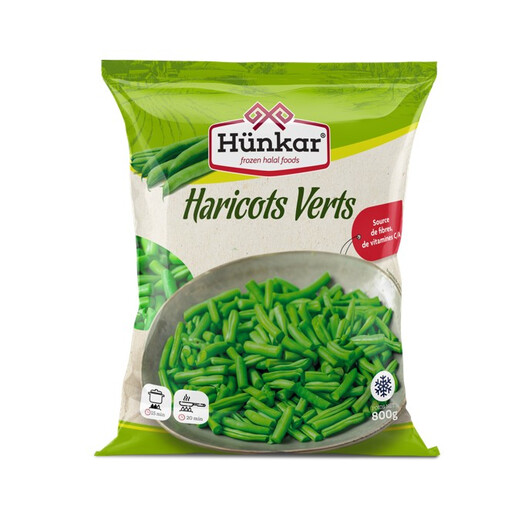 Image unavailable
Consider this 800 g frozen pack if you’d like to keep green beans in the freezer for several meals. Check the pack for cooking instructions and make sure the resulting texture is suitable for the child you’re serving them to.
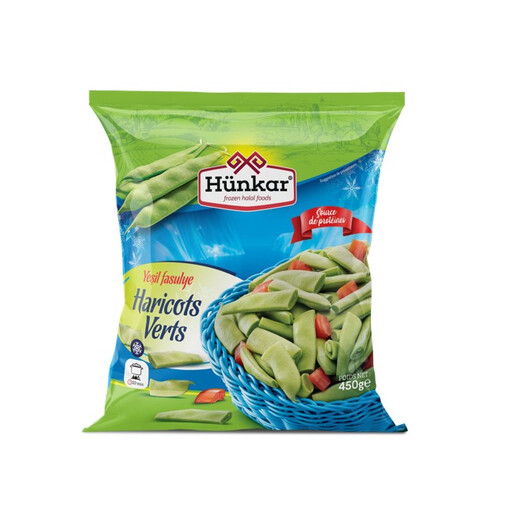 Image unavailable
This 450 g frozen pack could suit you if you’re looking for a smaller bag. If you want plain green beans, check the ingredients: this version also contains tomatoes. Read the cooking instructions before serving it to a child.
No: check the ingredients and the ‘salt’ figure per 100 g separately. The E.Leclerc listing for Notre Jardin gives green beans and water as the ingredients, with 0,0 g of salt per 100 g. An Auchan listing for D’aucy says ‘no added salt’ while also listing sea salt. In the latter case, check the packaging of the jar you buy.
Don’t choose a family-sized tin based on salt alone: the age guidance and texture must also be suitable for your baby. Manger Bouger says you shouldn’t add salt to food offered before the age of one. When starting weaning, check the product guidance and take account of the textures your child is already used to.
Yes. Santé publique France includes tinned vegetables among the forms of vegetables cited for children aged 4 to 11, alongside fresh and frozen vegetables. When choosing a particular tin, however, compare its ingredients and ‘salt’ figure with the rest of the meal.
Follow the instructions on the jar you’ve bought. For the D’aucy product listed by Auchan, the listing says to transfer the contents to a suitable airtight container, keep it in the fridge and preferably eat it within two days.