People keeping an eye on salt
You want to serve vegetables without adding unnecessary salt to the meal. The ingredients and salt per 100 g matter more than a claim printed on the front of the pack.


To serve with savoury crêpes at Candlemas while keeping salt to a minimum, compare the salt per 100 g and the ingredients list. The Jardin Bio Étic jar featured by Auchan France contains green beans and water, and has 0.02 g of salt per 100 g. Plain frozen green beans let you choose the seasoning, but they need cooking and freezer space. A “no added salt” claim isn’t enough if salt appears in the ingredients.
You want to serve vegetables without adding unnecessary salt to the meal. The ingredients and salt per 100 g matter more than a claim printed on the front of the pack.
You’re looking for a quick side to serve with savoury crêpes. A ready-cooked jar may suit you, as long as its drained weight and salt content meet your needs too.
You’d rather start with plain green beans and choose which herbs and seasonings to add. However, single-ingredient frozen beans need freezer space and must be cooked.
For a Candlemas side, check the ingredients and salt content first, followed by preparation time and the amount you can actually use.
| Criteria | What to check | Who is this for? |
|---|---|---|
| Salt and ingredients | Compare the salt per 100 g and read the ingredients for the exact product, particularly if the claim on the front seems contradictory. | If the other ingredients in my meal are already salty, I want to be able to choose green beans with a clear ingredients list. Around 46% of consumers put keeping salt in check first. |
| Preparation | Tell the difference between ready-cooked beans in a jar and frozen beans that need cooking, and check the preparation instructions. | When the savoury crêpes are nearly ready, I’d prefer a side that won’t delay serving. If I have more time, I can choose something that needs cooking. Speed or control over preparation comes first for around 27% of consumers. |
| Size and storage | Check the drained net weight of a jar or tin. For frozen beans, make sure you have freezer space and follow the storage instructions. | To serve the amount I need without taking up too much freezer space, I need to consider how much of the product I can actually use. Around 27% of consumers prioritise quantity and storage. |
The Bonduelle tin described by Auchan France carries a “no preservatives” claim, but contains salt and has 0.58 g of salt per 100 g.
When comparing products, check the ingredients list and the “salt” line in the nutrition information separately.
At Auchan France, the title of a d’aucy jar says “no added salt”, but its product details list sea salt among the ingredients and show 0.46 g of salt per 100 g.
Don’t treat it as a no-added-salt option without checking the label on the jar you’re buying or looking for up-to-date information from the manufacturer.
A jar with a drained net weight of 345 g and a bag of frozen beans can’t be compared by the stated weight alone: the jar gives the weight after draining, while the frozen product needs to be stored in a freezer.
Work out how much you want to serve, then check the drained net weight of tinned or jarred beans and the freezer space needed for a frozen product.
Any salt added at the table is on top of the salt already listed for some preserved products. Manger Bouger, the Santé publique France website, advises tasting food before salting it and not adding more salt to tinned or jarred products.
For the Jardin Bio Étic jar, follow Auchan France’s advice to rinse and drain the beans, then taste them before adjusting the seasoning.
A jar of organic extra-fine green beans with no added salt, listed by Carrefour France and Auchan France.
A tinned option of extra-fine green beans, separate from the brand’s frozen products.
A jar of organic green beans whose product information needs a closer look.
Plain frozen green beans for preparing and seasoning your own side dish.
These frozen products could work as a side that you season yourself for Candlemas. They aren’t a substitute for ready-cooked beans in a jar: check the ingredients, salt content and cooking instructions on each pack.
 Image unavailable
If you’d like a frozen side that you can season yourself, check the salt content on the pack and allow time to cook it before serving.
Size: 750 g. If you want to avoid adding salt during preparation, check the cooking methods listed for this product.
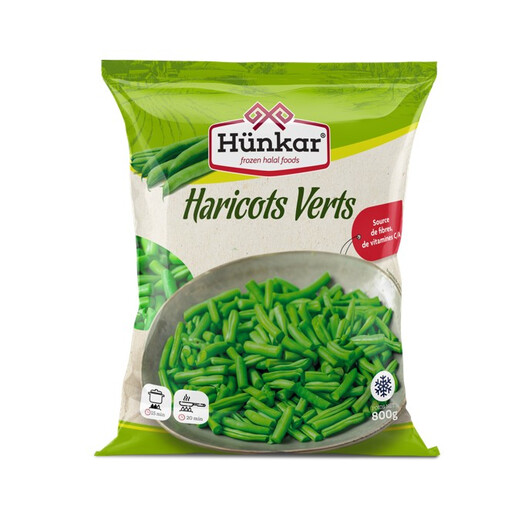 Image unavailable
This frozen option is for anyone who wants to choose how to season their green beans to go with savoury crêpes.
Size: 800 g. Check the cooking instructions on the pack to plan your meal preparation.
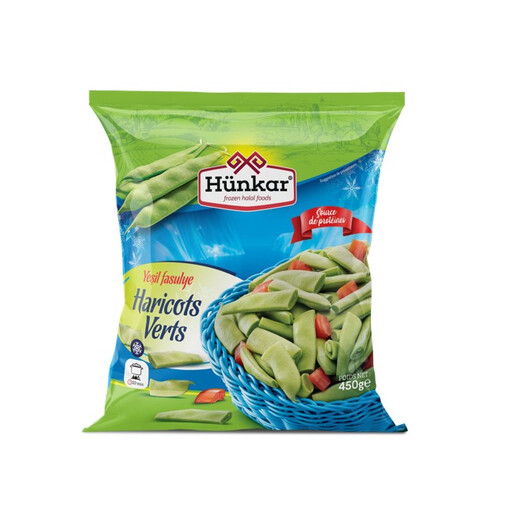 Image unavailable
This frozen product also contains tomatoes. It may suit you if you want a mixed vegetable option, but not if you’re looking for green beans on their own.
Size: 450 g. Check the ingredients, salt content and preparation instructions on the pack before planning to serve it.
No: “no added salt” doesn’t mean the salt content is zero. The Jardin Bio Étic jar featured by Auchan France contains green beans and water, yet has 0.02 g of salt per 100 g. Check the nutrition information for the exact product.
For the Jardin Bio Étic jar, Auchan France advises rinsing and draining the beans before serving. Taste them before adding salt; Manger Bouger, the Santé publique France website, recommends not automatically adding more salt to tinned or jarred foods.
No, that claim alone doesn’t tell you how much salt the product contains. The Bonduelle tin described by Auchan France carries this claim, but contains salt and has 0.58 g of salt per 100 g.
Follow the instructions for the product you’ve bought rather than assuming the same storage time applies to every jar. The details for the d’aucy jar featured by Auchan France advise transferring its contents to an airtight container, refrigerating it and eating it within two days for best quality.