Who is this guide for?

Anyone keeping an eye on the salt in their ingredients

You want to decide how to season a recipe that includes bread. Check the salt per 100 g rather than relying on the product name alone: product listings from Auchan France and Bonduelle show different values for different products.

Anyone trying green beans in dough

If you want to add green beans to bread, the water they contain and the size of the pieces will both affect your trial. The Auchan France listing for the Jardin Bio Étic jar advises rinsing and draining the beans, but gives no quantities for bread dough.

Anyone prioritising convenience

You’re choosing between a jar that needs draining and a frozen bag you can use in portions. Compare the preparation instructions and nutrition information for the product you choose: the format, organic label or fineness of the beans won’t tell you how much salt they contain.

Which criteria should you check?

For a bread-based recipe, first check the salt in the specific product, then consider how much water the beans might add and, finally, choose a format that suits your preparation.

Criterion What to check Who is it for?
Salt Read the ingredients and compare the ‘salt’ value per 100 g for the specific products. According to Auchan France’s listings, the Jardin Bio Étic jar contains 0.02 g per 100 g and the d’aucy jar 0.46 g; Bonduelle lists 0.92 g per 100 g for its steam-cooked tinned beans. If the bread or other ingredients are already salty, you may want to stay in control of how the beans are seasoned. Around 50% of consumers put controlling salt intake first.
Moisture For a jar, check the drained net weight and draining instructions. Try a small amount before adjusting your dough. If you’re concerned about the consistency of your dough or filling, the water in the beans will be an important factor in your trial. This is the main priority for around 30% of consumers.
Format Compare jars and frozen options based on the quantity you need, storage instructions and how you plan to prepare them. Check the salt independently of the format. If you’re cooking in batches, you may prefer a bag that you can portion out; for something you’re preparing straight away, a jar may suit you better. Format is the main concern for around 20% of consumers.

Common mistakes to avoid

  • Assuming an organic jar is low in salt

    The Auchan France listing for the organic d’aucy jar includes sea salt in the ingredients and states that it contains 0.46 g of salt per 100 g. An organic label alone doesn’t tell you how much salt a product contains.

    Compare the ingredients list and the ‘salt’ value per 100 g on the label of the product you’re buying.

  • Confusing ‘no preservatives’ with ‘no added salt’

    Bonduelle’s steam-cooked tinned beans contain salt and have 0.92 g of salt per 100 g. Information about preservatives doesn’t tell you how a product is seasoned.

    Check marketing claims, ingredients and nutrition information separately.

  • Forgetting about the rest of the recipe

    According to Anses, bread and crispbreads are the leading source of salt in the French diet. In a recipe with bread and other salty ingredients, the salt in the beans adds to the total.

    Compare the beans available, taking into account the other ingredients and how you plan to season the recipe.

  • Adding jarred beans without trying them first

    The advice to rinse and drain the beans in the Jardin Bio Étic jar listing relates to preparing the beans; it doesn’t specify how much to use or what result to expect in bread dough.

    Drain the beans, weigh the amount you use and start with a small trial to see how your dough turns out.

Brands and products to compare

Jardin Bio Étic

A jar of extra-fine organic green beans marketed as having no added salt.

  • The Auchan France listing gives green beans and water as the ingredients, 0.02 g of salt per 100 g and a drained net weight of 345 g.
  • The instructions to rinse and drain the beans don’t explain how to use them in bread dough.

Notre Jardin

A Marque Repère product: 225 g of extra-fine green beans, labelled ‘no added sugar or salt’ at E.Leclerc.

  • The product name makes it easy to identify when comparing options in store.
  • To compare its salt content with another product, check the value per 100 g and the ingredients on the label.

d’aucy

A brand whose jars should be compared individually when it comes to salt.

  • The Auchan France listing for the organic jar states that it contains 0.46 g of salt per 100 g, giving you a specific value to compare.
  • The same listing includes sea salt in the ingredients, despite the page title saying ‘no added salt’. Check the packaging of the exact product you’re buying.

Bonduelle

A brand that includes the extra-fine steam-cooked green beans described on its product page.

  • The Bonduelle listing specifies the ingredients and states that this tinned product contains 0.92 g of salt per 100 g.
  • This value applies to the steam-cooked tinned beans mentioned here, not to all Bonduelle green beans or the frozen product featured below.

Carrefour Classic’

A 1 kg bag of extra-fine frozen green beans, handy for cooking in batches.

  • The Carrefour France listing gives a storage temperature of −18 °C and says they can be cooked in a saucepan or in the microwave.
  • If salt is your deciding factor, check the nutrition information for this specific bag before comparing it with jars.

Green beans available on Joybuy

These two products are included to help you compare green bean formats for a bread-based recipe. Before choosing, check the salt content, cooking instructions and how to drain the beans on each pack.

BONDUELLE extra-fine green beans 750 g

BONDUELLE extra-fine green beans 750 g

If you’re thinking of using these beans in a bread-based recipe, check the seasoning information on the packaging and try a small amount once they’ve been prepared and drained. The pack size is 750 g.

View on Joybuy
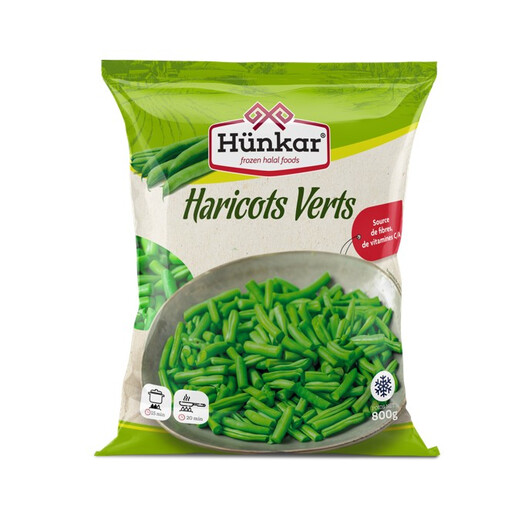
HÜNKAR green beans 800 g

HÜNKAR green beans 800 g

To see how this product works in a bread-based recipe, read the preparation instructions and check the ‘salt’ value per 100 g, then try a small amount in your recipe. The pack size is 800 g.

View on Joybuy

Frequently asked questions

Does ‘no added salt’ mean there’s no salt at all?

No. No added salt doesn’t mean the ‘salt’ value in the nutrition table is zero. The Auchan France listing for the Jardin Bio Étic jar gives green beans and water as the ingredients, and states that it contains 0.02 g of salt per 100 g.

Do organic green beans always contain less salt?

No. An organic label doesn’t tell you how much salt a product contains. The Auchan France listing for the organic d’aucy jar includes sea salt and states that it contains 0.46 g of salt per 100 g. Compare the labels of the products you’re considering.

How can I try jarred green beans in bread dough?

Start by preparing them according to the instructions on the packaging, then add a small amount, drained, to a trial batch of your recipe. The Auchan France listing for the Jardin Bio Étic jar recommends rinsing and draining the beans, but this doesn’t specify a quantity or baking result for bread.

How should I store a jar of green beans after opening?

Follow the storage instructions for the product you’ve opened. For the Jardin Bio Étic jar, the Auchan France listing recommends keeping it chilled after opening and using it soon. Check the specific instructions for any other product.