If you’re preparing several meals, choose plain frozen green beans if you want to take out portions as needed and have freezer space. If speed is your priority, opt for a tin or jar that’s already cooked. Compare the “of which sugars” figure per 100 g, the ingredients and the salt content: a declared figure alone isn’t enough to classify a product as “reduced in sugars”. For tinned beans, also check the drained net weight and the storage instructions after opening.
Who are these formats for?
People who spread their meal prep across several meals
A bag of plain frozen green beans lets you take out as much as you need, provided you keep the product in the freezer and don’t refreeze a portion once it has thawed, in line with advice from Anses.
Shoppers comparing sugar and salt
The “of which sugars” figure per 100 g, the ingredients list and the “salt” value help you compare products. A low figure on the label doesn’t, by itself, prove that sugars have been reduced.
People who want a vegetable that’s already cooked
Tins and jars are handy when you need to add something to prepared meals quickly. To plan your portions, check the drained net weight if the product is in a covering liquid, then read the storage instructions for after opening.
What should you check before buying?
For several meals, first choose between frozen beans that you can portion out and a ready-cooked product that’s quick to serve. Then compare the ingredients and nutrition on the same 100 g basis, without confusing the sugar figure with the “reduced in sugars” claim.
| What to consider | What to check | Who it matters to |
|---|
| Sugars and ingredients |
Compare “of which sugars” per 100 g and read the ingredients list; don’t infer a “reduced in sugars” claim from a figure on its own. |
If the ingredients guide my choice, I want to distinguish declared sugar levels from a promise to reduce them. This would be a priority for around 46% of consumers. |
| Stock and portions |
Check the pack size and storage instructions, and, for beans in a covering liquid, the drained net weight. |
When I cook ahead, I want to split the green beans between several meals without losing sight of how to store them; around 27% of consumers would put this need first. |
| Salt and quick serving |
For a ready-cooked product, check the “salt” value per 100 g and the instructions for after opening. |
When I’m adding something to a prepared dish, I prioritise a ready-to-serve vegetable while keeping an eye on salt; this would be the main consideration for around 27% of consumers. |
Mistakes to avoid
-
Assuming “reduced in sugars” means a low sugar figure
Two product listings may show different sugar amounts without proving that one product is “reduced in sugars”. The DGCCRF points out that the use of nutrition claims is regulated.
Compare the “of which sugars” figure per 100 g across similar products, and check their ingredients and salt separately.
-
Calculating portions using the weight of a tin that includes its liquid
The amount you can actually use in meals may be less than the weight that includes the covering liquid. The DGCCRF specifies that the drained net weight must be stated for products sold in this type of liquid.
Use the drained net weight to divide the green beans between your meals.
-
Choosing a tin without checking the salt or instructions for after opening
Recipes vary: Bonduelle states 0.92 g of salt per 100 g on its tin of steamed green beans, while the ingredients list for Jardin Bio étic’s no-added-salt jar shows green beans and water. The Bonduelle tin also includes instructions for use after opening.
Check the “salt” value for the product you choose and plan portions in line with its instructions for after opening.
-
Letting frozen beans thaw before putting them away
Choosing frozen beans means keeping them cold. Anses advises picking up frozen products at the end of your shop and not refreezing food once it has thawed.
Keep travel time to a minimum, put the bag in the freezer promptly and follow the preparation instructions on the packaging.
Brands and retailers to consider
These products illustrate different formats and ingredients to compare on a product-by-product basis; a brand or retailer won’t offer the same characteristics across its entire range.
Bonduelle
The brand offers, among other products, plain frozen green beans and tinned steamed green beans.
- Its 750 g bag of extra-fine frozen beans lists green beans as an ingredient and contains 1.7 g of sugars per 100 g.
- Its steamed tinned beans also contain salt and state 0.92 g of salt per 100 g, so the two formats won’t suit the same priorities.
Carrefour
The 750 g Carrefour Extra product is a bag of extra-fine frozen green beans, pre-cooked by steaming.
- The pre-cooked format may appeal if you want to portion out a frozen product.
- To compare sugar levels, check the “of which sugars” figure on the label of the product you choose.
Auchan
Auchan’s range includes plain frozen, pre-cooked and tinned green beans.
- The listing for its 1 kg bag of frozen VERDI beans names green beans as an ingredient and gives a sugar content of 0.6 g per 100 g.
- Auchan Bio’s tinned beans contain sea salt and state 0.55 g of salt per 100 g; you can’t assume they have the same characteristics as the frozen beans.
ALDI / ALL SEASONS
ALDI France offers a 1 kg bag of ALL SEASONS extra-fine frozen green beans.
- The 1 kg pack size may be useful when planning several meals.
- For a nutritional comparison, check the ingredients and the “of which sugars” and “salt” figures on the packaging.
E.Leclerc
E.Leclerc Drive has a frozen vegetables section for shopping with collection or delivery.
- Browse the range if you’re looking for a frozen format for preparing several meals.
- Compare the details of the specific green bean product available when you shop.
Lidl
Lidl’s food range includes vegetables and frozen products.
- The retailer may be worth considering if you’re looking for a format that suits your meal prep.
- For a specific green bean product, check its format, ingredients and nutritional information on the product available.
Green beans available on Joybuy
These products include two bags of green beans to keep frozen and portion out for different meals, plus a ready-cooked Bonduelle option for quicker meal prep. Choose a format based on your freezer space and when you plan to use each portion, and check the nutritional information on the product you choose.
 Image unavailable
Bonduelle Extra-fine Green Beans 750 g
A bag of frozen beans to consider if you want to take out some green beans for several meals.
Keep in the freezer at −18 °C and follow the cooking instructions on the packaging. Do not refreeze a portion once it has thawed.
View on Joybuy
 Image unavailable
Bonduelle Extra-fine Green Beans 440 g
This ready-cooked product is handy for adding to a prepared meal when you don’t have time for a long cooking process.
If you plan to split the contents between several meals, check the drained net weight and follow the storage instructions for after opening on the product.
View on Joybuy
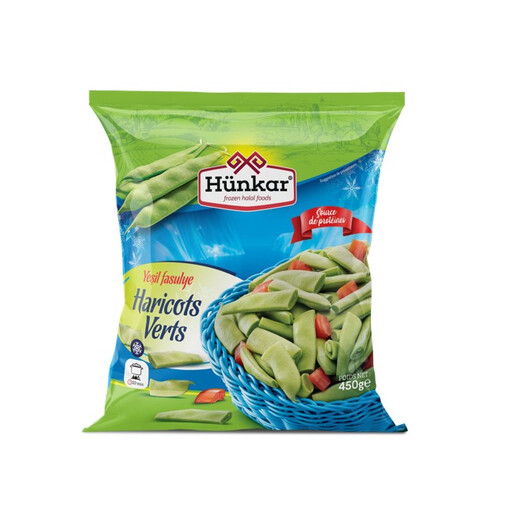 Image unavailable
HÜNKAR Green Beans 450 g
This frozen product could help you stock up on green beans for several meals, if you have a freezer.
Keep frozen at −18 °C or below, and check the cooking instructions on the packaging before planning your meal prep.
View on Joybuy
Frequently asked questions
Does a low sugar content mean a product is “reduced in sugars”?
No. The “of which sugars” figure per 100 g describes the product, but doesn’t by itself demonstrate a reduction compared with a reference product. The DGCCRF points out that nutrition claims are regulated. To compare these green beans, use the figures provided without assuming the claim applies.
Frozen or tinned beans for preparing several meals?
Plain frozen beans are a good choice if you want to take out portions and can maintain the cold chain. Tins and jars that are already cooked save you the preparation when it’s time to serve. If you choose these, check the salt, drained net weight and instructions for after opening.
What weight should you use to divide tinned beans into portions?
Use the drained net weight when the green beans are in a covering liquid. The DGCCRF states that this weight must appear on the label of these products. It helps you work out how many green beans to portion out, rather than counting the liquid.
Can you refreeze green beans after they’ve thawed?
Don’t refreeze green beans once they’ve thawed. Anses advises against refreezing thawed food, so take out the portions you need while keeping the rest of the bag frozen.


