
Livraison le jour même ou le lendemain

Qualité garantie

Débloquez vos offres de bienvenue: Livraison GRATUITE | Jusqu'à -80 % | 30 jours d'essai gratuits à JoyPlus
Téléchargez l'application
The graphite pencil, or simply "pencil," is an essential staple. You'll find one in every pencil case, on every desk, and in every artist's studio. Yet, this familiar object comes in a multitude of models, and choosing the right one can quickly become a challenge. A student's needs are not the same as an architect's, and a draughtsman expects something different from their pencil than an office worker does.
This guide is here to break down the key criteria and help you find the perfect graphite pencil for your needs, whether you're taking notes, creating a technical drawing, or unleashing your creativity. We have selected reliable, high-performance products to help you make the right choice, with confidence.
Before diving into our selection, it's essential to understand a few key concepts that distinguish a good pencil from a low-end model.
A pencil's lead is a clever mix of graphite and clay. Their proportion defines its hardness, a characteristic indicated by a letter and sometimes a number.
For daily use (note-taking, lists, quick sketches), the HB lead is undoubtedly the most sensible choice.
The duel between the traditional wood pencil and the modern mechanical pencil is primarily a matter of taste and use.
The shape of the pencil plays a crucial role in your comfort, especially if you write or draw for hours. While the classic hexagonal body ensures a good grip, triangular shapes are often favoured to reduce finger fatigue and promote proper positioning. Some models go even further with non-slip grip zones for absolute control.
To put theory into practice, here are our recommendations, tested and approved for various uses.
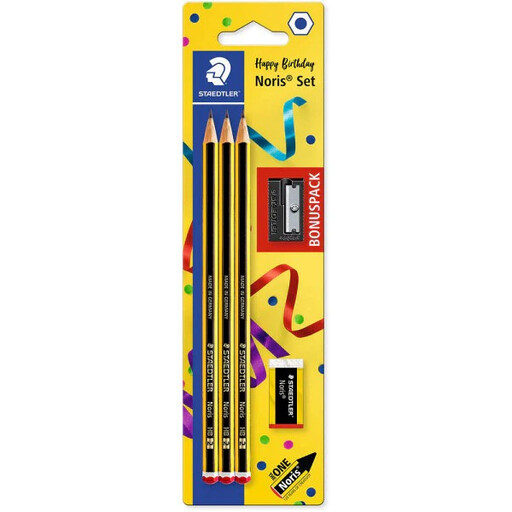
Why we love it: This set is all about convenience. It includes not only pencils but also a quality eraser and sharpener. It's the ultimate turnkey solution, perfect for the back-to-school season or for equipping an office without any hassle.
Advantages:
Who is it for? This set is primarily aimed at students (middle school, high school), families, and anyone looking for a reliable and effective starter kit for home or the office.
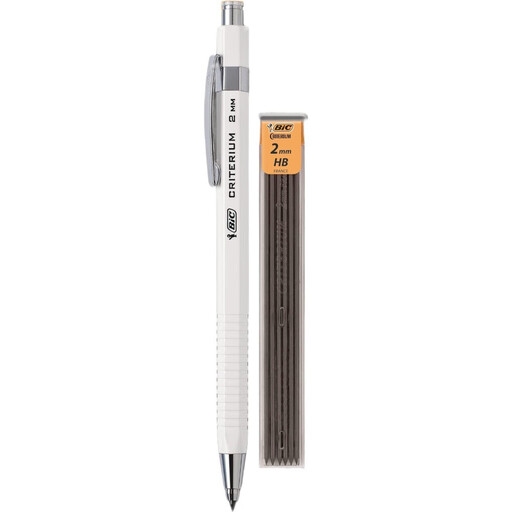
Why we love it: The BIC Criterium is a true classic, a tool built to last. With its 2 mm lead, it offers the best of both worlds: the feel of a classic pencil and the convenience of a mechanical one. No more sharpening chores! The line is always crisp, and the thick lead withstands pressure much better than its 0.5 or 0.7 mm counterparts.
Advantages:
Who is it for? An excellent choice for professionals in technical fields (architects, draughtsmen), art students, or anyone who wants the convenience of a mechanical pencil without sacrificing the strength of a real lead.
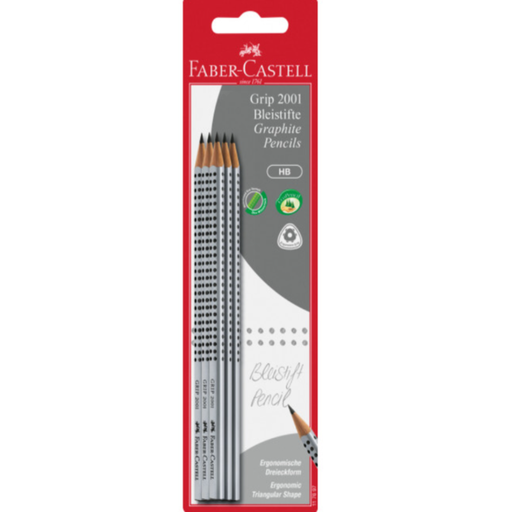
Why we love it: With its GRIP 2001 range, Faber-Castell makes comfort a top priority. Its triangular shape, combined with the patented grip zone and its famous non-slip dots, ensures an exceptional, fatigue-free hold. This is the professional-grade pencil that is easy on your hands.
Advantages:
Who is it for? The ideal companion for anyone who writes or draws extensively: students cramming for exams, writers, artists, and all professionals who use their pencil all day long.
Our selection focuses on versatile and ergonomic models, but the world of graphite pencils is much broader. Whether you're looking for specific hardness grades (a 2B for your shading, a 2H for ultra-fine lines) or other brands, the possibilities are endless.
To explore an even wider range, feel free to browse our dedicated category.
? Discover Our Entire Collection of HB Pencils
It's all about hardness, which depends on the clay-to-graphite ratio in the lead.
This is a common problem! Here are a few tips:
There's no absolute winner; it all depends on what you're looking for!
It really comes down to personal preference and intended use.