Anyone building a brunch around a variety of foods
If you’re serving granola with fruit, a dairy product or a plant-based alternative, check which cereals are listed in the recipe, then compare the fibre and sugars per 100 g.


For a Sunday brunch, start by checking how prominently wholegrains feature in the ingredients list, then compare the sugars and fibre per 100 g. A recipe with seeds or fruit gives you a choice of toppings; for a chocolate version, check the energy and allergens in the product you’re considering too.
If you’re serving granola with fruit, a dairy product or a plant-based alternative, check which cereals are listed in the recipe, then compare the fibre and sugars per 100 g.
Chocolate, fruit and seeds all affect a granola’s composition. When choosing a brunch topping, compare the ingredients and nutrition information for each recipe rather than relying on its flavour alone.
Before sharing a pack, check its ingredients and any ‘may contain’ warnings. Cereals containing gluten, nuts, milk, soya or sesame may be present in the recipes featured here.
Start with the ingredients to identify the wholegrains. Then, to compare two granolas, use the per 100 g values in their nutrition information, in line with the basis for presentation outlined by the DGCCRF.
| Criteria | What to check | Who is it for? |
|---|---|---|
| Wholegrain cereals and fibre | Look for wholegrains among the first ingredients, then compare the fibre per 100 g. | If I’m primarily looking for a wholegrain cereal base to go with the rest of the brunch, I want to be able to identify these ingredients on the pack. Around 38% of consumers would prioritise this composition and the fibre content. |
| Sugars | Compare the ‘of which sugars’ line per 100 g and look out for ingredients such as honey, syrups or chocolate. | If there are already several sweet foods planned for brunch, I prefer to choose granola by checking its sugar content. Around 37% of consumers would put limiting sugars first. |
| Toppings and sharing | Choose the inclusions you’d like and check the allergens and any ‘may contain’ warnings on the pack you’re serving. | When I put granola in the middle of the table, I want a flavour that will suit my guests while keeping everyone’s dietary needs in mind. Taste, variety and sharing would come first for around 25% of consumers. |
A recipe can contain wholegrains alongside sugar, honey, dried fruit, chocolate or syrup. The organic label is no substitute for checking the ingredients.
Check the cereals in the ingredients, then compare the sugars, fibre and energy per 100 g.
Depending on the recipe, seeds, chocolate, nuts and cereals may come with allergenic ingredients or ‘may contain’ warnings. The DGCCRF notes that allergenic ingredients must be highlighted on food labels.
Read the pack you’ve bought and keep it available for guests to check. If someone needs to avoid an ingredient, check any alternative you offer them separately.
A product listing viewed before you buy may not match the information on the pack you receive exactly.
Before serving the granola, check the ingredients and allergens on the packaging, especially if a guest needs to avoid certain foods.
Two recipes made with wholegrain oats let you choose between chocolate and red berries.
Recipes combining wholegrains with seeds or nuts, depending on the product.
Quinoa or seed varieties to add something different to your brunch toppings.
Organic wholegrain oat recipes, including almond and honey or chocolate varieties.
If you’d like to serve chocolate granola at brunch, here’s one product to consider. Be sure to check its ingredients on the pack.
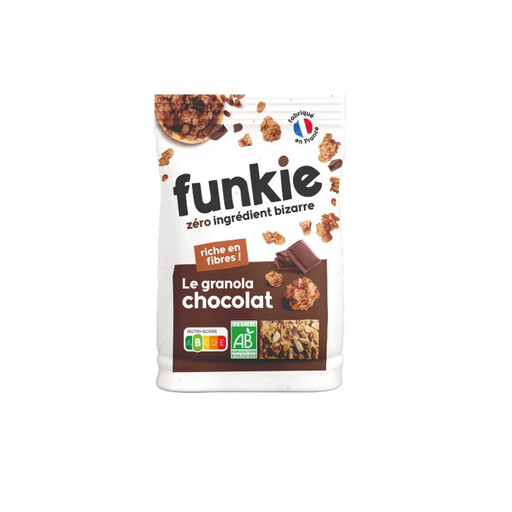 Image unavailable
This product is a good fit for a table where you’d like to offer a chocolate topping. The pack contains 300 g of granola. Before sharing it, check the ingredients, allergens and nutrition information on the packaging.
Look for ‘wholegrain oats’, ‘wholegrain oat flakes’ or another wholegrain cereal in the ingredients list. Check how high up it appears, or its proportion if one is given. Then compare the fibre and sugars per 100 g across the recipes you’re considering.
The presence of wholegrain oats alone isn’t enough to tell: some of the recipes mentioned also contain wheat or barley, or carry ‘may contain’ warnings. Check the ingredients and labelling on the specific pack you plan to serve.
Compare the values per 100 g first, so you’re using the same basis for each granola. The DGCCRF states that nutrition information is given per 100 g or 100 ml. Then consider the amount you actually serve alongside the other brunch foods.