
Livraison le jour même ou le lendemain

Qualité garantie

Débloquez vos offres de bienvenue: Livraison GRATUITE | Jusqu'à -80 % | 30 jours d'essai gratuits à JoyPlus
Téléchargez l'application
Choosing the right wet food for your dog can be a daunting task. In the jungle of the pet food aisle, the "grain-free" label sounds like a promise of quality. However, this label alone doesn't guarantee a healthy, balanced meal. Our mission: to help you decode labels and sort the good from the bad, moving beyond the marketing hype. Here are the most common pitfalls to avoid when choosing a grain-free wet food for your dog.
To be sure of the quality of a wet dog food, focus on a few objective criteria. These benchmarks will help you judge a product beyond its packaging.
The golden rule is simple: the ingredient list is always ordered by descending weight. A quality wet food should feature:
A healthy recipe doesn't need artificial extras. Check that the label clearly states:
These additives have no nutritional value and may even be poorly tolerated by some dogs. Reviews for brands like MjAMjAM often praise the simplicity and transparency of their formulas, a sign of trustworthiness for owners who care about their pet's well-being.
Nutritional needs obviously vary depending on your dog's age, breed, and health status.
These selection principles also apply to grain-free wet cat food, as our feline friends, being obligate carnivores, have even more specific nutritional requirements.
To provide a concrete example of a quality composition, here are a few products that meet very specific needs.
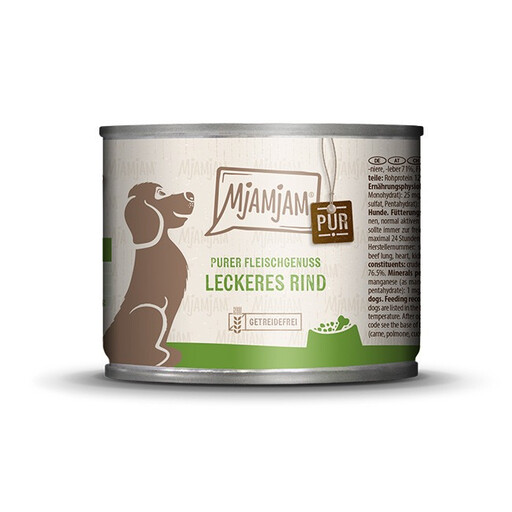
Why we chose it: Perfect for dogs prone to intolerances. By using only a single source of animal protein, this highly digestible recipe makes it easy to identify the source of a potential allergy.
This is a single-protein formula. It doesn't mix meats, which avoids the ambiguity of "rich in..." labels. The ingredient list is crystal clear: 71% beef and offal, meat broth, minerals, and eggshells. Zero hidden carbs, zero artificial ingredients.
Its extremely high digestibility, thanks to a simple composition and the complete absence of grains, gluten, lactose, and added sugars. Ideal for an elimination diet or for the most sensitive stomachs.
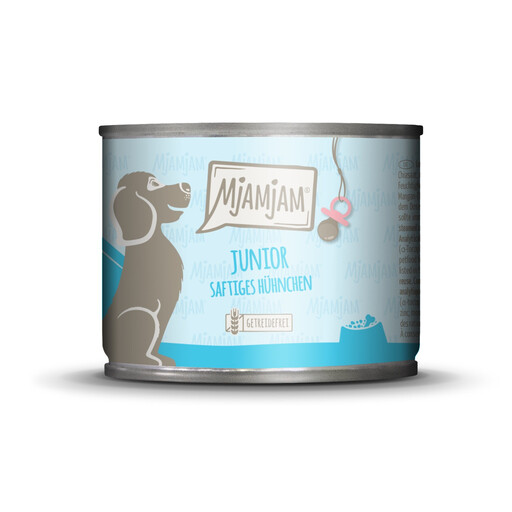
Why we chose it: Specially formulated for the needs of puppies. It provides all the energy and essential nutrients for healthy development of their skeleton and muscles.
The meat content is high and transparent (66% chicken). The recipe is enriched with functional ingredients (whole egg, chia seeds, safflower oil) rather than unnecessary "fillers."
A perfectly balanced nutritional profile for growth, with an ideal calcium-to-phosphorus ratio. The formula is also single-protein (chicken), ensuring excellent digestive tolerance in young dogs.
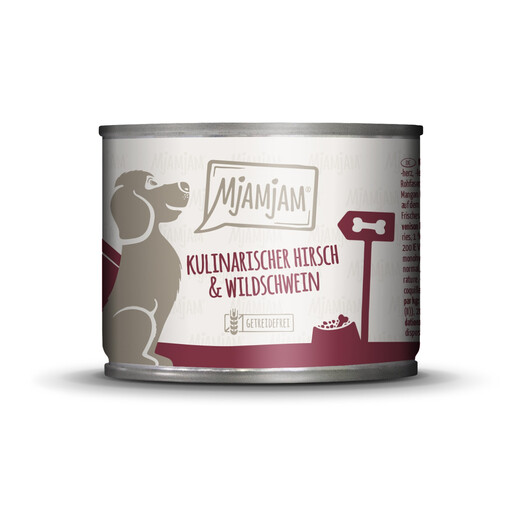
Why we chose it: For owners who like to add variety and offer more original flavours. The combination of game meats provides a taste experience that's off the beaten path (compared to chicken or beef).
The composition is ultra-detailed: 45.4% game (venison, wild boar), 21.5% pork (heart, liver), and 2% cranberries. The total meat and offal content is high and the sources are clear—a world away from vague descriptions.
The use of high-quality, less common proteins (game) is ideal for stimulating the appetite of the pickiest eaters. The recipe is, of course, free from grains, gluten, lactose, and added sugars.
Discover our full selection of wet foods that meet our quality criteria and current regulations.
To avoid any digestive upset, the transition should be gradual. Over 7 to 10 days, mix a growing portion of the new food with the old one. Start with about 25% of the new recipe on the first day, then slowly increase the amount until you reach 100%.
Yes, for the vast majority of dogs, a grain-free wet food rich in animal protein is ideal, as it closely mimics their natural carnivorous diet. However, every dog is unique. In case of a medical condition (kidney failure, pancreatitis, etc.), consulting your veterinarian is essential before any dietary change.
Both target sensitive dogs, but their approaches differ. A single-protein wet food contains only one source of animal protein (e.g., 100% turkey). It's the perfect tool for an elimination diet to identify a specific allergen. A hypoallergenic wet food, on the other hand, may contain one or more protein sources, but they are chosen for their very low allergenic potential (e.g., kangaroo, insects, lamb). Its goal is to minimise the risk of a reaction globally, without necessarily isolating a single protein.