
Livraison le jour même ou le lendemain

Qualité garantie

Débloquez vos offres de bienvenue: Livraison GRATUITE | Jusqu'à -80 % | 30 jours d'essai gratuits à JoyPlus
Téléchargez l'application
Choosing your puppy's very first food is a crucial step. Faced with shelves overflowing with promises, it's easy to feel lost. As the Head of Product Curation at Joybuy, my mission is to help you see clearly, navigate the marketing traps, and focus on what truly matters: your companion's healthy growth.
Before exploring the different options, let's review the 3 most common pitfalls when buying grain-free puppy p?té:
To make an informed choice, knowing how to decode a label is paramount. Here are the three points to check every time to ensure a meat-rich puppy diet that is perfectly suited to their needs.
A puppy's growth requires a substantial intake of high-quality protein. Prioritise ingredient lists that start with a clearly identified meat source: "fresh chicken," "beef," "lamb heart."
The percentages of different nutrients are just as important as the ingredient list. For a growing puppy, keep an eye on the following values:
Choosing a grain-free formula is often aimed at better digestibility, especially for cans for puppies with sensitive digestion. Just make sure that grains are not replaced by poor-quality substitutes.
Rather than a long, drawn-out list, we have selected products that meet specific needs, perfectly aligning with the criteria we've just discussed.
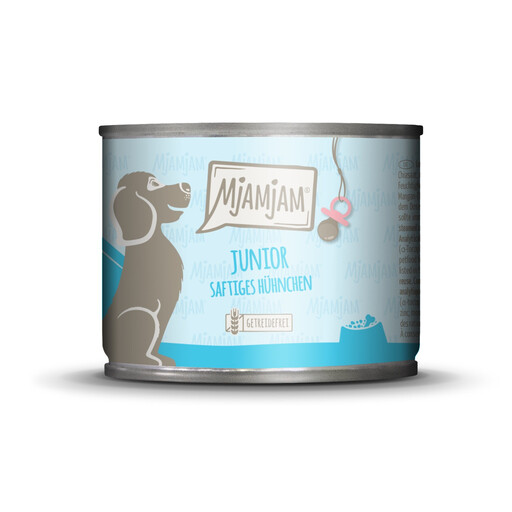
Why it's a great choice: Perfect for owners who want to test a new food or for small-breed puppies. Its single-protein chicken formula is designed to be particularly digestible, minimising the risk of gastrointestinal issues.
The ingredient list is clear and concise. It details: "Chicken meat, heart, liver, gizzard (66%)," which avoids the ambiguity of by-products. The recipe is guaranteed grain-free and has no added sugars.
Single-protein formula: limits the risk of intolerances. High meat content (66%): ensures a quality protein intake for growth.
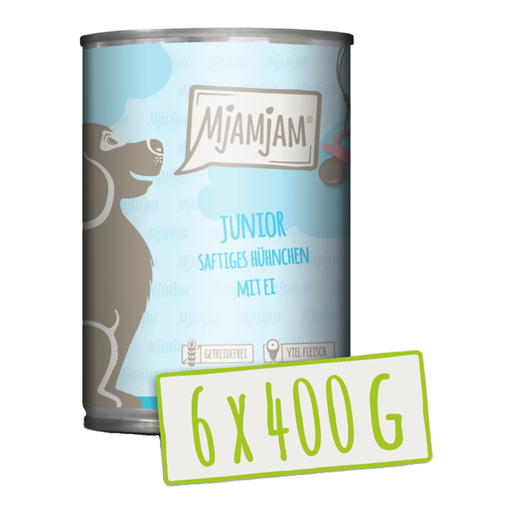
Why it's a great choice: For owners committed to high-quality wet food who are looking for a format that is both practical and economical. This pack provides complete nutrition to support a puppy's intense growth phase.
The brand's "prey-inspired" philosophy is reflected in a very high and clearly detailed meat content, far from the vague promises of being "rich in meat." The absence of grains, sugar, and preservatives is guaranteed.
Natural composition: 66% chicken, supplemented with eggs, chia seeds, and safflower oil. Complete food: provides all the necessary nutrients and vitamins for growth.
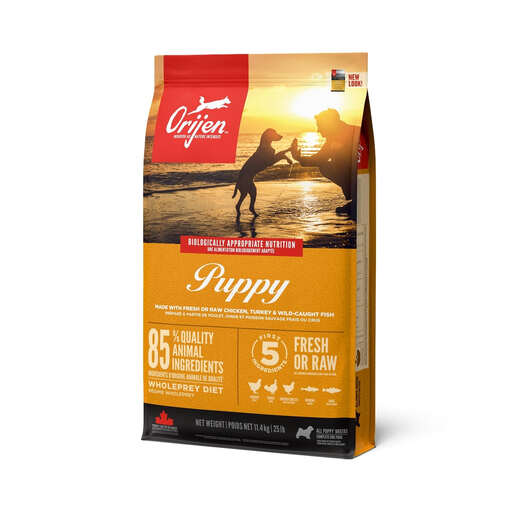
Why it's a great choice: Although it's a dry food, this product is a top-tier option for owners who practice mixed feeding or are preparing to transition to a dry diet, while sticking to a "grain-free" and high-protein philosophy.
This product goes beyond simply being "rich in meat" with 85% quality animal ingredients, including meat, organs, and cartilage (WholePrey ratio) for complete nutrition that mimics a natural diet.
Very high protein content (38%): supports the development of lean muscle mass. Biologically Appropriate: the composition is designed to mirror the natural diet of canines.
We have compiled a complete and up-to-date selection of products that strictly adhere to these selection criteria and current regulations.
The exact amount depends on your puppy's age, weight, breed, and activity level. Always refer to the recommendations on the packaging as a starting point. For example, for MjAMjAM Junior p?té, a 2 to 5-month-old puppy weighing between 1 and 5 kg will need 200 to 450g per day. Feel free to adjust portions to maintain a healthy weight and consult your veterinarian if you have any doubts.
Absolutely. This is known as mixed feeding (or bi-nutrition). This method combines the benefits of both food types: the hydration and palatability of p?té, and the chewing action of dry food, which is beneficial for teeth. Make sure to choose high-quality, grain-free p?té and dry food to remain consistent. Calculate the rations carefully to avoid overfeeding your puppy.
Monitor several indicators. Well-formed, low-odour stools are the first sign of good digestion. Also, observe the condition of their coat (it should be shiny), their energy level, and the absence of excessive flatulence or itching. When changing any food, always make a gradual transition over 7 to 10 days to allow their digestive system time to adapt.