
Livraison le jour même ou le lendemain

Qualité garantie

Débloquez vos offres de bienvenue: Livraison GRATUITE | Jusqu'à -80 % | 30 jours d'essai gratuits à JoyPlus
Téléchargez l'application
Choosing grain-free puppy food isn't just about spotting the words "grain-free" on a bag. For a puppy, the size of their future adult breed, their age, the energy density of the food, and its mineral balance are all equally important. A chicken recipe might be perfect for one young dog, while a lamb or pumpkin formula will suit other needs or preferences.
The main risk? Paying for an appealing package without taking the time to check the essential information. Here are the common mistakes and the criteria to examine before ordering a bag of puppy food.
The absence of wheat, maize or rice doesn't guarantee that a recipe is suitable for growth. These ingredients are often replaced by peas, lentils, chickpeas or potato. So you need to examine the full ingredient list, the nutritional analysis, and the mention of complete puppy food.
A grain-free recipe won't necessarily suit every dog. If you suspect an intolerance, notice persistent digestive issues, or have specific growth requirements, it's best to seek advice from a vet.
Claims like "rich in animal protein" can refer to the proportion of protein from animal sources, not the total amount of meat in the recipe. Some product pages state, for example, that 96% of the protein comes from animal sources. This figure must be distinguished from the crude protein level, the ingredient list, and the energy value.
Ingredients are generally listed by weight. However, their form — fresh, dehydrated or processed — can change how you read the composition. Careful checking therefore avoids comparing numbers that don't measure the same thing.
An 11.4 kg or 12 kg bag might be practical for a large-breed puppy, but it's a significant expense if the recipe doesn't suit them. For a first try, a 800 g to 2.5 kg bag lets you check palatability and digestion before moving to a family-sized pack.
Store the kibble in a dry place, away from heat, and seal the bag carefully after each use.
The needs of a small-breed puppy aren't the same as those of a future 30 kg dog. Small-breed puppy food often offers smaller kibble that's easier for tiny jaws to pick up. Medium and large-breed puppy food, on the other hand, may have a different energy density and feeding recommendations.
Check on the packaging:
For dry food intended for a puppy, look for a product page that specifies at least the levels of crude protein, fat, fibre, ash, calcium and phosphorus. Minerals play a particularly important role during growth: a ration that's too generous can lead to excessive weight gain, especially in large-breed puppies.
Formulas marketed as premium puppy food may include ingredients like herring oil, DHA, taurine or L-carnitine. Their presence isn't a medical guarantee, but their nature and quantity can be compared objectively from one product page to another.
Switch from one recipe to another over approximately 7 to 10 days, gradually increasing the proportion of the new food. Divide the daily ration into several meals according to your puppy's age, and follow the recommendations on the packaging. Fresh water should always be available.
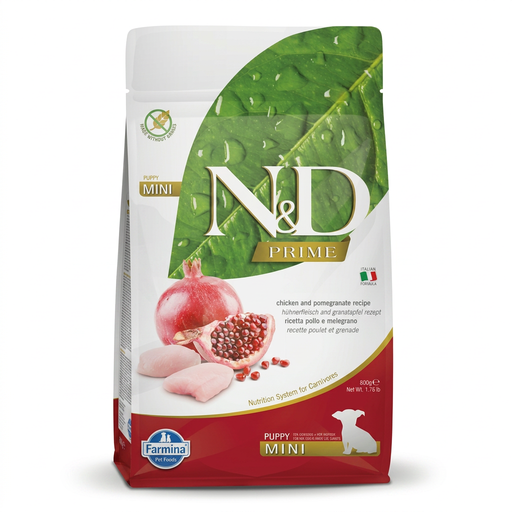
Why this choice suits this profile: Its small pack size limits the initial investment, while the recipe is designed for small-breed puppies.
The 800 g bag lets you check that your puppy accepts it before buying a larger bag.
A chicken recipe, listed as grain-free on the product page, with kibble designed for small breeds.
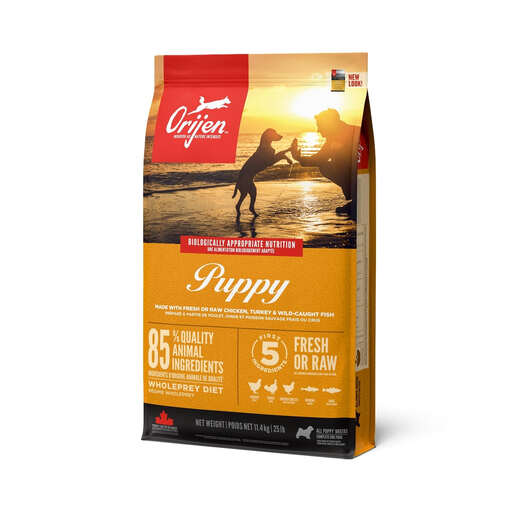
Why this choice suits this profile: Its large bag is aimed at households looking for a recipe rich in animal-based ingredients for regular use.
The product page details the animal sources and states 38% crude protein and 18% fat.
A grain-free formula in an 11.4 kg bag, with chicken, turkey, eggs and fish according to the listed ingredients.
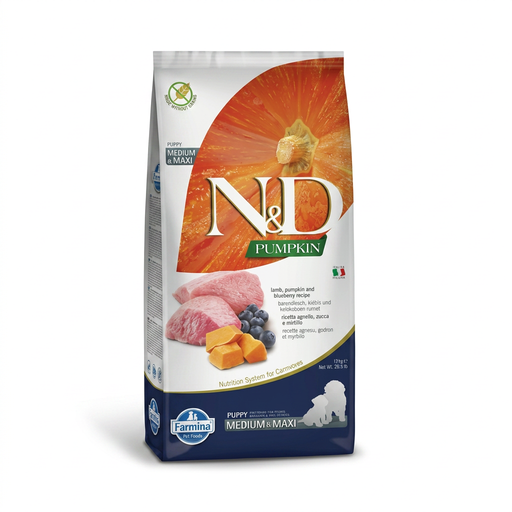
Why this choice suits this profile: This pack size is suitable for medium and large-breed puppies, as well as households that use it regularly.
The recipe specifies the target breed size and provides feeding tables based on weight and age.
Lamb as the main source, dried pumpkin, and a grain-free formula according to the product page.
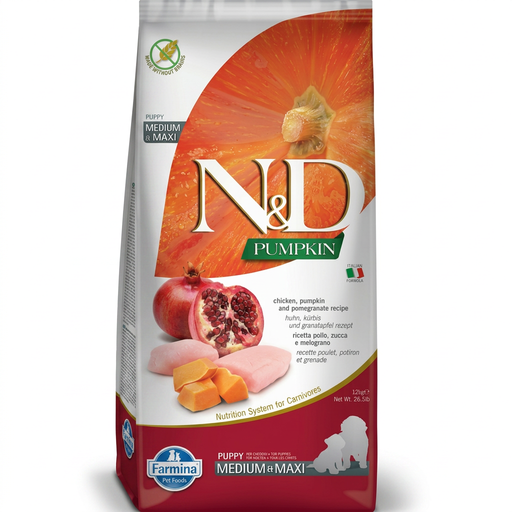
Why this choice suits this profile: This product is aimed at owners of medium or large-breed puppies who prefer chicken kibble.
The product page links the recipe to a specific size category and provides feeding amounts based on age and weight.
Chicken, herring, pumpkin and a net weight of 12 kg as stated in the product description.
We've put together a comprehensive, real-time updated selection of products that meet these demanding criteria as well as European safety regulations.
No. Check that the product is clearly presented as a complete puppy food, that it matches the expected adult size, and that its nutritional information is clearly displayed. The term "grain-free" doesn't mean the food will automatically suit every dog.
The ration depends on current weight, age, breed, activity level, and the energy density of the recipe. Refer to the manufacturer's feeding guide, weigh the portions, and regularly monitor your puppy's body condition. A vet can help you adjust the amounts if needed.
Respect the best-before date on the packaging. After opening, seal the bag carefully and store it in a cool, dry place. A smaller bag may be better for a puppy that doesn't eat much, while a larger bag will be more suitable for medium and large breeds or households with multiple dogs.