
Livraison le jour même ou le lendemain

Qualité garantie

Débloquez vos offres de bienvenue: Livraison GRATUITE | Jusqu'à -80 % | 30 jours d'essai gratuits à JoyPlus
Téléchargez l'application
Bringing a puppy home is a moment of pure joy, but it also comes with its share of responsibilities. One of the most crucial is undoubtedly choosing its food. Faced with a jungle of store aisles, it's easy to get lost. You hear terms like "?grain-free?", "?protein-rich?", and "?natural?", but what do they really mean for your young companion's health??
As a product selection expert at Joybuy, my role is to help you see things more clearly. Our mission in this guide?: to give you the keys to making the right choice, with a special focus on grain-free puppy food options. Together, we will decode the labels and present a selection of products that tick all the boxes on our checklist.
Before diving into our selection, let's review the key points to check to ensure you make the right decision.
The quality of a dry puppy food is primarily revealed on its label. A good composition always starts with a clearly identified source of animal protein.
Growth is a key stage that allows no compromise on nutritional balance. Ensure the food is labelled as a "?complete food?": this guarantees it covers all your pet's needs.
A Jack Russell obviously doesn't have the same needs as a future Great Dane. The kibble size must be adapted to their jaw for proper chewing and to prevent any choking hazards. Similarly, formulas for large puppies often include specific nutrients like glucosamine and chondroitin to support joint development, which is under particular strain during growth.
After scouring the market, here are three products that stand out for the quality of their composition.
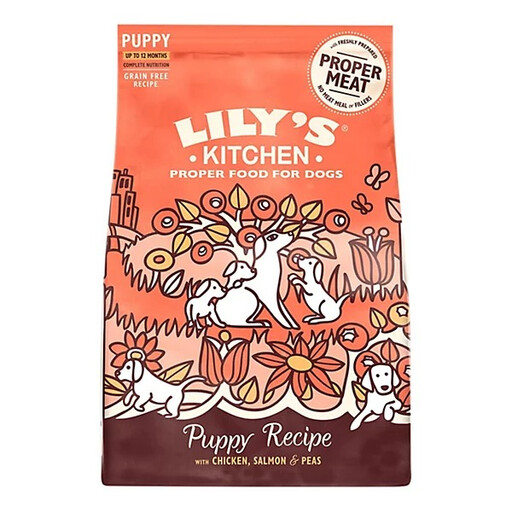
What makes it different: Lily's Kitchen focuses entirely on fresh, natural ingredients. With 27?% fresh chicken and 10?% fresh salmon, it provides a premium protein base. Its formula is enriched with a cocktail of vitamins, minerals, botanical herbs, and prebiotics for gentle digestion.
Key Features:
Who is it for? Ideal for owners looking for a natural, complete, and digestible food, with a real bonus for joint protection from a very young age.
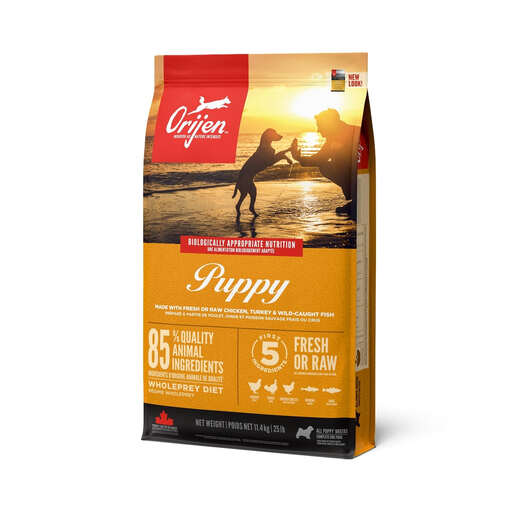
What makes it different: Orijen's reputation precedes it. Their "?Biologically Appropriate?" philosophy aims to closely mimic the ancestral diet of canines. This formula contains 85?% premium animal ingredients, including free-run chicken and turkey, cage-free eggs, and wild-caught fish. The WholePrey concept incorporates meat, organs, and cartilage for a nutritional intake that leaves nothing to chance.
Key Features:
Who is it for? A must-have for puppies of all breeds, especially if you want to boost the muscle growth of a future athlete or a medium to large-breed puppy.
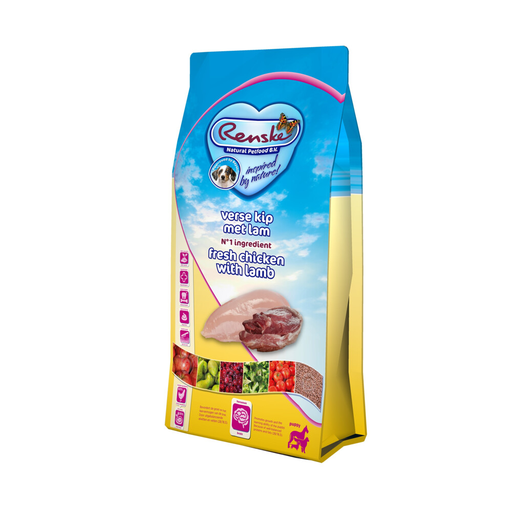
What makes it different: Renske stands out with its ultra-digestible formula and great versatility. With fresh chicken (26?%) as the first ingredient, it's designed to be easily combined with wet food. Gluten-free, it includes sustainably sourced krill, an excellent source of Omega-3 for brain development.
Key Features:
Who is it for? Perfect for puppies (from 3 weeks old) whose owners are looking for a natural, gluten-free option. It's the ideal choice for fans of mixed feeding (the famous kibble/wet food mix).
A puppy's well-being isn't just about its food bowl. After a walk in the rain or a bath, drying them properly is essential for their comfort and health, especially when temperatures drop. Efficient drying prevents chills and keeps your home clean.
To keep your companion warm and dry with ease, take a look at our selection of dog drying coats.
Grain-free puppy food is often chosen for its superior digestibility, especially for puppies with sensitive stomachs. By replacing wheat or corn with legumes or tubers (sweet potato, peas...), these recipes more closely resemble the original canine diet. They also often feature a higher animal protein content, a real bonus for muscle mass.
The golden rule?: the transition should happen when the puppy reaches about 90?% of its adult size. The timing, of course, depends on the breed?:
To avoid stomach upset, the change in food should be done gradually. Plan a 7 to 10-day period to mix the old and new food, slowly increasing the proportion of the new one?: