
Livraison le jour même ou le lendemain

Qualité garantie

Débloquez vos offres de bienvenue: Livraison GRATUITE | Jusqu'à -80 % | 30 jours d'essai gratuits à JoyPlus
Téléchargez l'application
Welcoming a puppy is an immense joy, but also a great responsibility. The most important one? Providing a diet perfectly suited for their growth. With an overwhelming selection on store shelves, it can be difficult to know where to start. That's why more and more owners are choosing grain-free puppy food, an option known for being more digestible and more respectful of their companion's ancestral diet.
At Joybuy, our mission is to guide you through this complex world. This guide is designed to help you decode labels, give you the keys to making the right choice, and present our selection of the best products available for your puppy's nutrition.
To make the right choice, you need to learn how to decode labels and understand the specific needs of your little companion. Here are the essential criteria to consider.
A growing puppy has high needs for top-quality protein. It's the essential fuel for developing muscles and organs. When you read the ingredient list, the golden rule is simple: the first ingredients are the most abundant. Therefore, prioritise formulas where a clearly identified meat or fish ("fresh chicken," "dehydrated salmon") is at the top of the list. A high-protein puppy food from animal sources is an excellent starting point.
The nutritional needs of a future Chihuahua are nothing like those of a Great Dane. A large breed puppy food must have perfectly controlled levels of calcium and phosphorus to ensure harmonious bone growth without over-stressing the joints. Conversely, small breed puppies have a faster metabolism and require a more energy-dense diet. Make sure the formula you choose matches your pet's adult size.
"Grain-free" recipes replace wheat, corn, or rice with other carbohydrate sources like sweet potatoes, peas, or lentils. This type of diet is particularly recommended for puppies showing digestive or skin sensitivities. There are also "gluten-free" options, which exclude this protein but may contain gluten-free grains like rice or oats. The choice will depend on your pet's tolerance and your search for natural puppy food.
After analysing dozens of formulas and poring over owner reviews, here are three products that stand out for their nutritional quality.
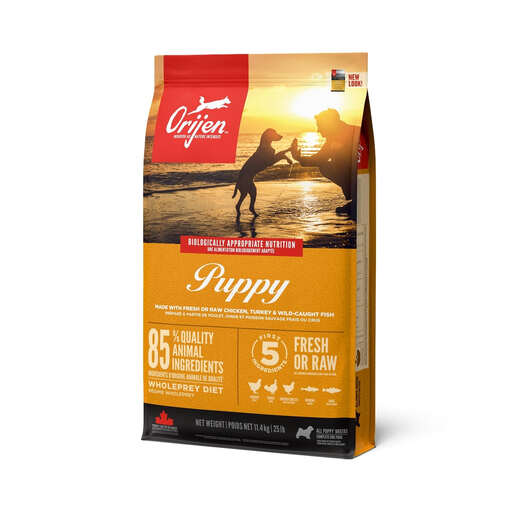
Why we chose it:Orijen puppy food is the benchmark for its "biologically appropriate" philosophy. Its recipe stands out with an exceptional 85% animal-based ingredient content, featuring an impressive variety of fresh meats, poultry, and fish. The WholePrey concept goes even further by including not just meat, but also organs and cartilage for a complete and natural nutritional profile.
Key features:
Best for which puppy? This premium formula is for puppies of all breeds and for discerning owners seeking an ultra-high-protein dry puppy food that closely mirrors the ancestral diet of wolves.
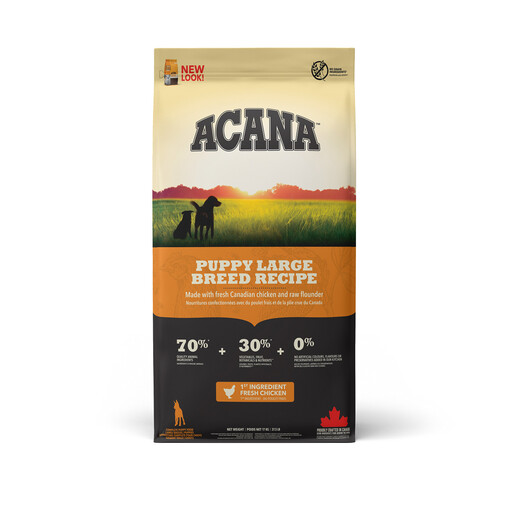
Why we chose it: Specially formulated for large breed puppies, this Acana product offers a calibrated nutritional balance for controlled growth. It provides just the right amount of protein for muscles while moderating fat and calories to avoid putting stress on a still-fragile skeleton.
Key features:
Best for which puppy? The sensible choice for owners of large or giant breed puppies (German Shepherd, Golden Retriever, Bernese Mountain Dog...) who want to ensure healthy, trouble-free growth.
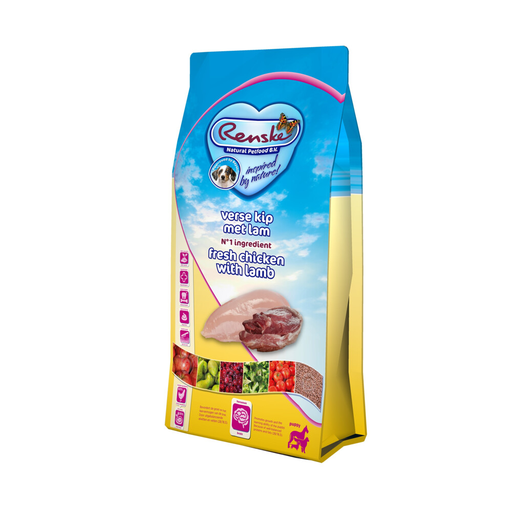
Why we chose it: This Renske recipe is a natural, gluten-free alternative. With fresh chicken as the number one ingredient, it guarantees an excellent protein supply. It stands out for its addition of krill, a valuable source of omega-3 fatty acids, which are essential for brain development and a healthy skin and coat.
Key features:
Best for which puppy? Perfect for puppies of all sizes, even the very youngest, and for owners who prefer a gluten-free option over a 100% grain-free one. Its omega-3 boost is a real plus for mental sharpness and a beautiful coat.
Does your puppy have specific needs? They might be sensitive to chicken or beef proteins. In that case, a fish-based diet is an excellent alternative. It's often highly digestible and naturally rich in omega-3s.
If this sounds interesting, check out our selection of fish-based dog food. You'll find formulas for all ages and sizes.
Generally, you can introduce puppy food (with or without grains) as soon as weaning ends, around 3 to 4 weeks of age. Always follow the age recommendations on the packaging and, if in doubt, consult your veterinarian.
Quality protein is vital for growth, that's a fact. However, an excess can be counterproductive, especially for large breed puppies where overly rapid growth can weaken their joints. The key is to choose a complete and balanced food with a protein level appropriate for your pet's breed, age, and activity level.
To avoid any digestive upset, the transition must be gradual. The principle is simple: over 7 to 10 days, mix the new food with the old, gradually increasing the proportion of the new kibble. For example: