
Livraison le jour même ou le lendemain

Qualité garantie

Débloquez vos offres de bienvenue: Livraison GRATUITE | Jusqu'à -80 % | 30 jours d'essai gratuits à JoyPlus
Téléchargez l'application
Today, choosing your dog's food is no longer a matter of guesswork. Itchiness, digestive issues, low energy? What if the problem is in their food bowl? This is where grain-free dog food comes in—an option gaining popularity among owners dedicated to their companion's well-being.
But with overcrowded shelves, it can be hard to know where to start. To help you make a clear choice, we've decoded the labels and selected products that prioritise transparency and premium ingredients.
Before you grab the first bag you see, here are the key points to check to ensure you make the right choice.
It's fundamental: a high-protein dog food made with quality ingredients is the foundation of a healthy diet. Your first step should be to scrutinise the ingredient list. You want to see a clearly identified meat or fish source at the top (e.g., "fresh lamb" or "dehydrated salmon"), not vague terms like "animal by-products." A good intake of animal protein is essential for their muscle mass and daily vitality.
Does your dog seem to react to just about everything? A hypoallergenic dog food is often the solution. The principle is simple: "single-protein" formulas use only one source of meat or fish (lamb, horse, salmon, etc.). The benefit? It limits the risk of allergies and makes it easier to identify the culprit if a reaction occurs. A single-protein wet dog food or kibble designed this way are excellent allies for sensitive digestive systems.
Be careful not to get them confused, as these two terms do not mean the same thing. A "grain-free" diet excludes all grains: wheat, corn, rice, barley, etc. Instead, you'll typically find legumes (peas, lentils) or tubers (sweet potato, potato). In contrast, gluten-free dog kibble simply excludes gluten-containing grains (wheat, rye, barley) but may very well include ingredients like rice. For a dog with a sensitive digestion, a completely grain-free formula is often the safest and most digestible option.
To guide you, we've reviewed several leading products on the market. Our criteria: a transparent formula and premium ingredients.
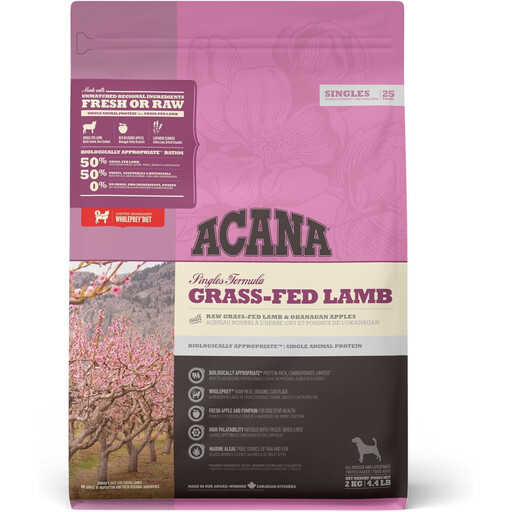
Key Feature: This single-protein lamb recipe is the ideal solution for dogs with pronounced food sensitivities. With 50% quality animal ingredients, it provides a solid nutritional foundation while keeping the ingredient list short.
What We Love:
Best For? Ideal for adult dogs of all sizes, especially those with delicate digestion or known intolerances to chicken or beef.
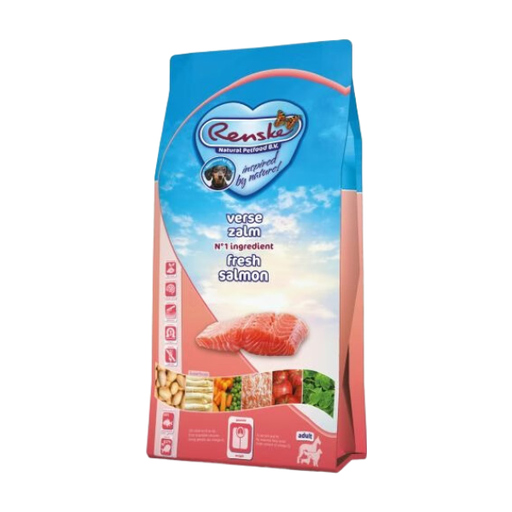
Key Feature: Fresh salmon as the #1 ingredient! This gluten-free dog kibble is a goldmine of omega-3s, the well-known allies for healthy skin and a shiny coat. Its recipe is also designed to be lighter, ideal for maintaining a healthy weight.
What We Love:
Best For? Perfect for adult dogs of all breeds, especially those prone to dry skin or a dull coat. It's also a great choice for dogs that need to watch their weight.
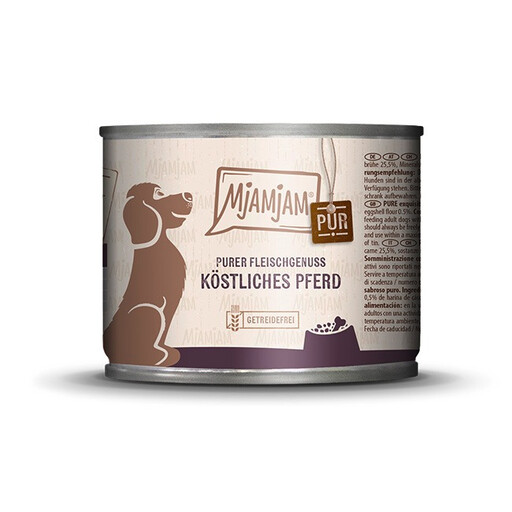
Key Feature: Minimalism at its best. This single-protein wet dog food gets straight to the point with an ultra-short and clear ingredient list: horse, broth, and minerals. That's it. It's the ultimate option for dogs with multiple allergies, as horse is a "novel" protein that very rarely causes allergic reactions.
What We Love:
Best For? Essential for dogs of all ages suffering from multiple allergies or an ultra-sensitive digestive system. It's also a great option for adding variety to their diet or tempting picky eaters who turn their noses up at their bowl.
A good diet is the foundation, but treats matter too! To reward your dog without undoing all your hard work, choose treats with an equally impeccable ingredient list.
Discover our selection of limited ingredient dog treats, designed to indulge your pet without compromising on health.
Not necessarily. A grain-free diet isn't a requirement for every dog. It is mainly recommended for dogs showing signs of intolerance (skin problems, digestive issues). A healthy dog with no particular sensitivities can thrive on a high-quality diet that includes good grains (preferably whole grains). In any case, if you have doubts or if your dog has a health problem, your first step should always be to consult your veterinarian.
To avoid upsetting their stomach, the golden rule is a gradual transition. The switch should take place over 7 to 10 days. The method: mix the new kibble with the old, slowly increasing the proportion of the new food. Start with a ratio of 25% new kibble to 75% old, then move to 50/50, then 75/25, before finally reaching a bowl with 100% of the new formula.
No, these two terms refer to two very different things. "Grain-free" guarantees that the recipe contains no grains (no wheat, corn, rice, etc.). "Single-protein" means that 100% of the animal protein comes from one single source (e.g., only lamb). A food can, of course, be both, and this is often the case for formulas designed for the most sensitive dogs.