
Livraison le jour même ou le lendemain

Qualité garantie

Débloquez vos offres de bienvenue: Livraison GRATUITE | Jusqu'à -80 % | 30 jours d'essai gratuits à JoyPlus
Téléchargez l'application
Choosing the right food for your dog can often feel overwhelming, especially with so many options on the market. Among the increasingly popular choices, grain-free dog food is emerging as a top solution to more closely match a dog's physiological needs. Whether for a dog with sensitive digestion or simply to prioritise a protein-rich formula, knowing how to decipher labels is key to making an informed choice.
This guide provides everything you need to know to select the diet that will truly contribute to your companion's well-being.
The "grain-free" label isn't everything; the quality of a kibble depends on many other factors. Here are the essential criteria to scrutinise to ensure you make the right decision.
The secret to a great protein-rich dog food? The quality of its ingredients. Dogs are carnivores, meaning animal proteins are the essential fuel for their muscle mass and vitality.
Every dog is unique. Its age, breed, activity level, and sensitivities are all factors to consider.
"Grain-free" (no wheat, corn, rice, etc.) does not mean "carb-free." Manufacturers replace grains with legumes (lentils, chickpeas, peas) or tubers like sweet potatoes. These ingredients provide fibre, vitamins, and energy, but you must ensure their proportion in the recipe remains reasonable compared to that of animal proteins.
To guide you, our editorial team has analysed and selected several products that stand out for their high-quality composition and nutritional philosophy.
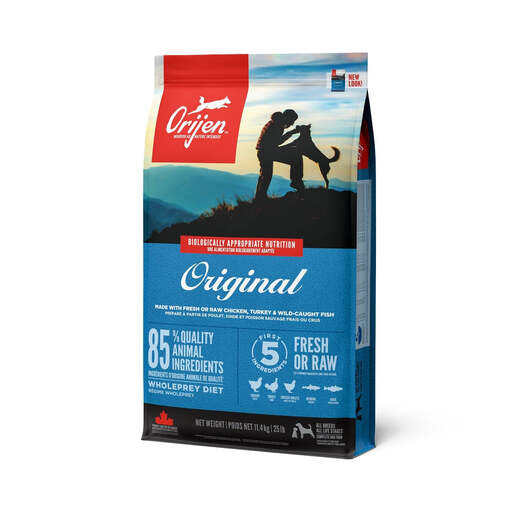
Why it stands out:Orijen dog food is renowned for its "WholePrey" philosophy, which involves incorporating not just muscle meat but also organs and cartilage for a complete nutritional profile that closely mimics a natural diet. This recipe combines free-run chicken and turkey, wild-caught fish, and eggs for remarkable protein quality and diversity.
Key features:
Who is it for? This food is ideal for adult dogs of all sizes with a moderate to high activity level. It will satisfy owners looking for a premium, biologically appropriate, and meat-rich diet.
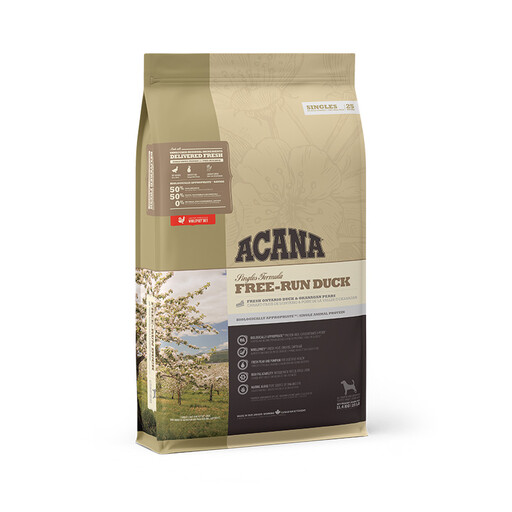
Why it stands out: The Singles range from Acana was specifically designed for sensitive dogs. This single-protein recipe relies on duck as its sole animal source. With 50% duck, it is an excellent hypoallergenic option for dogs that is both highly digestible and very palatable.
Key features:
Who is it for? An excellent solution for adult dogs prone to food intolerances, fragile digestion, or skin problems. Its high palatability also makes it a great choice for picky eaters.
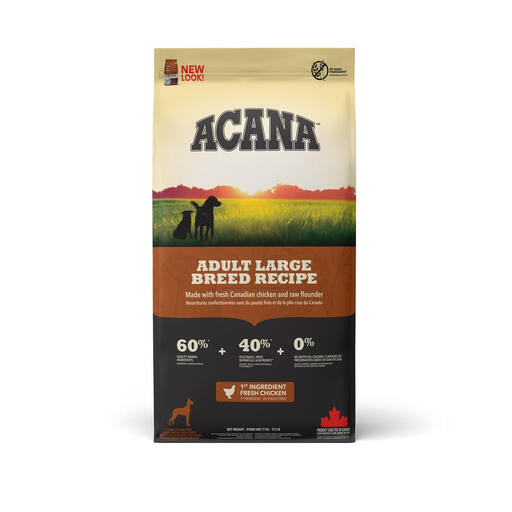
Why it stands out: Specifically formulated for large-build dogs, this Acana large-breed dog food contains 60% quality animal ingredients. The focus is on bone and joint support, with high levels of glucosamine (1200 mg/kg) and chondroitin (900 mg/kg), and a controlled calcium level (1.5%).
Key features:
Who is it for? A perfectly calibrated food for adult large-breed dogs (over 25 kg) to meet their specific metabolic needs and preserve their long-term bone and joint health.
Canine nutrition is a complex field, and every animal is an individual case. If the products in our selection don't perfectly match your needs or if you wish to explore other avenues, feel free to browse our complete catalogue.
Discover our full range of holistic dog food
While many dogs, especially those with sensitive digestion, thrive on it, a grain-free diet is not a requirement for everyone. The number one criterion remains the overall quality of the ingredients, starting with the proteins. Note that for a dog with a medical condition (kidney failure, pancreatitis, etc.), a veterinarian's advice is essential before any dietary change.
Any dietary transition must be gradual to avoid upsetting your dog's digestive system. The principle is simple: mix the new food with the old over 7 to 10 days, gradually increasing the proportion of the new food. During this period, monitor their stool and overall condition.
Absolutely not, for a dog in good health. A diet rich in quality protein is not a danger; quite the opposite. A dog is physiologically designed to efficiently metabolise proteins, which are essential for its muscles and entire body. Only animals with specific medical conditions (like advanced kidney failure) require a controlled-protein diet, and only on a veterinarian's recommendation.