
Livraison le jour même ou le lendemain

Qualité garantie

Débloquez vos offres de bienvenue: Livraison GRATUITE | Jusqu'à -80 % | 30 jours d'essai gratuits à JoyPlus
Téléchargez l'application
Giving your dog the best starts with what's in their bowl. The market for grain-free dog food is booming, promising easier digestion and a healthier composition. But with overcrowded shelves, finding the right one can be a real puzzle. There's often a wide gap between tempting marketing claims and the reality of the ingredients list. This guide is here to help you see clearly and make the right choice for your companion's health.
The overwhelming number of options comes with sometimes misleading marketing strategies. Here are two key things to watch out for to avoid falling into the trap.
The phrase "?rich in fresh chicken?" on a bag sounds like a promise of quality. But looks can be deceiving. It's crucial to understand how this percentage is calculated: fresh meat contains about 70% water. Its weight is measured before cooking and dehydration. Once processed into kibble, its actual share in the final product is drastically reduced. Paradoxically, an ingredient list that starts with "?dehydrated chicken?" or "?chicken meal?" often guarantees a much higher concentration of animal protein than a formula that banks on a high percentage of fresh meat.
A grain-free dry food isn't automatically superior. To replace wheat or corn, manufacturers turn to other starch sources like potatoes, peas, or sweet potatoes. While these alternatives can be beneficial, especially in food for dogs with sensitive digestion, an excessively high carbohydrate content, regardless of its source, is not ideal. The key is to take a step back and analyse the overall composition: the quality and proportion of animal protein should remain your number one criterion.
To choose a natural dog food that's truly suited to their needs, scrutinise these three points.
The quality of a kibble is judged first and foremost by its protein. Prioritise clear and precise ingredient lists.
The analytical constituents table is a goldmine of information about the nutritional balance. For adult dog food for a dog with normal activity, here are the benchmarks:
In grain-free kibble, carbohydrates come from legumes (peas, lentils) or tubers (sweet potato, potato). They provide energy and essential fibre for good digestion. The presence of prebiotics (like FOS and MOS) is a real plus for supporting gut flora, a major asset for dogs with fragile digestion.
Because every dog is unique, here is a selection of products that meet different needs, all while adhering to the quality criteria we've just detailed.
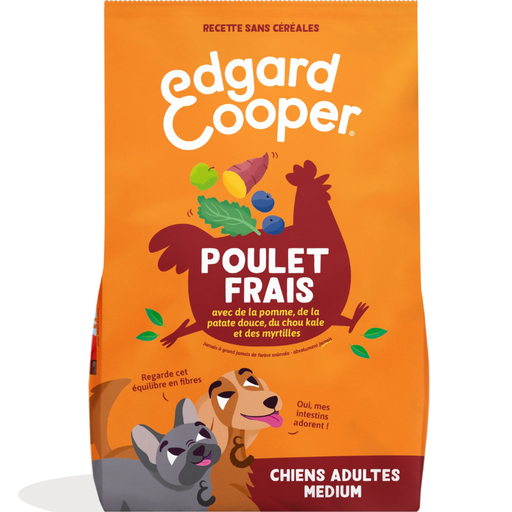
Why we chose it: Ideal for owners seeking total transparency and a recipe rich in fresh, identifiable ingredients—a far cry from opaque formulas and by-products.
The ingredient list is crystal clear: 40% fresh chicken at the top of the list. The brand plays the transparency card by not using meat meals, which sidesteps the "fake fresh meat" trap.
The recipe is enriched with fruits, vegetables, and herbs (mango, blueberries, carrots) for a diverse nutrient cocktail. It also contains prebiotics (MOS and FOS) for intestinal health.
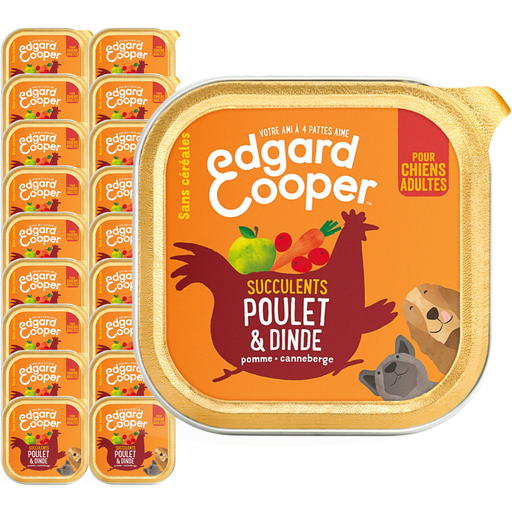
Why we chose it: An excellent option for those who practice mixed feeding (a combination of dry and wet food) or for dogs who turn their nose up at their bowl. The moisture in the p?té helps stimulate appetite.
This p?té is formulated without grains or added sugars. It relies on a simple composition with 56% fresh chicken and turkey, fruits, and vegetables, avoiding unnecessary fillers.
As a complete food, this p?té can be a meal in itself. Its high moisture content (82%) also contributes to your dog's hydration.
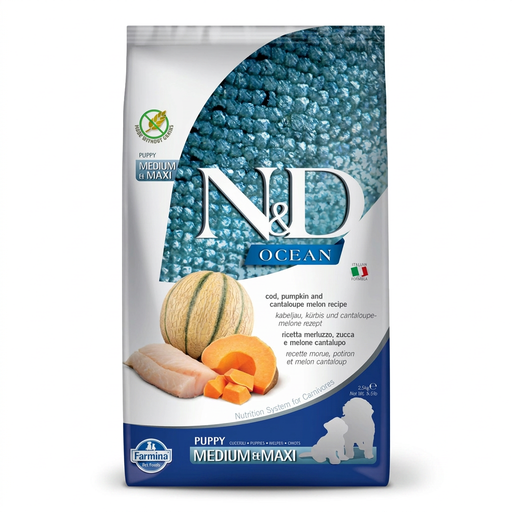
Why we chose it: For owners of medium and large breed puppies who want to start them off on the right paw with a grain-free diet, rich in quality protein and essential nutrients for growth.
The formula is not only grain-free but also legume-free (no peas or lentils), opting instead for sweet potato and pumpkin. The proteins come from clearly identified marine sources (cod, herring).
Rich in Omega-3 fatty acids (DHA and EPA) from herring oil, which are essential for a puppy's brain development, as well as for healthy skin and coat.
The main meal is sorted. Now, how about some little rewards? Discover our selection of quality treats to delight your companion.
To avoid upsetting their digestive system, any dietary transition must be done gradually. Over a period of 7 to 10 days, mix the new kibble with the old, slowly increasing the proportion of the new food. Start with 25% new kibble and 75% old, then move to 50/50, and so on, until the meal is 100% new kibble.
Often favoured for dogs with sensitivities or allergies, grain-free food can actually be suitable for most dogs. However, every animal is unique. The absence of grains is not the sole criterion for quality. The most important thing is to choose a balanced diet, rich in quality animal protein, and tailored to your dog's age, size, and activity level. If in doubt, or if your dog has specific health issues, consulting your veterinarian is essential.
The daily amount depends on several factors: your dog's weight, activity level, age, and metabolism. Every bag of kibble includes a feeding guide chart. These guidelines are a good starting point. Feel free to adjust the portion to maintain their ideal body weight: if you can feel their ribs but not see them, and their waist is clearly defined, their weight is ideal.