
Livraison le jour même ou le lendemain

Qualité garantie

Débloquez vos offres de bienvenue: Livraison GRATUITE | Jusqu'à -80 % | 30 jours d'essai gratuits à JoyPlus
Téléchargez l'application
Providing the best possible nutrition for your canine companion is a top priority for any owner. But with the overwhelming number of options available, it can be difficult to know where to start. The popularity of grain-free dog food continues to grow. This trend is part of a broader quest for a natural diet for dogs, one that is meant to more closely mimic their ancestral diet.
Our goal isn't to dictate your purchasing decisions. Instead, we aim to give you the keys to making an informed choice by equipping you with objective criteria. We will break down the characteristics of a good grain-free kibble and present a selection of products that check all the boxes for quality.
Before comparing brands, let's review the fundamentals for judging the quality of a kibble.
The dog is a carnivore with omnivorous tendencies, but its diet must remain rich in animal protein. Simply put, when reading the label, the first ingredients on the list should be clearly identified meats or fish ("fresh chicken," "dehydrated turkey") and not "animal by-products" or meals of questionable origin. Dog food rich in high-quality protein is the cornerstone of their muscle mass, energy, and overall health.
To replace grains (wheat, corn, rice, etc.), manufacturers turn to other carbohydrate sources like peas, lentils, or sweet potatoes. The advantage of these ingredients is their low glycemic index. Also, pay attention to the WholePrey concept found in some leading brands. The principle is to include not only muscle meat but also organs and cartilage. The result is a much more complete and natural nutritional intake, which limits the need for synthetic additives.
A brand that is transparent about the origin of its ingredients and its manufacturing methods is almost always a hallmark of trust. Knowing where and how your dog's food is made is essential for making a responsible choice.
Keeping these criteria in mind, here are some products that stand out for a natural diet for dogs.
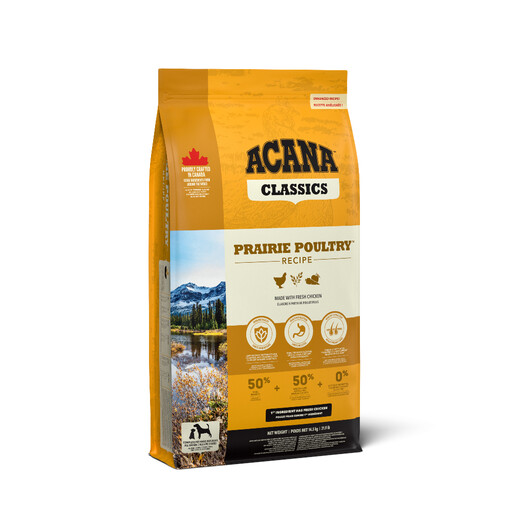
Why we love it: The Acana Classics Prairie Poultry recipe is based on a well-designed balance: 50% quality animal ingredients, including free-run chicken and turkey. Unlike many 100% grain-free recipes, this one includes whole, low-glycemic oats. This is a benefit for providing stable energy and fibre that aids digestion.
Advantages:
Who is it for? An excellent option for adult dogs of all breeds. Ideal if you are looking for a diet rich in animal protein but supplemented with healthy carbohydrates for more evenly distributed energy throughout the day.
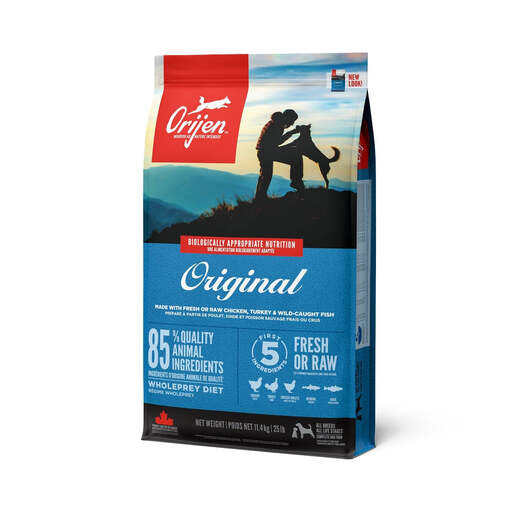
Why we love it: The reputation of Orijen kibble precedes it: it stands out for its exceptional concentration of animal ingredients. The Original recipe boasts an impressive 38% crude protein, sourced from a wide variety of ingredients: free-run chicken and turkey, wild-caught fish, and nest-laid eggs. This diversity closely mimics the natural and varied diet of a wild canid.
Advantages:
Who is it for? Perfect for very active dogs and discerning owners who want to get as close as possible to a carnivore diet, with food that is dense in nutrients and protein.
Why we love it: With the Adult Dog recipe, Acana takes it up a notch: 60% animal ingredients, including poultry, fish, and eggs. One-third of these meats are incorporated fresh or raw, which maximizes nutritional value and palatability. The extra touch? A freeze-dried liver coating that makes this kibble irresistible, even for the pickiest of eaters.
Advantages:
Who is it for? This recipe is for adult dogs of all sizes. It is particularly recommended for those who need a boost in flavour and a rich diet to maintain optimal vitality and physical condition.
Every dog is unique. The three products in our selection are just a starting point. If poultry is your preferred ingredient but you want to explore other brands or variations, we have prepared a broader selection for you.
Discover our selection of poultry-based kibble for dogs
Not necessarily. While it is an excellent solution for dogs with a confirmed sensitivity or allergy to grains, it is not a mandatory switch for everyone. A perfectly healthy dog can tolerate high-quality grains very well. The most important thing remains the overall quality of the ingredients and the balance of the recipe. When in doubt, always consult your veterinarian.
For a healthy, active adult dog, a diet rich in quality protein is highly beneficial: it supports muscle mass and energy levels. However, be cautious: for senior dogs, less active dogs, or those with certain health conditions (especially kidney-related), an excessive protein intake can be counterproductive. A discussion with your veterinarian is essential to determine the ideal protein level for your companion.
To avoid digestive upset, the key is a gradual transition. Ideally, over 7 to 10 days, mix the new kibble with the old, progressively increasing the proportion of the new food. Start with a 25/75 ratio (new/old), move to 50/50, then 75/25, before reaching 100% of the new recipe. And of course, always ensure your dog has fresh water available.