
Livraison le jour même ou le lendemain

Qualité garantie

Débloquez vos offres de bienvenue: Livraison GRATUITE | Jusqu'à -80 % | 30 jours d'essai gratuits à JoyPlus
Téléchargez l'application
Choosing the right food for your cat can be a daunting task. With aisles overflowing with promises, it's hard to separate fact from fiction and marketing from true nutritional quality. As a product expert at Joybuy, my mission is to help you see things more clearly. Let's break down the most common pitfalls and the essential criteria for selecting the perfect grain-free cat p?té for your companion.
Concerned about their pet's well-being, many cat owners are swayed by colourful packaging and catchy slogans. Here are the most frequent mistakes, which can be costly for your wallet… and your cat's health.
But avoiding pitfalls isn't enough to make the right choice. Here are the three fundamental criteria to examine to recognise a quality wet cat food.
The cat is a carnivore: it needs high-quality animal proteins. To evaluate a product, look at the ingredient list:
A good grain-free p?té does more than just exclude wheat, corn, or rice. You should also look for the complete absence of:
As a general rule, a short ingredient list is a sign of quality. MjAMjAM p?tés, for example, illustrate this principle well with clear compositions: meat, a cooking broth, a vegetable or fruit, and minerals. That's it.
Nutritional needs vary depending on your cat's age, lifestyle, and health. A quality range should therefore offer targeted options:
Rather than an endless list, we've chosen to match cat profiles with products that precisely meet their needs, based on the quality criteria we've just defined.
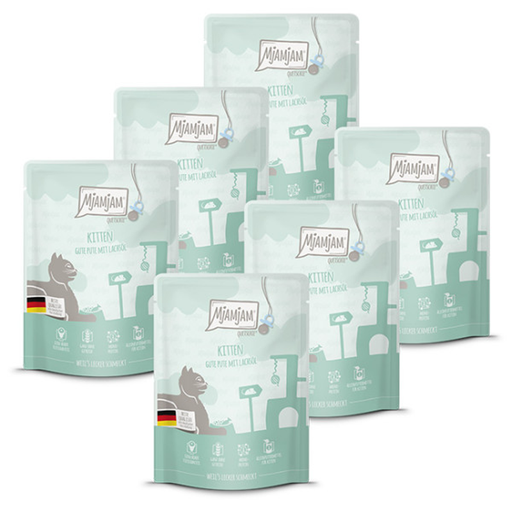
Why this choice? This formula is specially designed for the high energy needs of kittens. It provides the right balance of protein and fat, essential for proper muscle and skeletal development.
With 70% turkey, no added sugar, and no grains, this p?té avoids unnecessary fillers that could disrupt a kitten's still-fragile digestive system.
The recipe is enriched with salmon oil, an excellent source of omega-3 fatty acids (DHA), which are crucial for brain and vision development.
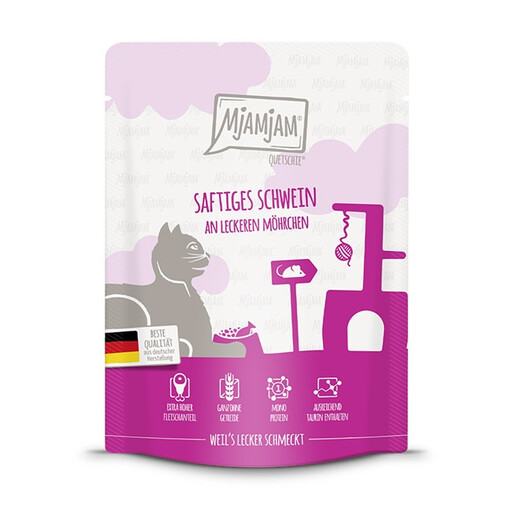
Why this choice? Its single-protein formula (pork only) is an excellent option for cats prone to food intolerances. It helps rule out common allergens like chicken or beef.
The ingredient list is intentionally minimalist: 70% pork, broth, carrots, and minerals. That's it. No mixed meats, grains, or sugars. This simplicity minimises the risk of a reaction.
Perfect for implementing an elimination diet, in consultation with your veterinarian, to precisely identify the source of a food allergy.
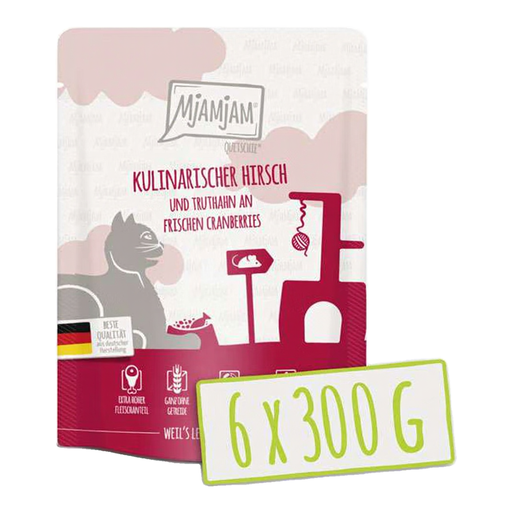
Why this choice? The combination of a premium meat like venison with the tangy touch of lingonberries creates a unique taste experience, capable of stimulating the appetite of the most selective cats.
Here, palatability doesn't come from artificial flavours or added sugars masking a poor composition, but from the quality and originality of the ingredients (67% meat).
A "gourmet" recipe that adds variety to the food bowl while scrupulously respecting the needs of a carnivore.
Explore our full selection of products that meet these strict quality criteria and current regulations.
Yes, and it's often an excellent option. A quality, grain-free sterilised cat p?té is naturally higher in protein and lower in carbohydrates. This composition helps preserve muscle mass while limiting fat storage—a crucial point for sterilised cats, whose metabolism tends to slow down. Just be sure to choose a formula with a moderate fat content.
The ideal amount depends on your cat's weight, age, and activity level, as well as the product's calorie density. As a guideline, an adult cat weighing 3 to 5 kg generally consumes between 200 and 400 grams of cat p?té per day, divided into several meals. The safest approach is to follow the instructions on the packaging (can or freshness pouch) and adjust the portion to maintain a healthy weight.