
Livraison le jour même ou le lendemain

Qualité garantie

Débloquez vos offres de bienvenue: Livraison GRATUITE | Jusqu'à -80 % | 30 jours d'essai gratuits à JoyPlus
Téléchargez l'application
Naturally, you want the very best for your cat. But when it comes to their diet, things can get complicated. The grain-free trend is gaining ground, with a simple promise?: to get closer to a cat's natural diet. Our guide is here to help you decode the labels and choose the best option for your feline friend.
Before filling your companion's bowl, there are a few criteria to check to ensure you're choosing a high-quality product that's perfectly suited to their needs.
It all comes down to the label. For a carnivore like a cat, protein quality is the number one criterion. Prioritise recipes where meat or fish is the first ingredient, with clear terms like "fresh chicken" or "salmon", and avoid vague wording like "animal by-products". Also, remember to check if it's a "complete" food (a full meal) or "complementary" (just a treat or an extra).
The debate rages on among cat owners?: should you opt for wet cat food or dry cat food?? In reality, it all depends on your pet's habits, as well as your own.
The ideal solution? Often, it's mixed feeding, which combines the benefits of both.
A kitten doesn't have the same needs as a senior cat, and an indoor cat doesn't have the same energy expenditure as an outdoor adventurer. Formulas for sterilised cats, for example, are lower in fat to prevent weight gain, and their mineral balance is adjusted to protect the often more fragile urinary system. Does your cat have a sensitive stomach? Look for a sensitive digestion cat food range, enriched with highly digestible ingredients and prebiotics to support their intestinal flora.
After reviewing dozens of products, here are the ones that caught our eye.
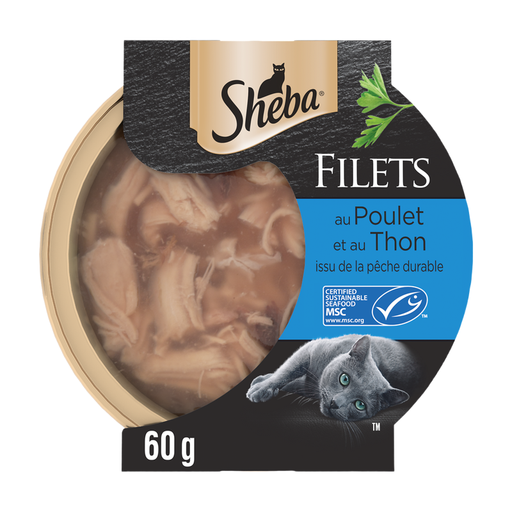
Why we love it?: Please note, this is a complementary food, best viewed as a luxury treat rather than a meal. The recipe is simple and effective?: real fillets of chicken (35%) and tuna (4%) in a light sauce. With no artificial colours or preservatives, it gets straight to the point.
The pros?:
Which cat is it for? Perfect for spoiling your cat from time to time, or for adding a tasty, hydrating touch to their kibble ration.
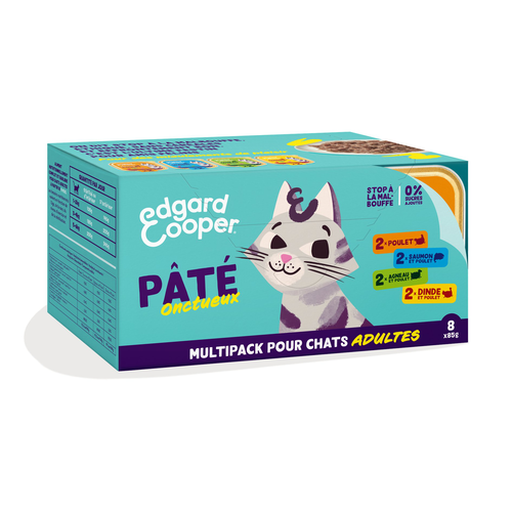
Why we love it?: With this pack, the Edgard & Cooper brand offers a truly complete and balanced meal, guaranteed grain-free. The variety pack includes four recipes (chicken, salmon/chicken, turkey/chicken, lamb/chicken), all made with fresh meat and fish. The brand highlights its easy-to-digest recipes, with no added sugars, preservatives, or artificial colours.
The pros?:
Which cat is it for? Ideal if wet food is your cat's main meal. The variety pack is an excellent way to mix up the flavours and satisfy even the pickiest eaters.
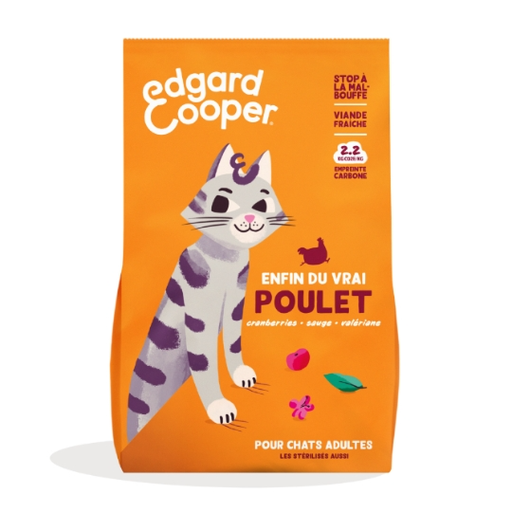
Why we love it?: This kibble stands out for its high content of fresh free-range chicken (50%). The grain-free recipe is boosted with prebiotics (MOS, FOS, and inulin) to support intestinal flora. This is a real plus for cats with sensitive digestion. Salmon oil, in turn, promises a shiny coat and healthy skin.
The pros?:
Which cat is it for? An excellent foundation for a daily diet, whether as 100% kibble or as part of a mixed-feeding plan. It's particularly recommended for cats that need a little help with their digestion.
Is your cat particularly fussy or do they have very specific needs? If our selection hasn't won you over, there are many other products to explore.
Discover other options in our pet supplies department to find the perfect match.
Cats are obligate carnivores. In practical terms, this means their digestive system is primarily designed to metabolise animal proteins. Grains, such as wheat or corn, are not part of their natural diet. A grain-free recipe is therefore often more digestible, especially for sensitive cats. It prioritises high-quality proteins, thus getting closer to their fundamental nutritional needs.
There's no single answer, as each format has its own strengths. Wet cat food is unbeatable for hydration, which is essential for kidney and urinary system health. Dry cat food is more convenient for daily use, stores better, and the chewing action helps fight tartar. That's why many vets recommend mixed feeding to get the best of both worlds.
To avoid any stomach upset, any dietary transition should be done gradually. Ideally, spread the change over 7 to 10 days. Mix the new food with the old, progressively increasing the proportion of the new one. For example?: start with 25% new food and 75% old, then move to 50/50, then 75/25, before reaching 100% of the new recipe. Throughout this phase, keep a close eye on your cat and their stool.