
Livraison le jour même ou le lendemain

Qualité garantie

Débloquez vos offres de bienvenue: Livraison GRATUITE | Jusqu'à -80 % | 30 jours d'essai gratuits à JoyPlus
Téléchargez l'application
As a cat owner, you know that choosing the right food is essential for your pet's health and well-being. Faced with overwhelming store shelves, it can be difficult to find your way, especially when you're looking for a grain-free cat food that meets specific needs.
This guide is here to help you see things more clearly. As a product expert at Joybuy, my mission is simple: to decode labels and guide you toward an informed choice, far from the marketing jargon. Together, let's review the essential criteria and discover a selection of products that deliver on their promises.
Before diving into our selection, let's go over the key points to make the right choice for your cat.
A good high-protein cat food is easy to spot: meat or fish should always be the first ingredient on the list. Remember, cats are strict carnivores. Their diet must therefore consist mainly of animal proteins. Favour clearly identified protein sources (e.g., "fresh chicken," "dehydrated lamb") and avoid vague terms like "animal by-products." As a general rule, a short and readable ingredient list is a good sign.
Every cat is different. Their nutritional needs vary with age, activity level, and overall health.
Mixed feeding, which involves combining wet food (p?té) and kibble, is an excellent strategy. P?té, which is full of water, ensures good hydration—a crucial point for the health of their urinary system. Kibble, on the other hand, contributes to oral hygiene through the mechanical action of chewing.
Let's now move on to our selection of products that stand out for the quality of their composition and their ability to meet specific needs.
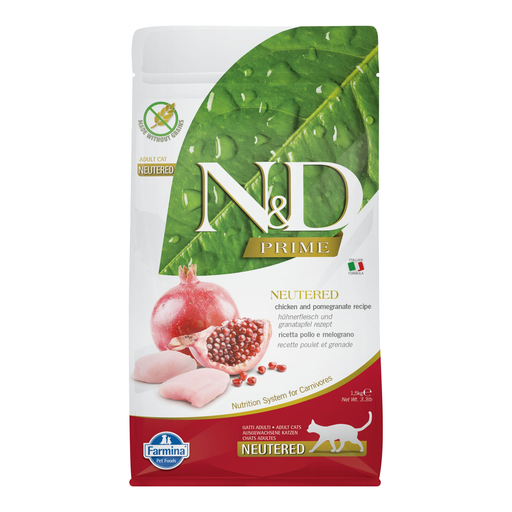
What sets it apart
The Italian brand Farmina offers a formula specially designed for the changed metabolism of sterilised cats. The composition is packed with protein: the manufacturer claims 98% of the protein is of animal origin, all without any grains.
Key features
Who is it for?
This kibble is an excellent option for owners of adult sterilised cats who want a premium, high-protein diet to ensure vitality and an ideal weight.
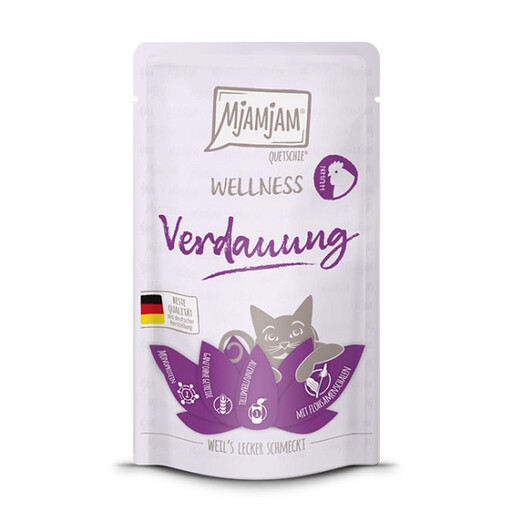
What sets it apart
The German brand Mjamjam is renowned for its natural-style recipes. This single-protein p?té, made exclusively with chicken, is designed for maximum digestibility. Its clean recipe and high meat content make it the perfect ally for sensitive stomachs.
Key features
Who is it for?
This p?té is ideal for adult cats, especially those suffering from sensitive digestion or intolerances. Its palatable texture will also win over even the pickiest eaters.
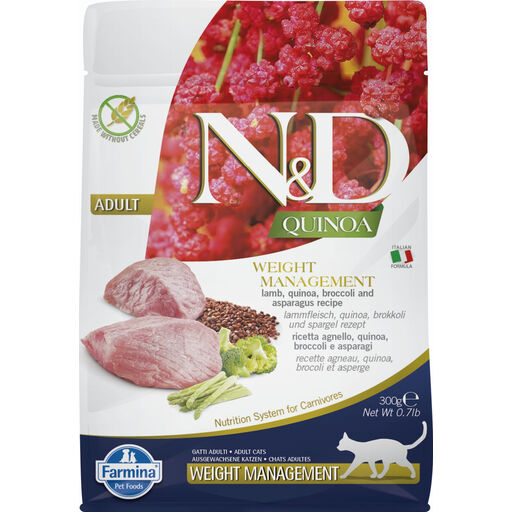
What sets it apart
This recipe from Farmina's Quinoa range is an advanced nutritional solution for weight management. It combines a high-quality protein (lamb) with quinoa, a superfood with multiple benefits. The formula is designed to help cats reach or maintain their ideal weight without sacrificing muscle mass.
Key features
Who is it for?
This light kibble is a preferred solution for adult cats that need to watch their weight or lose a few pounds, without compromising on high-quality protein intake.
Feline nutrition is a complex subject, and every cat has its own tastes and needs. If our selection doesn't perfectly match your companion, don't worry: many other options exist.
? Explore our full selection of vet-recommended indoor cat food and find the perfect formula for your feline friend.
The cat is a strict carnivore. Its digestive system is designed to process animal proteins and fats, not to digest large amounts of carbohydrates. A grain-free diet is therefore closer to its natural diet. It is particularly recommended for cats that are sensitive or allergic to grains like wheat or corn.
To avoid any digestive upset, a change in diet must be done gradually. The transition should be spread over 7 to 10 days. Progressively mix the new food with the old, increasing the dose little by little:
Wet food (p?té, terrine, mousse, etc.) contains a lot of water (about 80%). This is a major benefit for your cat's hydration and the health of its urinary system. It is also often more popular with picky cats. Kibble (or dry food) is more energy-dense, easier to store, and its crunchy texture helps fight tartar. Combining the two is what we call mixed feeding: it's often the ideal solution to enjoy the benefits of each format.