
Livraison le jour même ou le lendemain

Qualité garantie

Débloquez vos offres de bienvenue: Livraison GRATUITE | Jusqu'à -80 % | 30 jours d'essai gratuits à JoyPlus
Téléchargez l'application
Choosing the right food for your cat can quickly become a headache. Faced with shelves full of promises, the "grain-free" label sounds like a guarantee of absolute quality. The reality, however, is more nuanced. As a Product Recommendation Manager at Joybuy, my mission is to help you decode labels and navigate marketing traps to provide the very best for your companion.
The pet food market is ultra-competitive, and marketing claims can sometimes be deceptive. Here are the 3 essential points to watch out for before you choose.
So, how do you sort through the options? By focusing on objective criteria that don't lie.
The cat is an obligate carnivore. Its metabolism is optimised to digest animal proteins and fats, not plants.
As we've seen, "grain-free" does not mean "carb-free." A good formula aims to limit this intake as much as possible to mimic a cat's natural diet.
Good ingredients aren't just about protein and fat. Certain "bonuses" make all the difference.
To put theory into practice, here is our selection of products that tick all the boxes, for different types of cats.
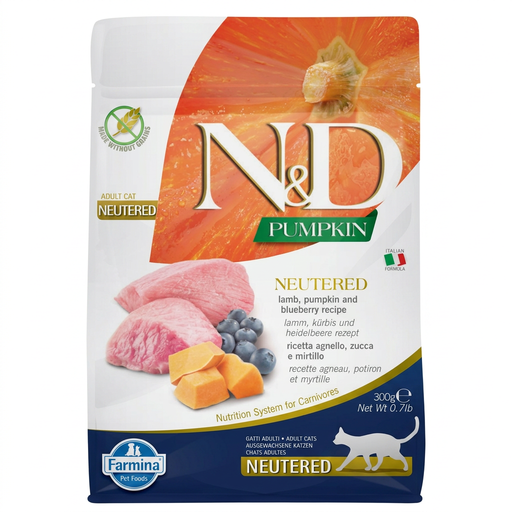
Why it's a great choice: Sterilisation slows metabolism and increases the risk of weight gain. This recipe is calibrated to meet this specific need: maintaining a healthy weight without your cat going hungry.
It goes beyond just being "grain-free." Its formula combines low fat (11%) and high fibre (5.1%) for maximum satiety. The calorie intake is controlled, sidestepping the trap of excess carbs.
Farmina states 96% animal-based protein (lamb). This helps preserve muscle mass while controlling weight. The added pumpkin aids digestion.
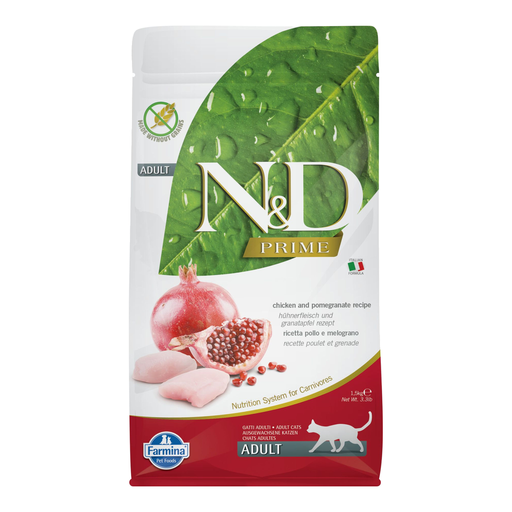
Why it's a great choice: For those who want to get as close as possible to a cat's natural diet. The goal: maximum high-quality animal protein for peak vitality and physical condition.
It debunks the "protein mirage" through transparency. The manufacturer states 98% animal-based protein, guaranteeing perfect digestibility, unlike recipes "inflated" with pea protein.
A crude protein level of 36% in a low-glycemic-index recipe, developed with the Animal Nutrition chair of the University of Naples. A mark of quality.
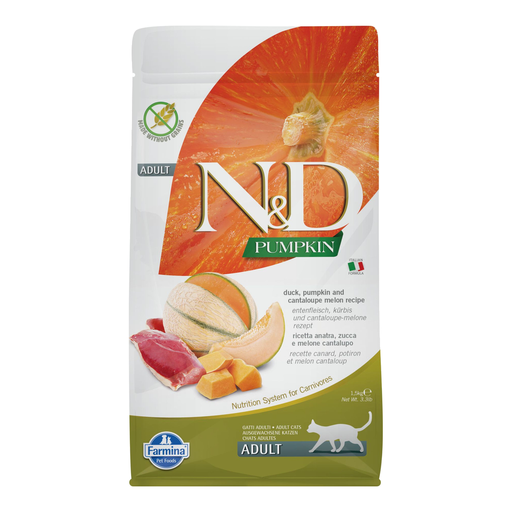
Why it's a great choice: Perfect for delicate stomachs or cats that don't tolerate common proteins (like chicken). Duck offers a digestible alternative, and pumpkin is a well-known ally for good digestion.
The recipe doesn't just remove grains; it adds a solution. The pumpkin, rich in soluble fibre, regulates the digestive tract and promotes calm digestion. It's a targeted and intelligent approach.
A single-protein formula (duck only) to minimise allergy risks, coupled with an animal protein level of 96% (according to the brand). The winning combination for digestible and effective nutrition.
We have selected a complete range of products that strictly adhere to our quality criteria and current regulations.
To avoid upsetting their digestive system, any transition must be gradual. The ideal method: over 7 to 10 days, mix the new kibble with the old. Gradually increase the proportion of the new food: start with a 25/75 ratio, then 50/50, 75/25, until you reach 100% of the new diet.
Yes, for the vast majority of healthy cats, a grain-free recipe rich in animal protein is ideal. However, be mindful of special cases: a cat suffering from a medical condition (kidney failure, pancreatitis, etc.) requires a specific diet. In this case, your veterinarian's advice is non-negotiable before any change.
As these foods are more nutrient-dense, they require precise portioning. Always follow the recommendations on the packaging, adjusting for your cat's weight and activity level. Weigh them regularly and adjust the portion as needed to maintain their ideal weight. This is a crucial point, especially for sterilised cats.