
Livraison le jour même ou le lendemain

Qualité garantie

Débloquez vos offres de bienvenue: Livraison GRATUITE | Jusqu'à -80 % | 30 jours d'essai gratuits à JoyPlus
Téléchargez l'application
Feeding an adult cat requires balancing genuine nutritional completeness with fine-tuned feline sensory preferences. Cats are notoriously sensitive to mouthfeel, sauce viscosity and ambient food temperature, meaning even well-crafted recipes can be spurned if the physical texture fails to satisfy their natural instincts. Navigating the Purina Gourmet range involves understanding how varied culinary styles—from aerated, silky mousses to delicate fillets gently bathed in savoury gravy—cater to distinct eating behaviours.
Beyond immediate texture appeal, everyday household logistics play an essential role in your feeding routine. Choosing between assorted discovery cartons that rotate multiple proteins and cost-effective bulk packs of slow-cooked stews influences freshness, pantry management and feline satisfaction. This guide outlines the core culinary criteria and practical storage considerations so you can select the right meals for your companion with confidence.
Purchasing a twenty-four-can bulk carton offers excellent convenience, but feline appetites can be remarkably specific. Committing to a large uniform batch before confirming your cat welcomes both the meat base and the sauce profile frequently leads to half-empty bowls and wasted stock. Establishing accepted textures through twelve-piece variety boxes first is a much safer route before ordering larger volumes.
Chilling opened tins keeps ingredients wholesome, but low temperatures mute the delicate aromatic volatile compounds that stimulate a cat's olfactory receptors. Offering chilled wet food straight from the fridge often results in instant feline refusal. Allowing chilled portions to rest until they reach room temperature restores their natural scent profile and closely resembles natural feeding conditions.
Combining wet food with crunchy dry kibble is a widespread feeding practice, but treating all wet textures identically can disrupt portion balance. Gravy-rich pouches contribute substantial liquid volume that aids hydration, whereas dense mousses pack concentrated energy into a smaller physical volume. Failing to account for sauce content when adjusting dry rations can lead to either unfinished meals or inadvertent overfeeding.
A cat's tongue structure and chewing habits dictate its food preferences far more than human visual presentation. Selecting a preparation that complements your pet's natural eating style prevents dinner refusal and ensures stress-free meals.
Offering an unvarying single recipe can eventually lead to behavioural food fatigue in discerning adult cats. Rotating complementary proteins preserves feline interest while ensuring broad aromatic engagement.
Wet cat food oxidises steadily once unsealed, dulling vital aromas and altering moisture levels. Selecting the appropriate container format protects flavour fidelity and suits your household rhythm.
Our recommendations pair specific feline dining preferences and household storage requirements with targeted Purina Gourmet formulas.
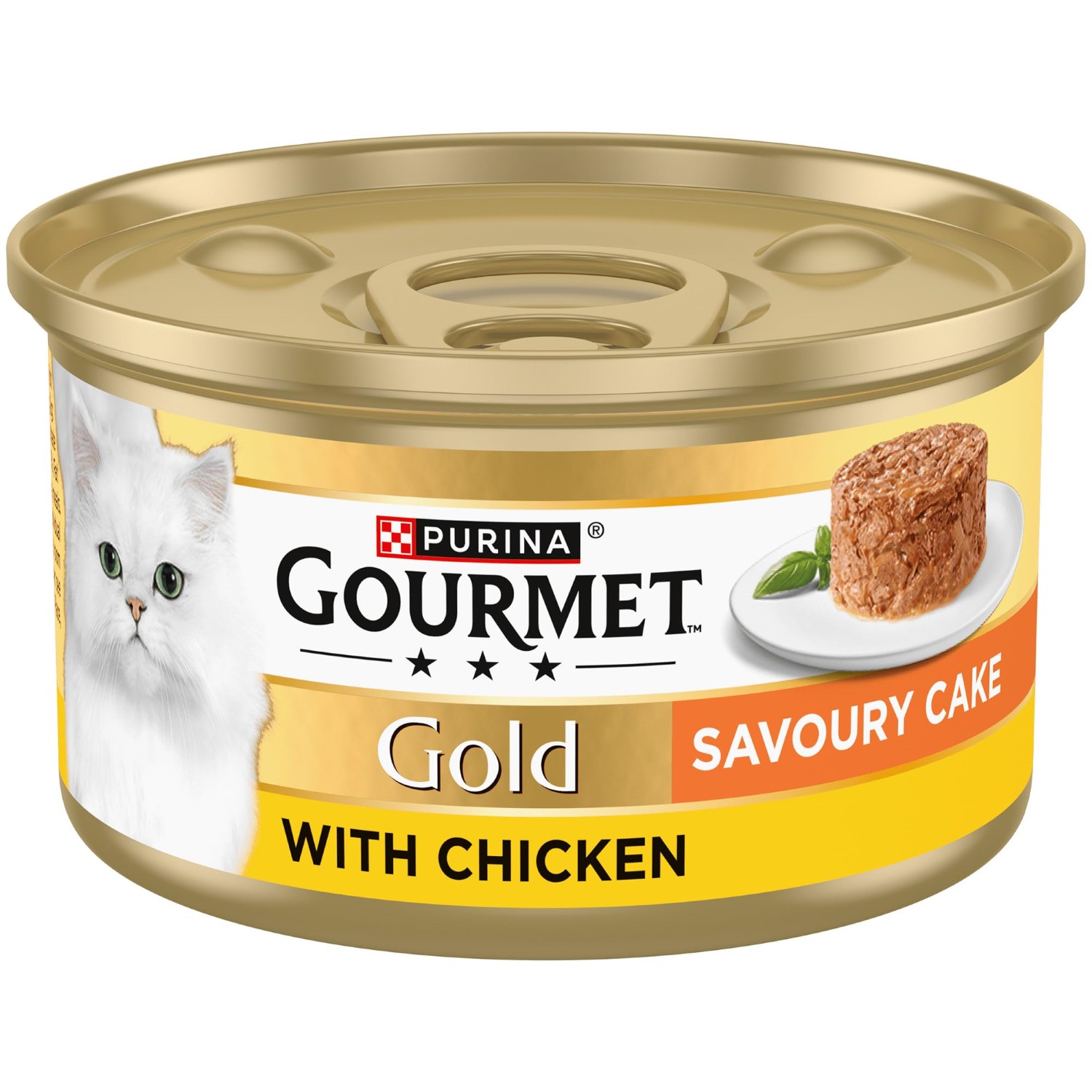
Why This Fits Their Persona: This assortment provides an exceptionally fine, aerated mousse consistency that appeals to felines that dislike dense chunks or struggle to chew firm morsels. Featuring four varied recipes including chicken, salmon, kidney and rabbit across twelve 85 g tins, it offers dependable day-to-day variety while preserving a consistent, velvety mouthfeel.
It resolves the common issue of cats simply licking gravy from stew-style recipes and abandoning dry chunks. The thoroughly blended mousse ensures your cat consumes complete, balanced nutrition in every single mouthful without separating sauce from meat.
The individual 85 g pull-tab cans seal in moisture and delicate scents until serving, allowing you to tempt selective eaters without mashing or pre-mixing.
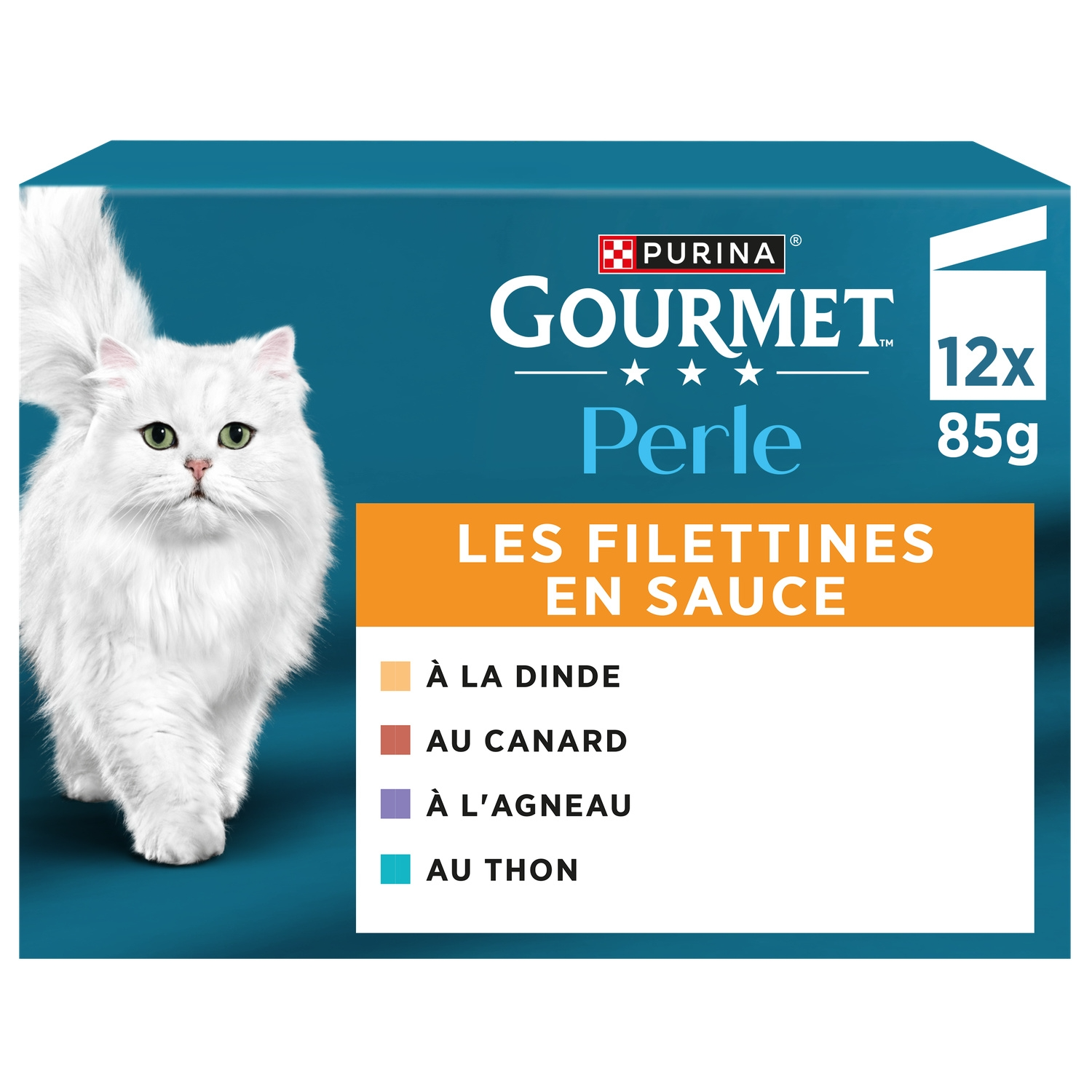
Why This Fits Their Persona: Crafted with finely shredded meat and fish fillets bathed in an abundant savoury sauce, this selection is formulated for cats that relish fluid-rich, textured meals. The twelve 85 g pouches offer four distinct meat and fish recipes prepared without artificial colourants or preservatives, delivering authentic taste variety.
It directly addresses feline dehydration tendencies by delivering significant moisture through its generous gravy base, supporting regular fluid intake alongside the water bowl.
The tear-open pouch design dispenses both delicate fillets and rich gravy smoothly into the bowl in one clean pour, leaving negligible residue inside the packaging.
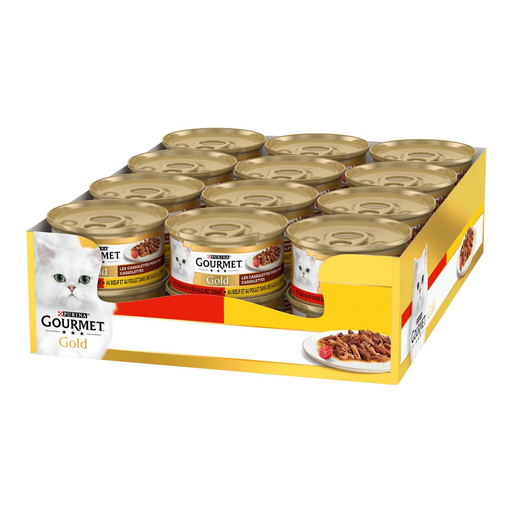
Why This Fits Their Persona: Tailored for owners seeking consistent larder organisation alongside comforting dining for their pet, this carton contains twenty-four 85 g tins of slow-cooked beef and chicken bites. The gentle hint of tomato sauce adds a distinct aromatic nuance to the classic poultry and red meat base, creating an enticing, stew-style experience.
It protects busy pet owners from sudden stock shortages and frequent reordering, helping maintain dietary consistency without triggering the digestive sensitivities caused by sudden food brand switches.
The rigid 85 g tin format stacks securely in kitchen cupboards and provides robust protection against air exposure, keeping the slow-simmered cassolette recipe fresh over longer storage intervals.
If your companion prefers varied protein sources, delicate jellies, or complementary crunchy dry foods, explore our wider selection of cat meals to tailor their daily menu.
Selective cats are predominantly guided by aroma and tongue feel. Felines that tend to lick up sauce and ignore solid pieces usually settle far better on smooth, aerated mousses, which blend flavour and moisture into a single uniform texture. For cats that enjoy chewing, tender shredded mini-fillets in rich gravy release enticing scent plumes that encourage active feeding. Bringing refrigerated meals up to room temperature prior to serving will also maximise aromatic appeal.
Mixed feeding successfully pairs the dental crunch and grazing flexibility of dry biscuits with the essential hydration of wet meals. To avoid accidental overfeeding, review the daily feeding guides on both products and adjust portions proportionately, such as serving one 85 g tin or pouch of wet food split between morning and evening, complemented by a measured quantity of kibble during the day. Always provide easy access to a clean bowl of fresh drinking water.
Once an 85 g tin or pouch is unsealed, exposure to air dries out sauces and oxidises aromatic fats. Unfinished food should be sealed immediately using a snug silicone pet can cap, or transferred from pouches into an airtight glass or plastic food container before being placed in the refrigerator. Use chilled portions within twenty-four to forty-eight hours, and allow the food to stand on the counter for ten to fifteen minutes before serving so it regains its appealing room-temperature aroma.