
Livraison le jour même ou le lendemain

Qualité garantie

Débloquez vos offres de bienvenue: Livraison GRATUITE | Jusqu'à -80 % | 30 jours d'essai gratuits à JoyPlus
Téléchargez l'application
Gouache paint has plenty to recommend it: richly covering colours, water-based dilution and a characteristic matt finish. But not all products are created equal. A 500 ml bottle intended for a classroom isn’t chosen the same way as a set of tubes for illustration. And gouache sticks offer a very different approach, with no brush or palette needed.
Before you place an order, three common mistakes keep cropping up:
An opaque paint masks the surface more effectively. It’s particularly suited to flat areas of colour, posters and graphic illustrations. A concentrated gouache can also be thinned with water to achieve a lighter effect. The amount of water you add directly affects transparency, fluidity and drying time.
Talens Art Creation sets are described as matt, opaque and water-soluble. Once dry, the paint can be reactivated with a damp brush, which makes certain touch-ups easier. However, it does not become waterproof after drying.
The right format depends mainly on how often you’ll use it:
A large volume is only worthwhile if you regularly use that colour. For occasional activities at home, several small tubes reduce waste while offering more shades.
To choose a gouache for children, check the recommended age, any warnings and whether there are small parts. The Maped products shown here are recommended from age 3, under adult supervision. The black and coloured Bruynzeel bottles are also described as suitable for children aged 3 and over.
The term “washable” doesn’t mean you can skip protecting the table and clothes. Use an apron, clean brushes and any splashes while the paint is still wet, then close tubes and bottles carefully to stop them drying out.
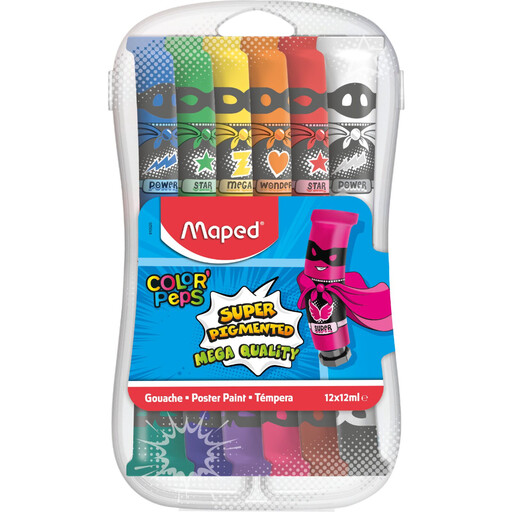
Why this choice suits this profile: The 12 tubes of 12 ml offer a varied palette for first activities at home or school. The reusable box can also double as a palette.
The attached caps reduce the risk of losing them. The paint can also be diluted to achieve more transparent effects.
12 colours, a plastic box and four compartments for dilution. The manufacturer states the product complies with toy safety regulations.
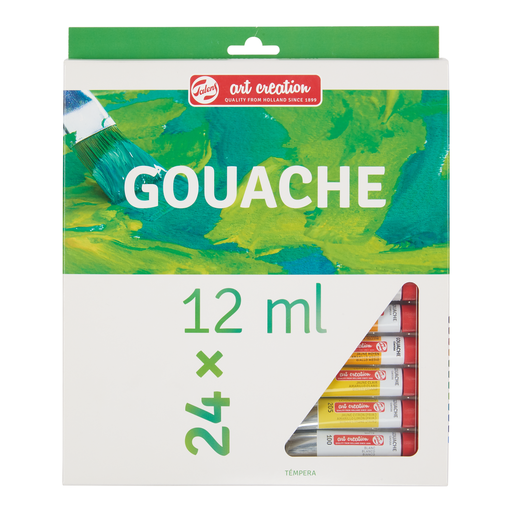
Why this choice suits this profile: Illustrators and experienced hobbyists have 24 shades to work on details, flat areas and mixes, without having to create every colour from a limited palette.
The volume of each tube is clearly stated. The gouache remains water-soluble, without suggesting a waterproof finish.
Matt and opaque finish, described as quick-drying, and dry paint can be reactivated with a damp brush.
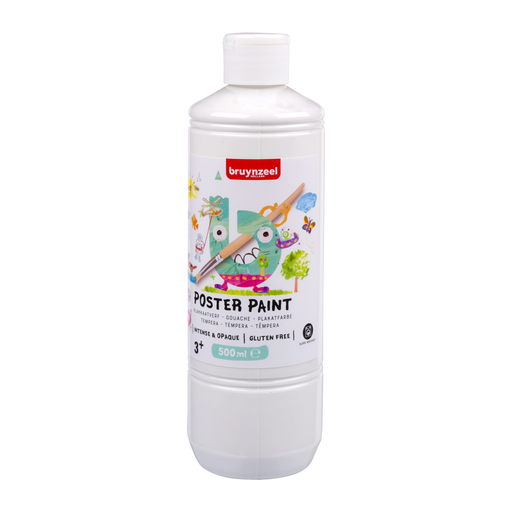
Why this choice suits this profile: The 500 ml bottle is ideal for school workshops, regular family activities and projects that need a base colour in large quantities.
The quick-open cap and dispensing from the bottle make sharing easy. However, cleaning with water only applies while the paint is still wet.
500 ml, matt and opaque finish, with use stated on paper, card, wood, canvas and Bristol board.
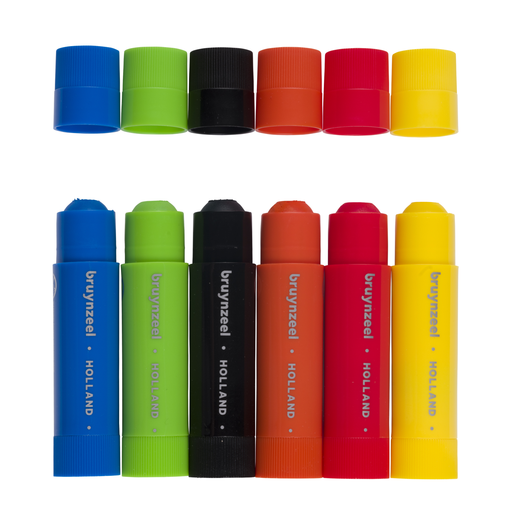
Why this choice suits this profile: The sticks apply directly to paper. They’re handy for travel, quick workshops or for children who prefer a grip similar to a pencil.
No brush or water pot is needed to get started. However, avoid twisting the stick out too far and replace the cap after use.
Six sticks of 10 g, direct application, quick drying as stated by the manufacturer, and can be used on paper, card, wood and glass.
We’ve selected a comprehensive list, updated in real time, of products that meet these demanding criteria and European safety standards.
To achieve an even result with a water-based paint, use a clean palette and add water gradually. Over-dilution can reduce coverage and cause thin paper to buckle. With children, choose paper that’s thick enough, use an apron and protect the work surface.
On wood or glass, clean and dry the surface thoroughly before applying the paint. How well it lasts depends on surface preparation and the formula you use. Test on a small area before starting a full project.
Some products are recommended from age 3, but always check the recommended age on the product page. Small parts, caps or accessories mean adult supervision is required. The paint must not be ingested and contact with eyes should be avoided.
Tubes let you measure and mix colours precisely. Bottles in large volumes suit frequent or group activities. Gouache sticks apply directly, with no water or brush, which cuts down preparation considerably. So the choice depends mainly on the surface, the storage space you have and how often you paint.
How long it lasts varies depending on the formula, storage conditions and how well the container is sealed. Close tubes and bottles after each use, store them in a cool, dry place away from direct light. If the paint becomes lumpy, dry or changes smell, check the manufacturer’s recommendations before using it again.