What should you check?
If you’re buying for someone with coeliac disease, first check that the specific product is labelled gluten free. The format and sugar content are separate considerations to look at afterwards.
| What to consider |
What to check |
Who is it for? |
| Gluten-free labelling |
Look for ‘gluten free’ on the exact product, and check the packaging you receive as well as the ingredients list. |
When someone in my household has coeliac disease, I want the product I’m buying to be labelled gluten free, rather than making assumptions based on its recipe; around 42% of consumers would make this their top priority. |
| Portions and storage |
Compare the number of pots and their drained weight; for a tin or jar, read the storage instructions for after opening. |
If I serve small portions at different times, I look for packaging that helps limit leftovers; around 33% of consumers would put format at the top of their list of priorities. |
| Recipe and sugars |
Read the ingredients and the ‘of which sugars’ figure per 100 g, comparing products in the same category. |
I want to understand what the recipe contains and how much sugar it has before I choose; nearly 25% of consumers would make this comparison their top priority. |
Brands to know when comparing products
A brand may offer several recipes and formats, so check each product intended for someone with coeliac disease for a gluten-free declaration.
St Mamet
Peaches in syrup and fruit recipes in different formats.
- Carrefour labels the St Mamet peaches in syrup ‘GLUTEN FREE’ on its product listing.
- This declaration doesn’t automatically apply to other St Mamet recipes. For its no-added-sugar fruit salad, Auchan lists 12 g of sugars per 100 g: this is separate nutritional information.
Carrefour Classic'
A range to consider if you’re comparing different fruit packaging formats.
- Carrefour lists several formats of fruit in syrup, including orchard fruit cocktail in four 70 g pots, with a drained weight of 70 g per pot.
- If you’re choosing a Carrefour Classic' product for someone with coeliac disease, check the specific product for a gluten-free declaration first.
Auchan
A supermarket own brand to compare for multi-portion fruit cocktails.
- Auchan lists a drained weight of 500 g and 14 g of sugars per 100 g for its four-fruit cocktail in light syrup.
- The recipe and its nutritional values alone aren’t enough to confirm that this product is suitable for someone with coeliac disease.
BACCARA®
Individual pots of fruit in light syrup, sold by ALDI France.
- The individual-pot format may be worth considering if serving portions is important to you.
- If you’re buying for someone with coeliac disease, check the ingredients and gluten-free declaration on the exact pots you’re considering.
MARTIN'S INTERNATIONAL
A multi-portion fruit cocktail to consider if your household can manage leftovers after opening.
- Auchan lists a drained weight of 500 g and advises keeping the product in a covered container in the fridge, and eating it within three days of opening.
- If you’re buying this product for someone with coeliac disease, check its gluten-free declaration separately.
A product on Joybuy
This jar of cherries in syrup may appeal to a household looking for a product labelled gluten free to use in desserts. Its format and the age guidance on the product listing should also factor into your choice.
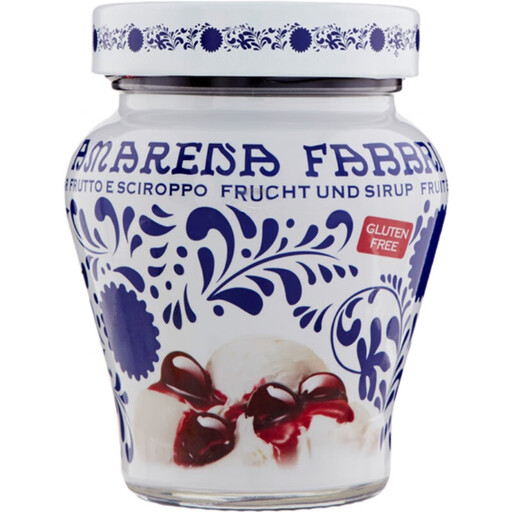 Image unavailable
FABBRI Amarena cherries in syrup, jar, 230 g
If you’re choosing cherries in syrup for desserts for someone with coeliac disease, this product’s description states ‘Gluten free’; check for the same declaration on the jar you receive.
The product listing says it is suitable from 3 years of age: don’t present it as food for infants.
View on Joybuy
Frequently asked questions
Does ‘no added sugar’ mean ‘gluten free’?
No. ‘No added sugar’ tells you about the recipe, not whether it contains gluten. If you’re buying for someone with coeliac disease, look for a gluten-free declaration on the specific product.
What should you check on a tin of fruit in syrup for someone with coeliac disease?
First, look for an explicit ‘gluten free’ declaration on the specific product, then read its ingredients and the allergens listed on the packaging you receive. European regulations govern the gluten-free claim and how allergenic ingredients are presented, so don’t assume a product is suitable just because its recipe appears to be fruit-based.
Are individual pots better than large tins for new parents?
Individual pots are handy if you want to serve separate portions or take them with you, while a large tin may suit several portions eaten at home. Compare the drained weight and, for a larger format, check the instructions for storage after opening. In either case, check for a gluten-free declaration if needed.
How long can you keep fruit in syrup after opening?
Follow the instructions for the product you buy, as they won’t necessarily apply to every tin. For its MARTIN'S INTERNATIONAL cocktail, Auchan advises transferring it to a covered container, keeping it in the fridge and eating it within three days of opening.


