If the rice cakes are for someone with coeliac disease, first choose a product labelled ‘gluten-free’: Regulation (EU) No 828/2014 sets a maximum gluten content of 20 mg/kg for this claim. When shopping for a large family, compare pack sizes, ingredients and nutritional information too. Nutri-Score can be a useful guide when displayed, but its use is voluntary in France, according to the French Ministry of the Economy.
Who are these criteria for?
Households with someone who has coeliac disease
The ‘gluten-free’ claim is the first thing to check, even for a recipe made with rice or maize. According to AFDIAG, the crossed-out wheat-ear logo also involves product testing and audits of manufacturing sites.
Large families who regularly restock their snacks
Pack weight and the number of rice cakes you’ll need during your shopping period can help you plan how much to buy. The products listed by Carrefour France for Bjorg, Aglina and Carrefour No Gluten weigh 130 g, 160 g and 150 g respectively.
Shoppers who pay close attention to nutritional information
If it appears on the packaging, Nutri-Score can complement the nutritional values per 100 g and the ingredients list. Its absence alone says nothing about the product’s ingredients: displaying it is voluntary in France, according to the French Ministry of the Economy.
Which criteria should you check first?
For a large household that includes someone with coeliac disease, check for the ‘gluten-free’ claim first. Then compare products by pack size and nutritional information.
| Criterion |
What to check |
Shoppers concerned |
| Gluten-free status |
Look for the ‘gluten-free’ claim on the specific product. Regulation (EU) No 828/2014 sets a limit of 20 mg/kg of gluten for this claim; AFDIAG describes the crossed-out wheat-ear logo as an additional check. |
If someone in my household has coeliac disease, I don’t want to assume the rice cakes are suitable just by looking at the cereals listed. Around 45% of shoppers would make checking gluten-free status their top priority. |
| Pack size |
Compare the weight and the number of packs you’ll need based on how often you eat them. |
When several people regularly have rice cakes for breakfast or as a snack, I want to make sure I buy enough packs to last until my next shop. The amount to buy would be the top priority for around 36% of shoppers. |
| Ingredients and nutrition |
Read the ingredients and nutritional values per 100 g; compare the Nutri-Score of similar products when it is displayed. |
If I’m choosing between several gluten-free recipes, I want to be able to check their ingredients and nutritional information. For around 19% of shoppers, this comparison would come first. |
What mistakes should you avoid?
-
Relying on a recipe that simply contains no wheat
A recipe made with naturally gluten-free cereals isn’t enough to confirm a product’s status: contamination can occur, particularly during transport or packaging, as AFDIAG points out.
If someone has coeliac disease, check for the ‘gluten-free’ claim on the packaging of the product you’re buying. You can also look for the crossed-out wheat-ear logo if you want the additional safeguards described by AFDIAG.
-
Ruling out any product without a Nutri-Score
The French Ministry of the Economy says that displaying Nutri-Score is voluntary in France. So, if you can’t see the logo, it doesn’t mean that the rice cakes have no nutritional information or aren’t gluten-free.
If Nutri-Score isn’t displayed, check the nutritional declaration per 100 g and the ingredients list. Check separately for the ‘gluten-free’ claim.
-
Underestimating how many packs you’ll need
The Bjorg and Aglina rice cakes, as well as Carrefour No Gluten crispbreads listed by Carrefour France, come in 130 g, 160 g and 150 g packs respectively. For a large household, the number of packs alone doesn’t tell you how much product you’ll have.
Use the pack weight and how often your household eats them to work out how much you’ll need.
-
Assuming ‘gluten-free’ means ‘free from other allergens’
The Aglina product information listed by Carrefour France warns that traces of soya, milk and nuts may be present; the Bjorg rice cake information warns of possible traces of soya.
If anyone in your household has another allergy, check the ingredients and any ‘may contain’ warnings on the exact pack, regardless of its gluten-free status.
Brands to know
Carrefour No Gluten
This range includes 150 g maize and rice crispbreads, listed by Carrefour France in the rusks, crispbreads and rice cakes aisle.
- The product information for these crispbreads carries the ‘gluten-free’ claim and lists a recipe made with maize semolina, rice flour, sugar and salt.
- These are crispbreads, not round rice cakes, so check that their shape suits the way you plan to use them.
Bjorg
Carrefour France lists 130 g packs of organic, gluten-free four-cereal rice cakes made with wholegrain rice, maize, buckwheat and quinoa.
- The product information suggests serving them as a crispbread or as a snack with drinks.
- It warns that traces of soya may be present. The 130 g pack size is also worth considering for a large household.
Aglina
The 160 g packs of Aglina organic, gluten-free five-cereal rice cakes listed by Carrefour France combine rice, buckwheat, maize, amaranth and millet.
- This product gives you the option of a recipe combining five cereals.
- The product information warns that traces of soya, milk and nuts may be present.
Chaque Jour Sans Gluten (Marque Repère / E.Leclerc)
The range listed by E.Leclerc includes 250 g packs of gluten-free crispbreads.
- These crispbreads come in a different pack size from the 130 g and 160 g rice cake packs listed above.
- When choosing a specific product, check its category, ingredients and allergen information on the packaging.
A rice cake option on Joybuy
These 130 g gluten-free multigrain rice cakes are an option for households looking to stock up on snacks or crispbreads during their weekly shop.
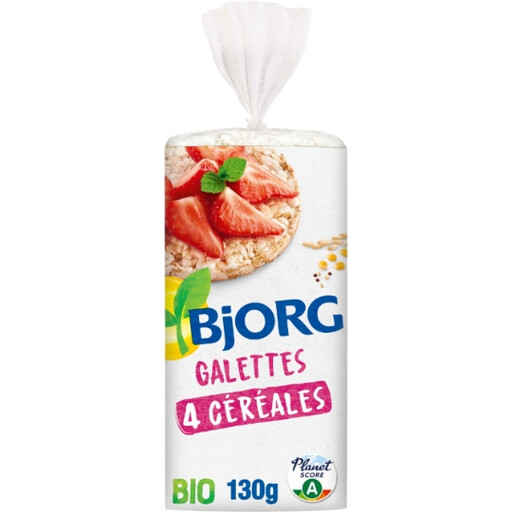 Image unavailable
Bjorg Organic Four-Cereal Rice Cakes 130 g
This pack of gluten-free rice cakes may suit a household looking for a multigrain recipe to enjoy as a snack or crispbread. The product information listed by Carrefour France names wholegrain rice, maize, buckwheat and quinoa, and warns that traces of soya may be present. If you have a large family, bear the 130 g pack size in mind when working out how many packs to buy.
View on Joybuy
Frequently asked questions
Are rice or maize cakes automatically suitable for someone with coeliac disease?
No. The cereals used aren’t enough to confirm a product’s gluten-free status. Look for the ‘gluten-free’ claim, which Regulation (EU) No 828/2014 limits to a maximum gluten content of 20 mg/kg. AFDIAG points out that contamination can occur during transport or packaging.
Does every gluten-free rice cake need to carry the crossed-out wheat-ear logo?
The regulated ‘gluten-free’ claim and the crossed-out wheat-ear logo don’t mean the same thing. Regulation (EU) No 828/2014 defines the claim by the product’s gluten content. According to AFDIAG, its logo adds product testing and an audit of the manufacturing site. Check the packaging of the specific product if these additional safeguards matter to you.
Is Nutri-Score compulsory on rice cakes in France?
No. The DGCCRF says that a nutritional declaration is compulsory for most prepacked foods, while the French Ministry of the Economy says that displaying Nutri-Score is voluntary in France. You can check the nutritional values per 100 g even when no Nutri-Score is shown.
How can you work out how much to buy for a large family?
Once you’ve checked the ‘gluten-free’ claim for the person with coeliac disease, look at the weight of each product and estimate how many packs you’ll need based on how often your household eats them. A 130 g pack of rice cakes and a 250 g pack of crispbreads don’t contain the same amount, and they may be used in different ways.


