Who is this guide for?

Shoppers who need a gluten-free label

You want to see this label on the exact bar you’re buying, rather than infer it from its name or appearance. You should also check allergens for each recipe: ‘gluten-free’ doesn’t mean free from peanuts, soya or milk.

People looking for a bar to take on the go

Whether it’s for breakfast or a snack when you’re out and about, the individual pack size matters, as does the amount of protein per bar. The per-100 g figures make it easier to compare products with different serving sizes.

Shoppers who prioritise organic certification

You want to identify a certified organic bar rather than rely on ‘natural’ branding. Then check the gluten-free label, allergens and nutritional information for that same product.

What should you check first?

Check each specific product: its gluten-free label, nutritional composition and organic certification answer different questions.

What to check Look for Who is it for?
Gluten-free label Look for ‘gluten-free’ on the exact product and check its ingredients and allergens. Regulation (EU) No 828/2014 sets a maximum gluten content of 20 mg/kg for products carrying this claim. If I need to avoid gluten, I want to see an explicit label rather than guess from the bar’s appearance. Around 50% of shoppers would make this their top concern.
Nutritional composition Compare protein, sugars, fat, energy and salt per 100 g, then check the figures per bar. The DGCCRF states that nutrition information is expressed per 100 g or 100 ml. For a snack on the go, I want to know what I’ll get from the portion I eat, rather than relying on the word ‘protein’ alone. Around 30% of shoppers would prioritise comparing nutritional information.
Organic certification Look for an organic certification mark on the exact product, then check its gluten-free label and nutritional information separately. If a certified organic bar is my top priority, ‘natural’ branding isn’t enough. Around 20% of shoppers would put organic certification at the top of their list.

Mistakes to avoid

  • Assuming ‘natural’ or ‘vegan’ means ‘organic’

    These descriptions don’t prove that a specific bar is organically certified. The Ministry of Agriculture describes organic as a regulated method of production, not simply an impression created by a recipe.

    If this is a deciding factor, look for a certification mark on the product you’re buying, then check its gluten-free label separately.

  • Forgetting about other allergens in a gluten-free bar

    Depending on the recipe, the products mentioned contain ingredients such as peanuts, soya, milk or almonds. The gluten-free label alone doesn’t tell you whether these ingredients are present.

    Read the ingredients list and highlighted allergens for the specific flavour you choose.

  • Comparing only the protein amount shown on the front

    The amount listed per bar can’t be directly compared with a per-100 g value or a serving of a different size.

    Start with the per-100 g figures, then check protein, sugars, fat, energy and salt for the serving you plan to eat.

  • Assuming a product you’ve seen online is available everywhere

    The range at a shop or collection point may differ from what’s shown elsewhere. E.Leclerc, for example, says availability of its Bio Village range varies by store.

    Select your store and check whether the specific product is available before you plan your shop.

Brands to consider by product

Nature Valley

Carrefour France lists a peanut and chocolate Protein bar labelled gluten-free; Joybuy France gives details of a different recipe, salted caramel and peanut, in 40 g portions.

  • Joybuy France lists 10.4 g of protein per 40 g serving for the salted caramel and peanut recipe.
  • Ingredients and allergens vary by recipe; check for organic certification too, if it matters to you.

Eat Natural

Auchan France and Carrefour France list protein bar recipes labelled gluten-free, including peanut varieties.

  • Auchan’s listing for the peanut, almond and caramel recipe gives 8.6 g of protein per 40 g serving.
  • The recipes mentioned contain peanuts. Check the other allergens in your chosen flavour and don’t assume it’s organically certified.

NAKD

Carrefour France lists a peanut fruit and nut bar labelled gluten-free. It may suit shoppers looking for this type of recipe, rather than a bar specifically positioned as a protein bar.

  • The recipe mentioned is a date and peanut-based bar worth considering.
  • It contains peanuts. If protein content or organic certification is important to you, check these details on the exact product.

Bio Village

E.Leclerc describes Bio Village as a range of organic products. It’s a starting point when looking for certification, not confirmation that a particular bar is also high in protein and gluten-free.

  • The range is worth exploring if you’re looking for organic products at E.Leclerc.
  • For each bar you’re considering, check the gluten-free label, protein content and allergens. Availability may vary by store.

Gluten-free protein bars on Joybuy

These products are options to consider if you’re looking for individually wrapped gluten-free protein bars. If organic certification is one of your criteria, check the packaging for each product before choosing.
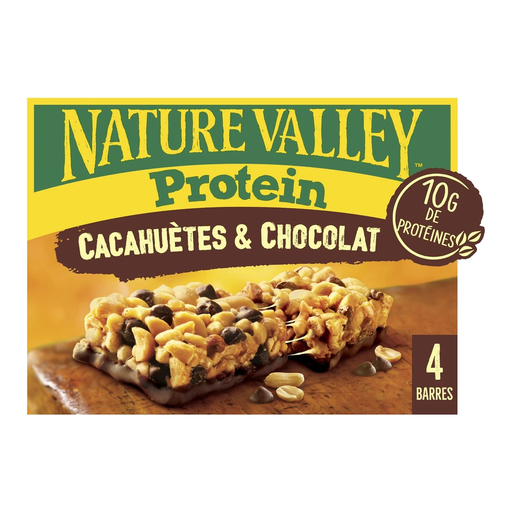
N/VALLEY Protein Bar, pack of 4 x 40 g bars

N/VALLEY Protein Bar, 4 x 40 g

Worth considering as a protein snack to take with you as part of a gluten-free shop: this product is listed as gluten-free. The pack contains four 40 g bars. Check the allergens on the packaging, including peanuts, soya and milk, and look for an organic certification mark too if certification is essential to you.

View on Joybuy
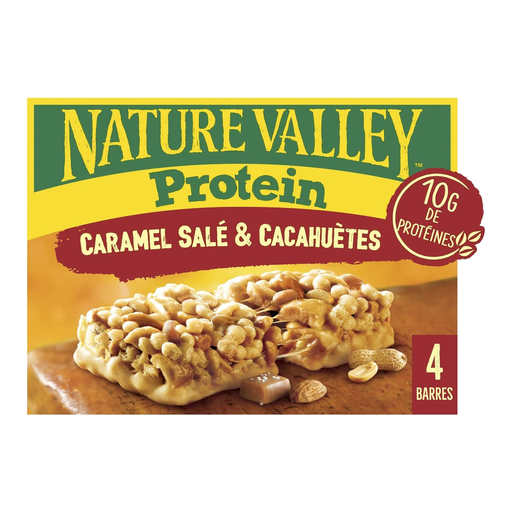
Nature Valley Protein Bar salted caramel and peanut, pack of 4 x 40 g bars

Nature Valley Protein Bar salted caramel and peanut, 4 x 40 g

For comparing snacks to take on the go, Joybuy France lists 10.4 g of protein per 40 g bar and describes this product as gluten-free. The recipe contains peanuts, soya, milk and almonds, so check the label on the product you buy. If you’re also looking for an organic option, check the certification for this product.

View on Joybuy

Frequently asked questions

What does the ‘gluten-free’ label guarantee on a bar?

In the European Union, Regulation (EU) No 828/2014 allows products to carry this claim only if their gluten content does not exceed 20 mg/kg. Check the label on the specific product; it doesn’t mean the bar is free from other allergens, such as peanuts, soya or milk.

Is a bar described as ‘natural’ organic?

No. This description alone doesn’t establish that a product is organically certified. For a specific bar, look for a certification mark such as the EU organic logo or the AB mark, then check the gluten-free label separately.

How do I compare two bars of different sizes?

Start with their nutritional information per 100 g, then check the size of each serving. Compare protein, sugars, fat, energy and salt in particular, rather than inferring the ingredients from the product name alone.

Which allergens should I check in the recipes mentioned?

The Nature Valley peanut and chocolate recipe mentioned contains peanuts, soya and milk; the Eat Natural recipes mentioned include peanuts and soya. The Eat Natural caramel version also contains almonds and milk. Always check the ingredients list for the flavour you’re buying rather than assuming it’s the same as another bar.

Will a bar I’ve found online be available at my local store?

Not necessarily: ranges can vary by store, as E.Leclerc notes for Bio Village. Select your collection point and check whether the exact product is available before you plan your shop.