People looking for a snack to have around a workout
If you want a bar to take with you before or after a workout, check separately that it’s labelled gluten-free and how many grams of protein you’ll get from the portion you plan to eat.


When choosing a protein bar as part of a gluten-free shop, first check that the exact flavour is labelled “gluten-free”. Then compare the protein per serving and the nutritional information per 100 g. Check the allergens too: a gluten-free bar may contain peanuts, soya, milk or eggs, and “high protein” doesn’t mean it can replace a meal.
If you want a bar to take with you before or after a workout, check separately that it’s labelled gluten-free and how many grams of protein you’ll get from the portion you plan to eat.
A gluten-free recipe may contain peanuts, soya, milk, eggs or nuts. Check the ingredients and highlighted allergens on the packaging of each flavour.
If you’re choosing a bar for an everyday snack, check the serving size, sugars and other nutritional information rather than relying on the words “high protein” alone.
If gluten-free compatibility is essential to your purchase, start there. Then compare the servings and ingredients of products that meet your needs.
| What to check | Look for | Who is this for? |
|---|---|---|
| Gluten-free compatibility | Look for the words “gluten-free” on the exact flavour and check the packaging ingredients. | If my shopping needs to be gluten-free, I want to see that claim on the bar I choose rather than infer it from the name. Around 36% of consumers put this compatibility first. |
| Protein per serving | Compare the grams of protein per bar, then check the values per 100 g if the serving sizes differ. | For a snack around a workout, I want to know how much protein I’ll get from the bar I actually eat. Around 29% of consumers prioritise protein per serving. |
| Allergens and ingredients | Read the highlighted allergens and compare the sugar content per serving in particular. | If certain ingredients aren’t suitable for me, I need to compare recipes beyond their gluten-free claim. Ingredients are the main priority for around 21% of consumers. |
| Pack size and availability | Check the number of bars, the weight of each one and whether the product is available through your preferred way of shopping. | If I’m preparing several snacks, I want to know how many servings are in the pack and whether I can get this product. Around 14% of consumers put these practical considerations first. |
The category name doesn’t tell you whether a product contains gluten. A Milical product sold by E.Leclerc, for example, contains wheat gluten and wheat dextrin.
If gluten-free is essential for your shop, look for the “gluten-free” claim on the exact product and flavour.
Depending on the product, the recipes reviewed contain peanuts, soya, milk, eggs or almonds. The gluten-free claim doesn’t tell you whether these ingredients are present.
Check the allergens on the packaging of each flavour, even if you’re already familiar with the range.
Two bars won’t necessarily have the same weight or ingredients. A protein figure per 100 g doesn’t directly tell you how much protein is in one bar.
Compare the protein in the serving you plan to eat, then look at the sugars, fibre, energy and ingredients list together.
The Protein range includes, among other options, a pack of four 40 g bars. Its salted caramel and peanut flavour is listed as gluten-free on its Joybuy page.
Auchan lists several 52 g bar flavours as gluten-free. The salted peanut and chocolate recipe includes dates, peanuts and egg white.
Carrefour lists a 40 g peanut and dark chocolate product as gluten-free.
Carrefour lists a 55 g chocolate and salted caramel bar with a gluten-free claim.
These two packs each contain four 40 g bars and are suitable if you’re looking for a gluten-free, high-protein snack. Check the claim on the packaging of the product you choose and compare the protein per serving before buying.
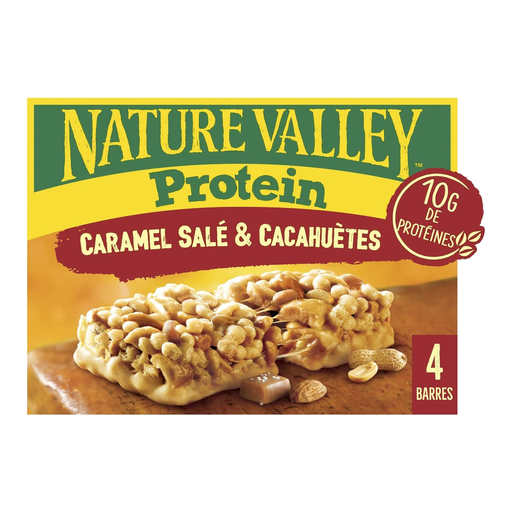 Image unavailable
If you need a gluten-free snack to have around a workout, check that the salted caramel and peanut flavour is labelled gluten-free on the packaging. The Joybuy page states that each 40 g bar contains 10,4 g of protein. This product contains peanuts, soya, milk and almonds.
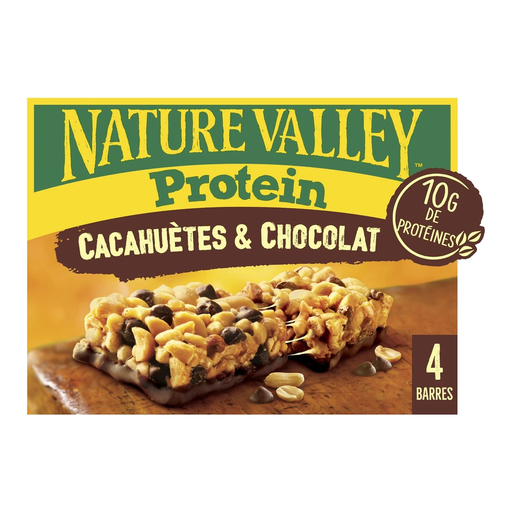 Image unavailable
This pack contains four 40 g bars, making it handy for individual snacks. If you’re shopping gluten-free, check that this product is labelled gluten-free on the packaging. Also read the allergen information and check the protein per bar before comparing it with another flavour.
In the European Union, Regulation (EU) No 828/2014 reserves this claim for foods with a gluten content of no more than 20 mg/kg. Check that it appears on the bar and flavour you’re buying rather than assuming it from the “high-protein” category.
Because gluten-free doesn’t mean free from other allergens: the products featured may contain peanuts, soya, milk or eggs, among other ingredients. The Directorate-General for Competition Policy, Consumer Affairs and Fraud Control reminds food businesses that allergens must be highlighted on food labels.
Compare their nutritional values per 100 g, then check the values for the serving you’ll eat. The Directorate-General for Competition Policy, Consumer Affairs and Fraud Control explains that displaying nutrition information per 100 g makes it easier to compare products.
Not automatically. E.Leclerc states that a protein bar is not, in itself, a meal replacement. If that’s what you’re looking for, check that the product is explicitly intended for this purpose and read the directions for use.