When choosing a protein bar to eat in the evening, start with what you need to avoid: ‘gluten free’ doesn’t guarantee that a bar is free from milk, soya, peanuts or tree nuts. If you’re more concerned about sugar or the size of your snack, compare the nutritional information for the whole bar. If you have an allergy, always check the specific variety and allergen in question.
Who is this guide for?
People avoiding a specific allergen
If you need to avoid peanuts, milk, soya or tree nuts, read the ingredients and allergen declaration for every flavour. The DGCCRF reminds consumers that allergenic ingredients must be highlighted on the label: ‘gluten free’ is no substitute for checking.
People looking for a gluten-free bar
Look for the ‘gluten free’ claim on the specific product. Regulation (EU) No 828/2014 limits this claim to foods containing no more than 20 mg/kg of gluten when sold to the final consumer; it says nothing about other allergens.
People who are mindful of their evening snack
If you want to compare portions for a small late-night snack, check the energy, sugars and protein per whole bar, as well as its weight. The word ‘protein’ alone won’t tell you all of this.
What should you check?
First, identify your dietary requirement, then compare it with the portion you actually plan to eat.
| What you’re concerned about |
What to check |
Who it’s for |
| Specific allergen |
Look for the allergen in the ingredients and allergen declaration; also read any warnings about possible traces. |
If I need to avoid a specific allergen, a ‘gluten free’ claim isn’t enough to rule out, for example, milk or peanuts; around 31% of consumers would make checking for their allergen their top priority. |
| Gluten |
Look for the ‘gluten free’ claim on the variety you’ve chosen, then check its other allergens separately. |
When I need to avoid gluten, I want a claim that addresses this requirement, without making assumptions about the rest of the ingredients; around 25% of consumers would put avoiding gluten first. |
| Lactose |
Check for a ‘lactose free’ claim and, if you also need to avoid milk, read the ingredients and allergen declaration. |
If I want to avoid lactose, I don’t want to confuse this with avoiding milk proteins; this would be the top priority for around 25% of consumers. |
| Evening portion |
Compare the bar’s weight and nutritional values per whole portion, particularly its energy, sugars and protein. |
For a small late-night snack, I need to assess the whole bar rather than just its protein content; around 19% of consumers would prioritise the portion and its nutritional values. |
Common misconceptions to avoid
-
Assuming ‘gluten free’ means ‘allergen free’
A gluten-free bar may contain other allergens. Auchan’s product page for a gluten-free Nature Valley bar lists peanuts, soya and milk.
Start with the allergen you need to avoid and check the ingredients in the flavour you’re buying.
-
Assuming ‘lactose free’ means ‘milk free’
A Zero Bar described by Decathlon as lactose free includes whey protein isolate and calcium caseinate in its ingredients list.
If you need to avoid milk or its proteins, check the ingredients and allergen declaration, not just the claim on the front of the pack.
-
Comparing protein alone
Sugars and energy levels also vary by recipe. A gluten-free vegan bar listed by Decathlon contains 20 g of protein, 17 g of sugars and 289 kcal per 68 g bar.
Compare the nutritional values for the amount you’ll eat, checking whether they’re given per bar or per 100 g.
-
Assuming the word ‘protein’ means a bar is suitable at any time
This description tells you neither the portion size nor when to eat it. Anses recommends having a light dinner early enough to leave around two hours before bedtime, while also highlighting the limitations of the evidence on chrononutrition.
For a late-night snack, consider how hungry you are and the portion size, without assuming the bar will affect your sleep.
Retailers to know when comparing labels
Carrefour
The retailer lists, among other products, a gluten-free Eat Natural protein cereal bar in a pack of 3 × 40 g.
- Its product page shows the ingredients, allergens and nutritional values per bar.
- ‘Gluten free’ doesn’t mean ‘peanut free’: this product listing states that this variety contains 51% peanuts.
E.Leclerc
The retailer has separate categories for protein bars and ‘Chaque Jour sans Gluten’ cereal bars.
- This distinction helps you avoid treating a gluten-free cereal bar as a protein bar.
- Check the details on the product page for the variety you choose rather than assuming them from its category.
Auchan
One of the retailer’s product pages features a chocolate and cranberry Nature Valley protein bar labelled ‘gluten free’.
- The ingredients list lets you check the exact recipe.
- This variety lists peanuts, soya and lactose from milk, among other ingredients: check each variety against your dietary requirements.
Gluten-free protein bars available on Joybuy
These two products match a search for protein bars labelled gluten free, in 40 g portions. For a late-night snack, compare the label with your dietary requirements and preferred portion size; ‘gluten free’ doesn’t mean ‘allergen free’.
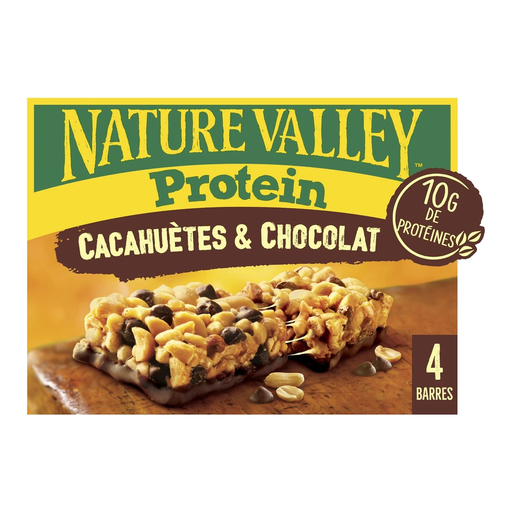 Image unavailable
N/VALLEY Protein Bar, 4 × 40 g
This pack contains four 40 g portions, making it easy to compare an evening snack on a per-bar basis. Before choosing it to meet your dietary requirements, check the packaging for the gluten claim, allergens and any warnings about possible traces for this specific variety.
View on Joybuy
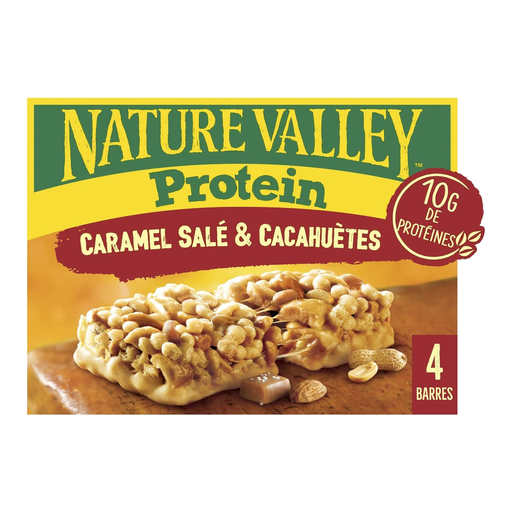 Image unavailable
Nature Valley Protein Bar, salted caramel and peanuts, 4 × 40 g
This pack contains four 40 g bars, so you can compare an evening snack by portion. The Joybuy product page for this variety lists peanuts, soya, milk and almonds as allergens; also check the packaging and nutritional values per bar.
View on Joybuy
Frequently asked questions
What does ‘gluten free’ guarantee on a bar?
For food sold to the final consumer, Regulation (EU) No 828/2014 reserves this claim for products containing no more than 20 mg/kg of gluten. It doesn’t tell you whether the product contains milk, soya, peanuts or tree nuts.
Can a gluten-free bar contain allergens?
Yes. An Auchan product page for a gluten-free Nature Valley bar lists peanuts, soya and milk, among other ingredients. Read the ingredients and allergen declaration for the product and flavour you choose.
Does ‘lactose free’ mean ‘milk free’?
No. A Zero Bar described by Decathlon as lactose free also lists whey protein isolate and calcium caseinate. If you need to avoid milk or its proteins, check the ingredients and allergen declaration.
How should I choose a bar to eat late at night?
Compare the energy, sugars and protein in the whole bar, as well as its weight, rather than relying on the word ‘protein’ alone. Anses recommends a light dinner and leaving around two hours between dinner and bedtime, but this doesn’t mean that a particular bar is suitable for everyone or will affect their sleep.


