If you have coeliac disease, first choose a product whose packaging states “gluten-free”, then compare the shapes and cooking instructions. Short pasta can be convenient to serve when you want a soft meal, but neither its shape nor a longer cooking time guarantees a texture suitable for someone with a swallowing difficulty.
Who is this choice for?
People with coeliac disease
The first thing to check is whether the exact product is labelled “gluten-free”. According to AFDIAG, this means it contains less than 20 mg/kg of gluten; if the crossed grain symbol appears on the product, it indicates an additional control process.
People who prefer soft food
Short pasta can be convenient to serve, but you should consider how the particular pasta cooks. Barilla gives a cooking time of 7 minutes for its gluten-free coquillettes, while Auchan gives 8 to 9 minutes for its own. These instructions apply to specific products only.
People who have difficulty swallowing
A meal that is easy to chew is not necessarily suitable for someone with dysphagia. Hôpital Saint-Antoine AP-HP and the French National Authority for Health describe situations that require individual care, rather than a choice based solely on pasta shape.
What should you look for?
When shopping, first check the packaging, then choose a shape and cooking method that suit the meal you have in mind.
| Criteria | What to check | Who is it for? |
|---|
| Gluten-free labelling |
Check that the exact pack is labelled “gluten-free” and review its ingredients; look for the crossed grain symbol. |
If I’m shopping for someone with coeliac disease, I want to clearly identify the product intended for them before choosing a shape. Around 42% of consumers prioritise this need. |
| Shape and cooking |
Compare pasta shapes and follow the cooking time given for the product you choose. |
If I’m serving a meal that someone prefers to be soft, I need a practical shape and a cooking time I can adjust to suit the meal. Softness is the main priority for around 33% of consumers. |
| Shopping at your usual retailer |
Check which product is available locally, the pack size and its labelling. |
When I plan my shopping at a particular retailer, I want to be able to find the size I need without having to switch products at the last minute. Around 25% of consumers prioritise this convenience. |
Things to watch out for
-
Confusing two different gluten claims
“Gluten-free” and “very low gluten” do not mean the same thing. According to AFDIAG, the former means less than 20 mg/kg.
If you have coeliac disease, look specifically for “gluten-free” on the pack you buy, even if you change the shape or recipe.
-
Assuming soft pasta is suitable for dysphagia
Preferring food that is easy to chew and having difficulty swallowing are not the same thing. The French National Authority for Health describes dysphagia care as something that should be tailored to the individual.
If the difficulty is with swallowing, ask the healthcare professional supporting the person for advice before changing the texture of their meal.
-
Choosing a product without checking in-store availability
E.Leclerc’s product page for Chaque Jour Sans Gluten penne advises customers to check availability with their local store.
Before you shop, check which product your store offers and read the label on the pack you actually receive.
Brands and ranges to know
Barilla
According to Barilla France, the Barilla Gluten-Free range includes coquillettes, penne rigate, tagliatelle and lasagne.
- The coquillettes product page gives a cooking time of 7 minutes.
- This cooking time does not mean the pasta is suitable for someone with dysphagia.
Carrefour No Gluten !
Carrefour offers, among other products, 500 g of gluten-free spaghetti made with maize and rice flour.
- The shape, ingredients and pack size are specified for this product.
- Long pasta is not, in itself, an indication that it is easy to chew.
Auchan
Auchan offers 500 g of gluten-free coquillettes made with maize and rice.
- The product page gives a cooking time of 8 to 9 minutes once the water has come back to the boil.
- The cooking instructions do not guarantee a texture that suits everyone.
Chaque Jour Sans Gluten / Marque Repère
E.Leclerc’s product page describes 400 g of gluten-free penne made with maize and brown rice.
- The shape and ingredients make it easy to compare this product with other short pasta.
- E.Leclerc advises customers to contact their local store to check availability.
Pasta available on Joybuy
These products come in different shapes for preparing a pasta meal. If you’re buying for someone with coeliac disease, check that the pack delivered is labelled “gluten-free”; none of these shapes guarantees a texture suitable for dysphagia.
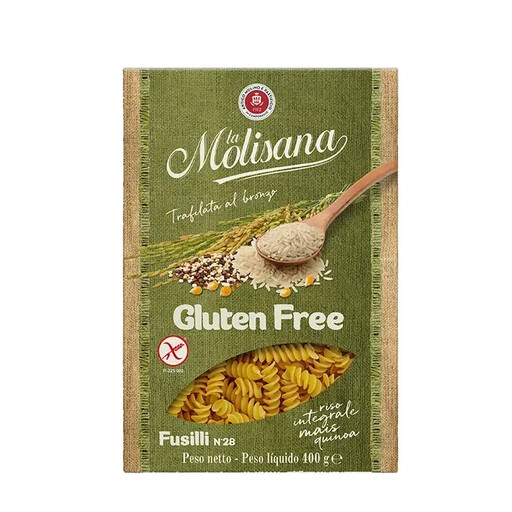 Image unavailable
La Molisana Fusilli N.28 Gluten-Free, 400 g
Fusilli to consider if this shape suits the dish you have in mind. The pack is listed as 400 g; check that the packaging you receive says “gluten-free” and assess the texture after cooking.
View on Joybuy
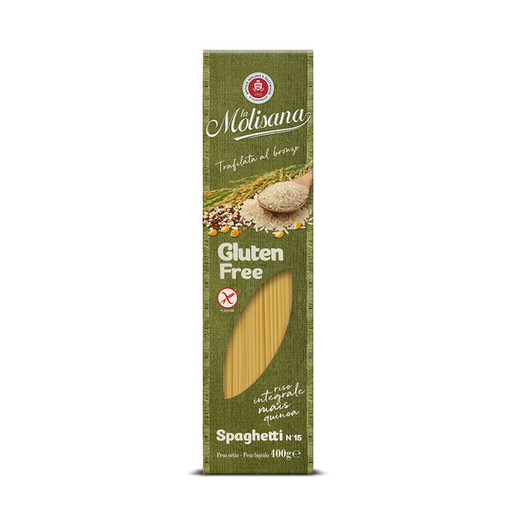 Image unavailable
La Molisana Spaghetti N.15 Gluten-Free, 400 g
These spaghetti are suited to a dish calling for long pasta, but that doesn’t necessarily mean they’ll be easy to chew. The product name indicates a 400 g pack made with brown rice, maize and quinoa; check that the packaging you receive says “gluten-free”.
View on Joybuy
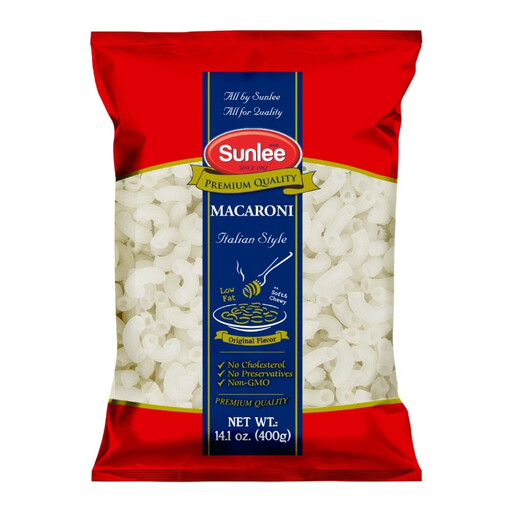 Image unavailable
Sunlee Short Rice Macaroni, 400 g
The short shape can be convenient to serve if it suits the meal you have in mind. This is a 400 g pack of rice macaroni; if you’re buying for someone with coeliac disease, check specifically for “gluten-free” on the pack you receive rather than relying on the listed ingredient alone.
View on Joybuy
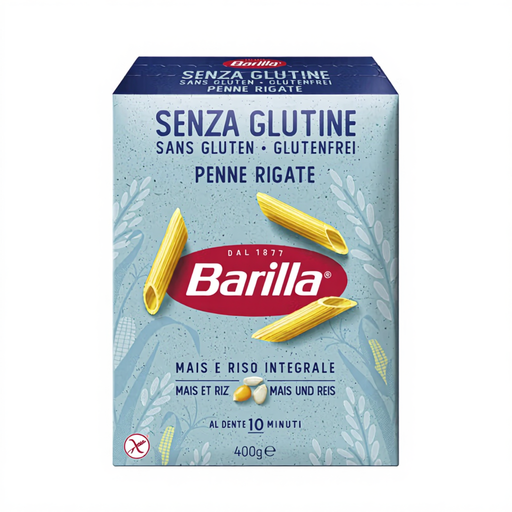 Image unavailable
Barilla Penne Rigate Gluten-Free, 400 g
These penne rigate are an option if their shape suits the person eating them. The pack is listed as 400 g; follow its cooking instructions and check that the packaging you receive says “gluten-free”.
View on Joybuy
Frequently asked questions
Is a rice- or maize-based recipe enough for someone with coeliac disease?
No. Check that the exact product is labelled “gluten-free”, rather than assuming this from its main ingredients. According to AFDIAG, this means less than 20 mg/kg of gluten; if present, the crossed grain symbol provides an additional indication.
Are coquillettes always easier to chew than spaghetti?
Not necessarily. Their short shape can be convenient to serve, but ease of chewing also depends on how the pasta is prepared and on the person eating it. Compare the shape and cooking instructions on the pack, and don’t assume that either type is suitable for everyone.
Is cooking pasta for longer enough for someone with dysphagia?
No. Cooking pasta for longer is not enough on its own to determine whether the texture is suitable for someone with a swallowing difficulty. If the person coughs during meals, food or drink goes down the wrong way, or they struggle to swallow, ask the healthcare professional supporting them for advice before changing their diet.


