If you have coeliac disease, first choose a product that is explicitly labelled gluten-free: regular wheat pasta does not meet this requirement. If you’re planning your shopping with diabetes in mind too, a ‘gluten-free’ label isn’t enough. Compare the carbohydrate content per 100 g and work it out for the portion you plan to eat, following the dietary guidance that’s right for you.
Who is this choice for?
People with coeliac disease who count carbohydrates
You need to check that the product you buy is gluten-free, then take its carbohydrate content and the serving size into account. Assurance Maladie stresses the need for a strict gluten-free diet for people with coeliac disease and recommends relating nutritional information to the amount eaten.
People with diabetes looking for a gluten-free alternative
You’re buying gluten-free pasta for yourself or your household and want to compare the nutritional information for the products available, without assuming that being gluten-free determines their carbohydrate content.
Families who prefer familiar pasta shapes
You’re looking for penne, macaroni, spaghetti or tagliatelle for your usual recipes. Check the product name and the label on the pack you choose: the shape of the pasta doesn’t tell you whether it contains gluten.
What should you check first?
If the meal needs to be suitable for someone with coeliac disease, first check the exact product and its gluten-free label. Then compare the nutritional information on the same basis before choosing a shape that works for your meal.
| Criteria |
What to check |
Who it matters to |
| Gluten-free choice |
Check the gluten-free label and ingredients on the pack of the exact product; don’t rely on the brand name alone. |
If I need to strictly avoid gluten because I have coeliac disease, I want to be able to identify the pasta I’m buying with confidence. Around 36% of consumers would put this need first. |
| Carbohydrates and portion size |
Compare the carbohydrate content per 100 g, then work it out for your portion; fibre and protein are also worth checking. |
To include pasta in my dietary tracking, I need to know how many carbohydrates are in the amount I’ll serve. This would be a priority for around 46% of consumers. |
| Shape and shopping |
Check the shape, pack size and ingredients of the product available for the meal you have planned. |
When I’m preparing a family meal, I look for a pasta shape that works in my recipe without compromising on the gluten-free requirement. This would be the main need for around 18% of consumers. |
Mistakes to avoid
-
Assuming ‘gluten-free’ means low in carbohydrates
Being gluten-free doesn’t determine the amount of carbohydrates. Auchan and E.Leclerc list 80 g of carbohydrates per 100 g for gluten-free macaroni and 79 g per 100 g for gluten-free penne, respectively.
Read the nutritional values on the same basis and work them out for your portion. If managing your diabetes means you need to count carbohydrates precisely, follow the guidance from your healthcare team.
-
Choosing by brand rather than by product
A brand may offer several ranges of pasta. Barilla’s gluten-free range doesn’t mean you can assume that another pack from the brand meets the same requirement.
Check the product name, gluten-free label and ingredients on the pack you’re planning to buy.
-
Cutting out gluten before tests for suspected coeliac disease
According to the Association Française Des Intolérants Au Gluten, starting a gluten-free diet before blood tests can affect the results.
If you think you may have coeliac disease but haven’t been diagnosed, ask your doctor for advice before making strict changes to your diet.
Pasta brands to know for this choice
Barilla
Barilla offers a range of gluten-free pasta made with white maize, yellow maize and rice, including penne, spaghetti and tagliatelle.
- The range lets you look for a familiar shape while checking that the product you choose is labelled gluten-free.
- Auchan’s product listing for Barilla gluten-free spaghetti states 79 g of carbohydrates per 100 g, so you’ll still need to take your portion into account.
Auchan
Auchan offers gluten-free macaroni and spaghetti made with maize and rice.
- The product listing for its macaroni gives, per 100 g, 80 g of carbohydrates, 1.3 g of fibre and 6.7 g of protein, making it possible to compare with another product labelled on the same basis.
- Check the information for the specific product on the pack you actually choose.
Chaque Jour Sans Gluten / Marque Repère (E.Leclerc)
The E.Leclerc range includes gluten-free penne and tagliatelle.
- The product listing for its penne describes a recipe made with maize and brown rice, with 79 g of carbohydrates per 100 g.
- Check which product is available at the shop or for the delivery or click-and-collect service you use.
Carrefour No Gluten
Carrefour’s gluten-free pasta range includes penne, fusilli and spaghetti.
- The different shapes let you look for one that suits the recipe you have planned.
- Check the ingredients and nutritional information for the product available at your store.
Panzani
Panzani offers ranges of durum wheat pasta.
- If you need to follow a strict gluten-free diet, don’t assume that a product from this brand is suitable: check the exact product and its label.
Lustucru
Lustucru offers classic pasta and fresh egg pasta.
- These categories alone don’t confirm that a product is gluten-free; check the label on the pack you choose.
Pasta to explore on Joybuy
These products come in pasta shapes described as gluten-free. To choose between them while shopping, check the label on each pack, then compare the carbohydrate content with the portion you plan to serve.
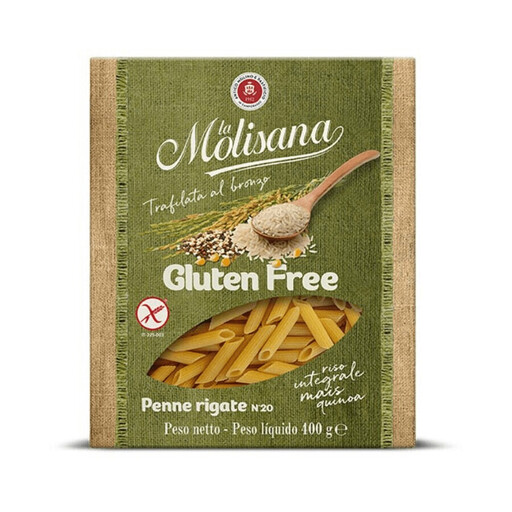 Image unavailable
La Molisana Penne Rigate N°020 Gluten-free
A penne shape to consider if you’re planning a gluten-free pasta dish. Check the gluten-free label and the nutritional information you need to work out your portion on the pack.
View on Joybuy
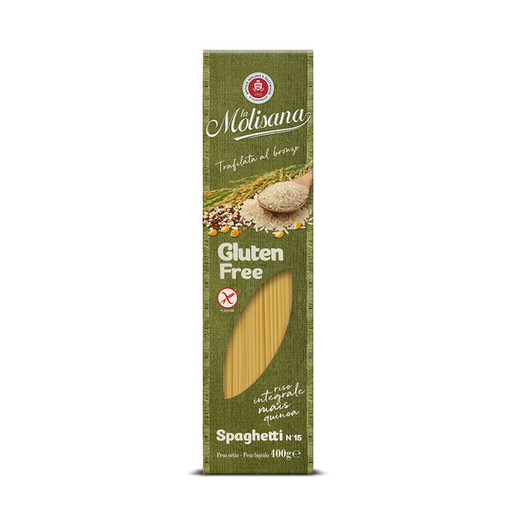 Image unavailable
La Molisana No. 15 Gluten-Free Spaghetti, 400 g
Spaghetti to consider for a recipe that calls for this shape. The product name mentions wholegrain rice, maize, quinoa and bronze-die extrusion; check the ingredients and nutritional values on the pack.
View on Joybuy
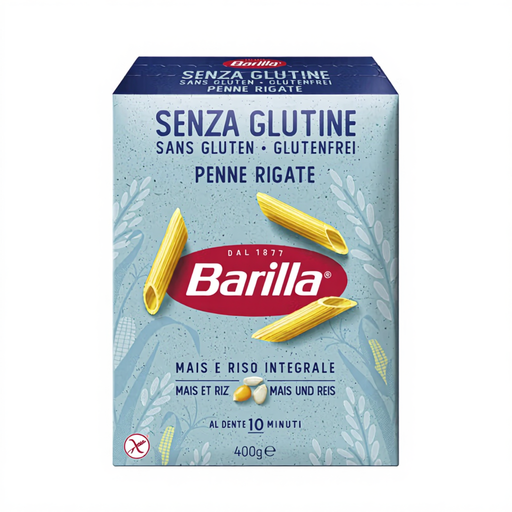 Image unavailable
Barilla Gluten-Free Penne Rigate, 400 g
These penne are worth considering if you’re looking for pasta explicitly described as gluten-free. The Joybuy listing for this product gives 79.6 g of carbohydrates and 1.7 g of fibre per 100 g; work out the carbohydrate content for your planned portion and check the pack label.
View on Joybuy
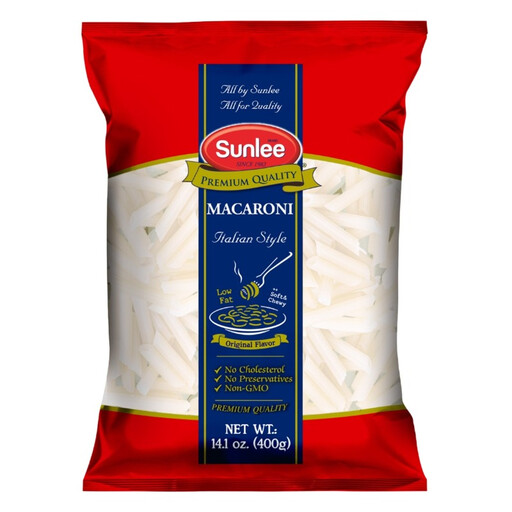 Image unavailable
Sunlee Rice Macaroni Extra Long, 400 g
This long rice-based shape is worth considering if you’re looking for a different kind of pasta for your meal. Confirm that the pack is labelled gluten-free and check the carbohydrate content per 100 g before working out your portion.
View on Joybuy
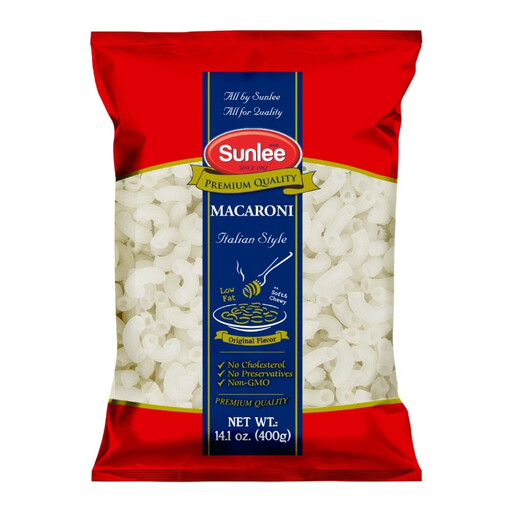 Image unavailable
Sunlee Rice Macaroni Short, 400 g
A short rice-based shape to consider for a macaroni recipe. Check that the exact product is labelled gluten-free and compare its nutritional information with that of the other pasta you’re considering.
View on Joybuy
Frequently asked questions
Is a ‘gluten-free’ label enough when choosing pasta if you have diabetes?
No: it tells you about gluten, not the amount of carbohydrates in your meal. Assurance Maladie recommends checking the nutritional information per 100 g and adjusting it to the amount you actually eat.
Can you eat regular wheat pasta if you have coeliac disease?
No: according to Assurance Maladie, regular wheat pasta isn’t suitable for the strict gluten-free diet needed if you have coeliac disease. Choose a product whose label explicitly says it is gluten-free.
How should you compare two packs of gluten-free pasta?
Compare their nutritional information per 100 g, including carbohydrates, sugars, fibre and protein, then take the amount you plan to cook into account. This shared basis makes it easier to compare labels without confusing the pack size with the portion size.
Should you stop eating gluten before tests for suspected coeliac disease?
Ask your doctor for advice first: the Association Française Des Intolérants Au Gluten says that starting a gluten-free diet before blood tests can affect the results. This precaution is about the diagnostic process, not choosing a pack of pasta after a confirmed diagnosis.


