Parents of a child with coeliac disease
A recipe made with rice or maize isn’t enough to establish that a snack is suitable. Look for the explicit ‘gluten-free’ label on the specific product, in line with the labelling guidance described by AFDIAG.


If your child has coeliac disease, choose a product that is explicitly labelled ‘gluten-free’, then check the other allergens on the packaging. Before bringing it in, ask the nursery about its policies, including whether an individualised care plan (PAI) applies. Neither a gluten-free label nor an easy-to-serve format makes these checks unnecessary.
A recipe made with rice or maize isn’t enough to establish that a snack is suitable. Look for the explicit ‘gluten-free’ label on the specific product, in line with the labelling guidance described by AFDIAG.
There’s more to check than gluten. Depending on the recipe, milk, soya, peanuts, tree nuts or sesame may also be a concern. Read the ingredients and precautionary allergen information in light of your child’s allergies.
Choose a product whose packaging and information will be available when it’s served. Ask the nursery how it handles food brought in from home and any individual requirements. The Ministry of National Education states that early years settings may need to follow a PAI (individualised care plan).
For this snack, first check the gluten-free label and relevant allergens, then the nursery’s requirements and the product format. Nutritional information can then help you compare products that already meet these requirements.
| Consideration | What to check | Who it matters to |
|---|---|---|
| Gluten-free label | Look for ‘gluten-free’ on the packaging; don’t assume that ‘wheat-free’ or a recipe made with maize means the same thing. | If my child has coeliac disease, a simple list of cereals isn’t enough for me to choose their snack. Around 36% of consumers prioritise a product being explicitly identified as gluten-free. |
| Nursery arrangements and serving | Confirm the nursery’s rules, whether a PAI applies and whether the packaging can be kept until the snack is served. | For a group snack, I want to know whether the product I bring in will be accepted and how it will be served. This is the main concern for around 29% of consumers. |
| Other allergens | Check the ingredients and precautionary allergen information on the pack you buy, based on the allergies of the children concerned. | When several allergies are involved, ‘gluten-free’ doesn’t answer all my questions. Avoiding other allergens is then the top priority for around 21% of consumers. |
| Nutritional information | Compare salt, fat and sugars per 100 g in particular; check the Nutri-Score if one is shown. | Once dietary needs and the nursery’s requirements have been met, I want to compare products on a like-for-like basis. Around 14% of consumers prioritise this nutritional comparison above all else. |
The main cereal alone isn’t enough to establish whether a snack is suitable for a child with coeliac disease. AFDIAG states that the ‘gluten-free’ label corresponds to a gluten content below 20 mg/kg. Vico, for example, says its Curly Extra Cheese may contain gluten.
For this requirement, choose a product explicitly labelled ‘gluten-free’ and rule out products that warn of possible gluten.
A gluten-free product can contain other allergens. Carrefour’s product listing for Schär crackers mentions soya; Auchan’s listing for Nature Addicts rice crackers mentions milk and soya, among other ingredients.
Read the ingredients and precautionary allergen information on the pack you buy, then check them against the requirements for each child.
The DGCCRF states that displaying the Nutri-Score is voluntary. Even when it appears on the packaging, it doesn’t tell you by itself whether the product is suitable for someone with an allergy or complies with the nursery’s rules.
Use it as an additional guide and compare the nutritional values per 100 g, without skipping the checks for gluten and other allergens.
A product that meets dietary requirements may not fit the setting’s serving arrangements. A PAI may include individual provisions for a child who needs a particular diet for medical reasons.
Contact the nursery before buying anything, and keep the packaging clearly identifiable so staff can access the ingredients and allergen information.
Carrefour lists gluten-free Schär crackers in 6 x 35 g packs. These details apply to this specific product, not the whole brand.
Auchan lists Nature Addicts cheese-flavoured rice crackers, labelled gluten-free, in an 85 g bag.
Vico’s Curly Extra Cheese shows why a recipe made with maize shouldn’t automatically be considered gluten-free.
This list includes products from Carrefour, Auchan and Joybuy in their original order. The order takes account of the gluten-free label, allergen information and available format for each product. It is not based on a comparative test and isn’t a quality ranking.
| Rank | Product | Features | What to bear in mind | Platform |
|---|---|---|---|---|
| 1 | Schär gluten-free crackers, 6 x 35 g packs | Crackers labelled gluten-free and wheat-free; individually packed. | Carrefour lists soya in the ingredients. Also check that the format meets the nursery’s requirements. | Carrefour |
| 2 | Nature Addicts gluten-free cheese-flavoured Rice Crackers, 85 g | Rice crackers labelled gluten-free; 85 g bag. | Auchan lists milk and soya, as well as possible traces of tree nuts. The gluten-free label doesn’t address these other allergen concerns. | Auchan |
| 3 | LA VENEZIANE gluten-free sesame mini grissini, 250 g | 250 g sesame mini grissini; the product title on Joybuy says gluten-free. | For this product listed in the Joybuy section, check the ingredients, allergens and precautionary allergen information on the specific product before choosing it for nursery. | Joybuy |
These mini grissini, described as gluten-free, could be served instead of savoury biscuits at a shared snack, provided their ingredients and the nursery’s arrangements are suitable for the children concerned.
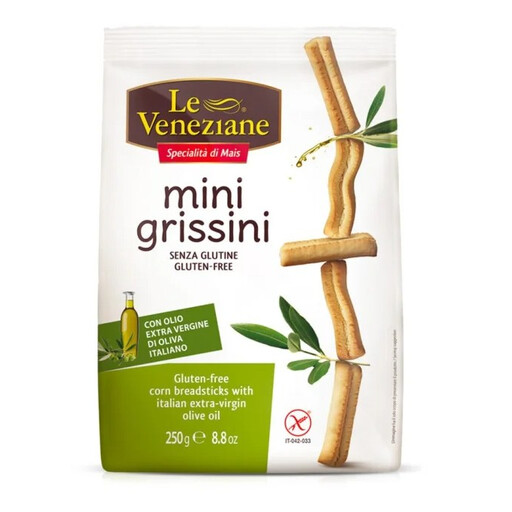 Image unavailable
A pack to consider for a shared snack if the nursery accepts this type of product. It’s described as gluten-free; before planning how to serve it, check the packaging for other allergens and any precautionary information relevant to the children concerned.
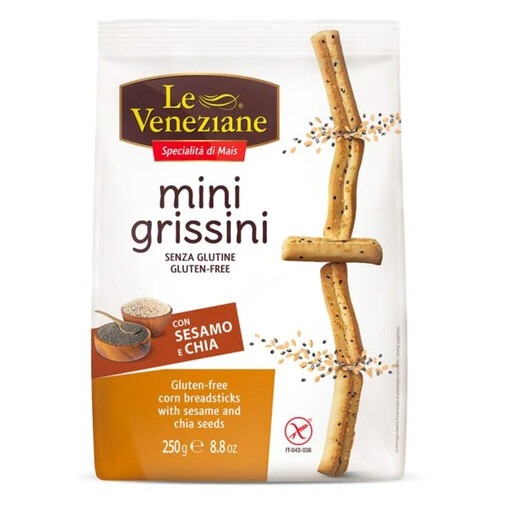 Image unavailable
Another product described as gluten-free to consider for a shared snack, subject to the nursery’s rules. This recipe contains sesame, so it isn’t suitable if that ingredient is incompatible with an allergy affecting one of the children. Check the other information on the pack too.
Look for the explicit ‘gluten-free’ label on the specific product. AFDIAG explains that this corresponds to a gluten content below 20 mg/kg. A recipe made with rice or maize isn’t a substitute for this label; check the packaging for other allergens too.
First, ask the setting whether it accepts food brought in from home and how it will be served. The Ministry of National Education states that early years settings may need to follow a PAI (individualised care plan); check with the nursery whether any individual requirements apply.
No. Carrefour lists soya in the Schär crackers mentioned here, while Auchan lists milk and soya in the Nature Addicts rice crackers. Check the ingredients and precautionary allergen information on the pack you choose, based on the allergies concerned.
No. As the DGCCRF explains, displaying the Nutri-Score is voluntary in France. When comparing pre-packed products, check the nutritional information, which is generally required subject to some exceptions. In particular, compare salt, fat and sugars per 100 g.