What should you check before buying?
Start with the nursery’s guidance and your child’s needs, then compare the labels of products that could be suitable.
| What matters |
What to check |
Who it’s for |
| Allergens and the nursery’s requirements |
The nursery’s guidance and any PAI; the ingredients, declared allergens and ‘may contain’ warnings on the packaging. |
If my child needs to avoid a specific allergen, their snack must also meet the nursery’s requirements. Around 31% of consumers put this individual and collective compatibility first. |
| Avoiding gluten |
Look for ‘gluten-free’ on the product, then check separately for other allergens. |
If gluten is what needs to be avoided, I look for an explicit claim and don’t mistake it for a guarantee that the product is free from all allergens. This is the top priority for around 31% of consumers. |
| How often the snack is served |
Compare the salt per 100 g in similar products, and consider how often this type of snack is planned. |
If the snack is served often, I don’t want to choose a salty savoury cracker out of habit. For around 25% of consumers, whether a snack is suitable for everyday use comes before other considerations. |
| Pack size and storage |
The pack size, storage instructions and label on the product you’ll bring. |
When I take a snack to nursery, I want to be able to identify the product and store it as instructed on the packaging. Around 13% of consumers put convenience first. |
Brands and retailers to consider
These examples can help you identify what to check for a specific product. They don’t tell you what every product from a brand contains.
Carrefour
Carrefour France product pages for Schär and N.A! crackers feature products labelled ‘gluten-free’.
- The product pages checked provide information about ingredients and allergens.
- Depending on the product, they also list other allergens or possible traces. Check the pack you choose.
Auchan
Auchan’s savoury biscuit range includes several brands, and a product page for N.A! rice crackers features the ‘gluten-free’ claim.
- The product page for this item includes details such as ingredients and nutrition information.
- The cheese flavour contains milk and soy, so its ‘gluten-free’ claim doesn’t make it suitable for avoiding these ingredients.
Vico
Vico makes products for aperitifs, but APERIFRUITS SWEET is a mix of fruit and nuts, not a savoury cracker confirmed here to be gluten-free.
- The official page lists the ingredients for this product, including peanuts and almonds.
- This product isn’t suitable if these ingredients need to be avoided.
Belin
Belin savoury biscuits, including Rolls, Monaco and Minizza, feature in the Auchan range checked.
- These names can help you find the product page and label for a specific item.
- A brand being stocked by the retailer doesn’t mean that any of its products are gluten-free or suitable for someone with an allergy.
Two grissini options on Joybuy
These two mini grissini are presented as gluten-free crunchy savoury snacks, rather than savoury crackers in the strict sense. Whether they’re suitable for a nursery snack depends on the nursery’s requirements and the ingredients in the pack you choose.
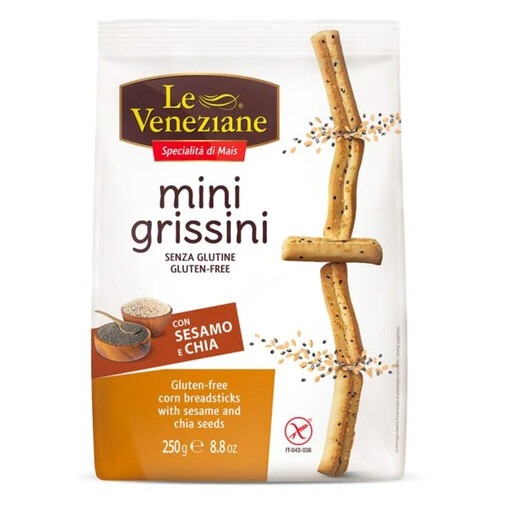 Image unavailable
LA VENEZIANE Mini Sesame Grissini, gluten-free, 250 g
Consider these if the nursery allows gluten-free grissini and they meet your child’s individual requirements.
250 g pack; contains sesame. Also check the packaging of the product you buy for other allergens and ‘may contain’ warnings.
View on Joybuy
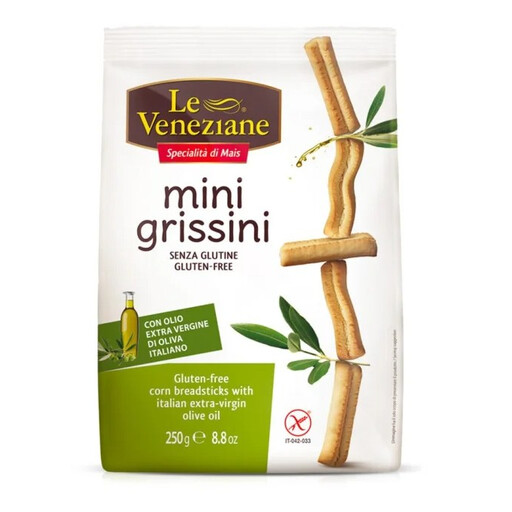 Image unavailable
LA VENEZIANE Mini Olive Oil Grissini, gluten-free, 250 g
Consider these for an occasional savoury snack if the nursery allows this format and the ingredients are suitable for your child.
Mini olive oil grissini in a 250 g pack. Check the packaging for allergens and ‘may contain’ warnings before taking them to nursery.
View on Joybuy
Frequently asked questions
Is Nutri-Score compulsory on savoury crackers in France?
No. The DGCCRF says that displaying the Nutri-Score is voluntary in France, while nutrition information is compulsory for most pre-packed foods. It lets you compare the salt, sugars and fat per 100 g in similar products, among other things.
Is a ‘gluten-free’ biscuit also free from other allergens?
No. In the European Union, ‘gluten-free’ means a gluten content of no more than 20 mg/kg; it doesn’t guarantee that a product is free from other allergens. Product pages for gluten-free crackers published by Carrefour France and Auchan France list ingredients such as soy, sesame or milk, depending on the product. Always read the label of the one you choose.
What should I do before taking in a snack if my child has a PAI?
First, ask the nursery which requirements apply, then choose a product that’s compatible with your child’s PAI. France’s Ministry of National Education describes the PAI as an individualised plan that can include dietary adjustments. A general selection of snacks is no substitute for these instructions.
Are savoury crackers suitable as an everyday snack?
They shouldn’t become the default savoury snack: France’s Assurance Maladie recommends limiting foods high in salt and lists savoury crackers among them. For children aged 4 to 17, Manger Bouger suggests a varied range of snacks, including bread, fruit or fruit purée and, depending on the child’s needs, a dairy product. Any dietary restrictions specific to your child and the nursery’s requirements must still be followed.


