People looking for gluten-free noodles
If gluten-free is a must for you, check the label on the exact variety you’re buying. A recipe made mainly with rice isn’t a substitute for checking.


When shopping gluten-free, first choose noodles whose packaging explicitly says “gluten-free”. Rice in the ingredients list alone isn’t enough to confirm this. Next, compare the “salt” value for products listed in the same state, and take any sauce, stock or seasoning into account. Rice noodles aren’t automatically lower in salt. Plain noodles let you control what you add, while pre-seasoned varieties call for a closer look at the whole product.
If gluten-free is a must for you, check the label on the exact variety you’re buying. A recipe made mainly with rice isn’t a substitute for checking.
The salt value for the noodles is only part of the picture if you’re adding a sauce, stock or condiments. Anses advises reading labels and limiting the salt added during preparation.
Plain noodles let you choose what to add. If time matters too, compare the cooking instructions: Carrefour, for example, states that the Suzi Wan rice noodles listed on its product page take 4 minutes to cook.
Start by confirming that the specific product is labelled gluten-free, then compare the salt content of the noodles and anything served with them. Cooking time can then help you choose between formats that suit your recipe.
| Criterion | What to check | Who is this for? |
|---|---|---|
| Gluten-free labelling | Look for the wording on the packaging of the exact variety; don’t assume it’s gluten-free just because of its main ingredient. | If I need to avoid gluten, I want clear confirmation on the noodles I buy rather than making an assumption based on rice; around 42% of consumers put this first. |
| Salt in the meal | Compare the “salt” value per 100 g for products listed in the same state, then check the sauce, stock and seasoning. | When I’m making a dish with sauce, I want to be able to manage the salt in the whole meal; around 33% of consumers share this priority. |
| Preparation and additions | Check the cooking time and see whether the noodles come with a sauce or seasoning sachet. | When I want to prepare a quick dish to suit my taste, I prefer to choose the ingredients myself; around 25% of consumers prioritise this flexibility. |
The main ingredient alone doesn’t confirm the claim made about the finished product.
If you need to avoid gluten strictly, check that the packaging of the variety you’re buying says “gluten-free”.
The salt content listed for a specific product doesn’t prove that it carries a “reduced salt” claim, or that other rice noodles have the same ingredients.
Compare the values per 100 g for similar products and check the exact wording on the packaging.
Comparing the noodles alone doesn’t take account of any sauce, stock or seasoning sachet. Anses reminds consumers that condiments and sauces contribute to sodium intake.
If you want to manage the salt in your dish, check these additions too and measure them separately where the recipe allows.
What’s available can vary between stores and collection services. Some rice noodle products were listed as unavailable for click and collect on the Carrefour product pages consulted.
Check the variety and local availability before planning a meal around the product.
Carrefour lists a 200 g variety of AYAM organic brown rice noodles labelled “gluten-free”.
Carrefour describes a 160 g variety of Suzi Wan rice noodles made from 100% rice, with a stated cooking time of 4 minutes.
Auchan lists a variety of organic semi-wholegrain Thai rice noodles labelled “gluten-free”.
These rice vermicelli and noodles can be used as a base for a dish with seasoning of your choice. If gluten-free is essential or you’re comparing salt content, check the labelling and nutritional information on the exact pack. Don’t choose any of these products on the assumption that they’re lower in salt.
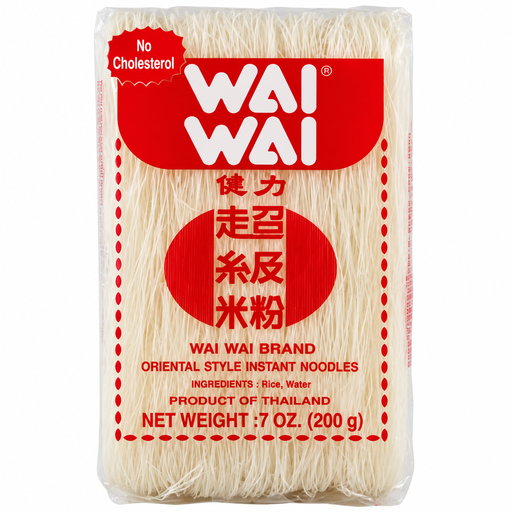 Image unavailable
These vermicelli are worth considering if you’d like to season the dish yourself. The pack size shown is 200 g; check the packaging for the gluten-free label and “salt” value before comparing.
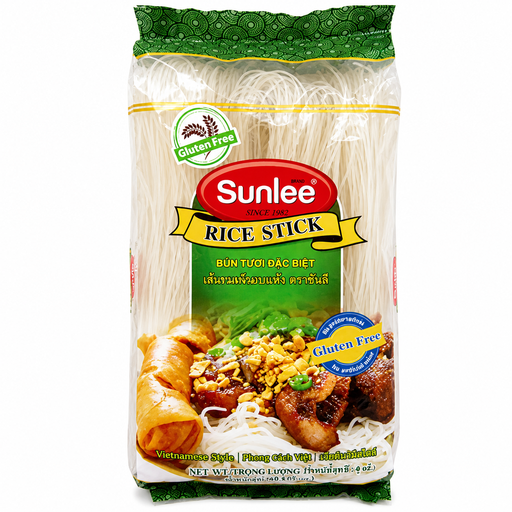 Image unavailable
A format to consider if you want to prepare rice noodles with accompaniments of your choice. The pack size shown is 454 g; check the variety’s details, gluten-free labelling and “salt” value on the packaging.
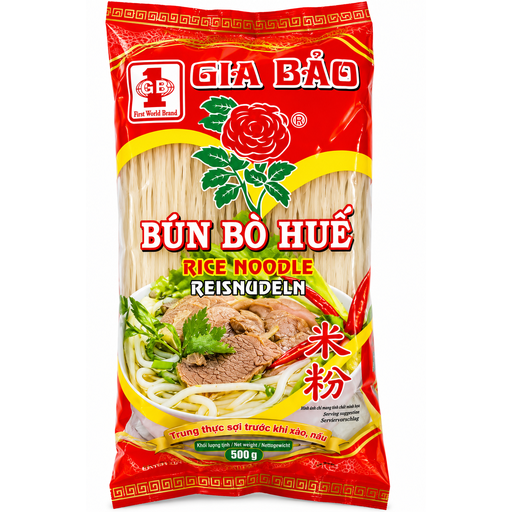 Image unavailable
These rice noodles are worth comparing for a dish where you prepare the stock or sauce separately. The stated size is 1,5 mm and the pack is 500 g; check the packaging for the gluten-free label and the salt content of the different parts of your meal.
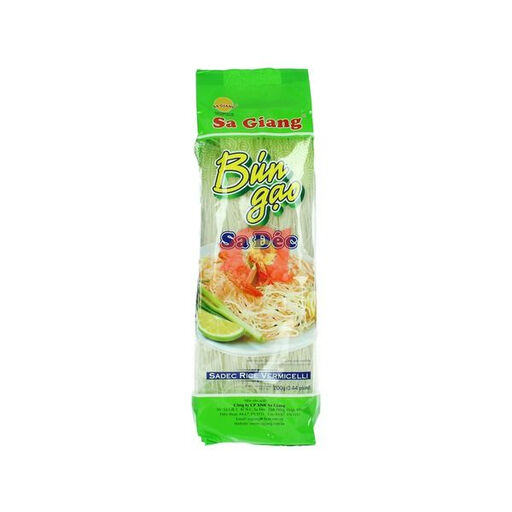 Image unavailable
These vermicelli could suit a recipe where you control what you add. The pack size shown is 200 g; check the gluten-free label and “salt” value for the exact product before choosing your seasoning.
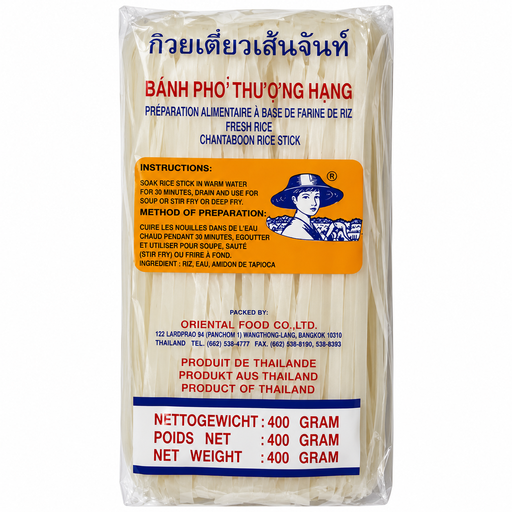 Image unavailable
This rice noodle format is worth considering if you want to choose the sauce for your dish separately. The stated width is 10 mm and the pack is 400 g; check the packaging directly for the gluten-free label and “salt” value.
Look for the words “gluten-free” on the exact product rather than relying only on the fact that it contains rice. Check the label on the variety you plan to use.
No. Being made with rice doesn’t mean they contain less salt. Compare the “salt” value per 100 g for similar products and check whether the product actually carries a reduced-salt claim. For example, Auchan lists 0,34 g of salt per 100 g for its Jom Bao product; this value doesn’t apply to other rice noodles.
Yes, you should also take account of any stock, condiments and sauce added to the dish. Anses recommends reading labels and limiting the salt you add. With plain noodles, you can control the amount of these ingredients separately.
Not necessarily: availability can vary by store and collection method. Check the variety and local stock before planning a meal around a particular pack.