What should you check?
When catering for a guest with coeliac disease, start with the finished product’s label. Then compare any other dietary requirements, nutritional information and serving format.
| Criteria |
What to check |
Who is it for? |
| Gluten and cross-contamination |
Look for the ‘gluten-free’ label on the exact pack. According to AFDIAG, this means less than 20 mg/kg of gluten; the crossed-grain logo, if present, offers an additional point of reference. |
When someone with coeliac disease is joining the drinks spread, I want to identify the finished product rather than rely on its main grain. Around 40% of consumers put checking for gluten first. |
| Other allergens |
Read the ingredients and any ‘may contain’ warnings for the chosen flavour, particularly for milk, soya, peanuts or tree nuts. |
If several guests have dietary requirements, choosing a gluten-free biscuit won’t meet them all. For around 20% of consumers, other allergens are the main priority. |
| Nutritional information |
Compare salt and fat per 100 g across similar products. Refer to Nutri-Score only if it is displayed. |
Once I’ve shortlisted products labelled ‘gluten-free’, I want to compare their nutritional information. This comes first for around 20% of consumers. |
| Format and serving |
Check the packaging, then set aside a separate serving dish and pair of tongs if you’re serving the biscuits out of their pack. |
When several types of biscuits are being passed around a buffet, I want to make it easy to identify those for the guest with coeliac disease and avoid mixing them up. Serving arrangements are the main concern for around 20% of consumers. |
A drinks-time option on Joybuy
If you’re happy to serve mini grissini instead of savoury biscuits, this product is one option to consider. Before offering it to someone with coeliac disease, check the ‘gluten-free’ label and allergens on the packaging.
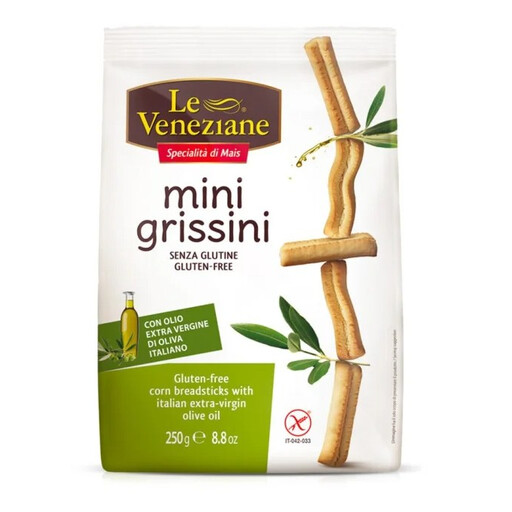 Image unavailable
LA VENEZIANE gluten-free mini grissini with olive oil, 250 g
These savoury breadsticks can be served as part of a shared drinks spread. The product title describes them as gluten-free; if you’re serving them to a guest with coeliac disease, check this claim as well as the ingredients and other allergens on the exact pack.
View on Joybuy
Frequently asked questions
Is Nutri-Score compulsory on savoury biscuits in France?
No. The DGCCRF says that displaying Nutri-Score is voluntary in France. The nutrition declaration on prepacked foods lets you compare things such as salt and fat per 100 g, but none of this replaces checking for the ‘gluten-free’ label.
What does ‘gluten-free’ mean for a guest with coeliac disease?
According to AFDIAG, this label means that a product contains less than 20 mg/kg of gluten. If the crossed-grain logo appears on the pack, it offers an additional point of reference based on product testing and audits of the manufacturing site. It does not need to appear on every product labelled ‘gluten-free’.
Is a rice or maize biscuit automatically gluten-free?
No. The main grain doesn’t tell you whether the finished product is gluten-free. AFDIAG says contamination can occur during transport or packaging, so look for the ‘gluten-free’ label on the exact pack you plan to serve.
What should you check on the pack before serving the biscuits?
Check the ‘gluten-free’ label, ingredients, allergens and any ‘may contain’ warnings for the recipe you’ve chosen. Then keep the pack nearby so you can identify it, and use separate utensils if you’re serving other biscuits at the same gathering.
Can you rely on Lidl for a last-minute shop?
First, check the current promotion and the store you’re planning to visit. Lidl France says its gluten-free products are available through occasional promotions rather than a permanent range, and you’ll still need to check the label of any product you find.


