For a child with coeliac disease, choose a product whose packaging explicitly says “gluten-free”, then check for other allergens and follow the school’s guidance. In the European Union, this claim is regulated by Regulation (EU) No 828/2014; a rice- or maize-based recipe alone is not enough to confirm that a product is suitable. Smaller packs make preparation easier, but they don’t replace these checks.
Who is this choice for?
Parents of a child with coeliac disease
The first thing to look for is the “gluten-free” claim on the specific product. Also check for other allergens and agree arrangements with the school. France’s Ministry of National Education says that an individualised support plan (PAI) can set out dietary adjustments at school.
Parents who need to consider several allergens
A gluten-free product may still contain other ingredients your child needs to avoid. Product listings from Carrefour France for Schär, TOOGOOD and N.A! include, for example, soy and, depending on the product, sesame or warnings about possible traces. Always compare the packaging with your child’s requirements.
Parents looking for an easy-to-pack savoury snack
An individual pack can make it easier to prepare a lunchbox; with a larger pack, you’ll need to portion out a serving. Either way, check the label and the school’s guidance before packing the snack.
What should you check before buying?
If your child must strictly avoid gluten, start with the claim on the pack. Then check for other allergens, school rules and how easy the product is to pack.
| Criteria |
What to check |
Who it matters to |
| Gluten-free claim |
Look for the “gluten-free” claim on the pack you’re buying and read the ingredients list. |
If my child needs to avoid gluten strictly, I can’t rely on the type of cereal used in the recipe alone. Around 50% of consumers put clear gluten-free identification first. |
| Other allergens and school requirements |
Check for allergens and trace warnings relevant to your child, then check the school’s guidance or the PAI. |
When several allergens are involved, I need to find a product that suits my child’s needs and the arrangements made for them at school. For around 30% of consumers, this compatibility is the top priority. |
| Pack size and nutritional information |
Compare pack weights and nutritional information per 100 g; check the Nutri-Score if it’s displayed. |
When preparing a lunchbox, I look for a portion that’s easy to pack and information that helps me compare products. Convenience or ease of comparison comes first for around 20% of consumers. |
Which mistakes should you avoid?
-
Assuming a rice- or maize-based recipe means a product is gluten-free
The main ingredient alone doesn’t tell you how much gluten is in the finished product. For a child with coeliac disease, this shortcut could lead you to choose a snack that isn’t suitable.
Look for the “gluten-free” claim on the packaging of the specific product you’re buying.
-
Trusting a brand rather than checking the specific product
Ingredients vary from one product to another. Vico says that Dixi Tomate may contain gluten, while Monster Munch Barbecue contains wheat flour and breadcrumbs.
Check the ingredients list and allergen information every time you buy, even if you know the brand.
-
Forgetting about allergens other than gluten
A “gluten-free” label doesn’t mean a product is free from soy, sesame or other allergens. These matter too when choosing a snack to take to school.
Compare the label with the allergens your child needs to avoid and the arrangements set by the school or, where applicable, the PAI.
-
Using the Nutri-Score to answer an allergy question
France’s DGCCRF says that the Nutri-Score is voluntary in France. Whether or not it appears on a pack doesn’t tell you if a biscuit contains gluten or another allergen.
Use it as an additional guide when it appears on the pack, but don’t let it replace checking the ingredients and nutritional information.
Brands and products to know
Schär
Carrefour France lists Schär gluten-free savoury crackers in six 35 g packs. This is a format to consider if separate portions make preparation easier.
- The listing for this product says “gluten-free”.
- It also lists soya flour, so this product isn’t suitable if your child needs to avoid soya.
TOOGOOD
The soya and potato product listed by Carrefour France is a gluten-free savoury biscuit in a 25 g pack.
- The small pack means you may not need to portion out a serving from a larger pack.
- It contains soya flour, so check whether it’s suitable for the allergens your child needs to avoid.
N.A!
Carrefour France lists N.A! gluten-free rice crackers with sesame in an 85 g pack, which you can portion out to suit your lunchbox needs.
- The product carries a “gluten-free” claim.
- It contains soya and sesame and warns that it may contain traces of other allergens. Check the specific pack.
Vico
Vico products show why you need to check ingredients product by product, rather than making assumptions about the whole brand.
- The information published by Vico helps distinguish the details for Dixi Tomate from those for Monster Munch Barbecue.
- Dixi Tomate may contain gluten; Monster Munch Barbecue contains wheat flour and breadcrumbs.
Savoury snacks available on Joybuy
These two savoury mini grissini could be considered for a lunchbox, although they aren’t technically savoury biscuits. Their product names say “gluten-free”; if your child must strictly avoid gluten, confirm this claim and check the allergens on the pack you’re buying before choosing them.
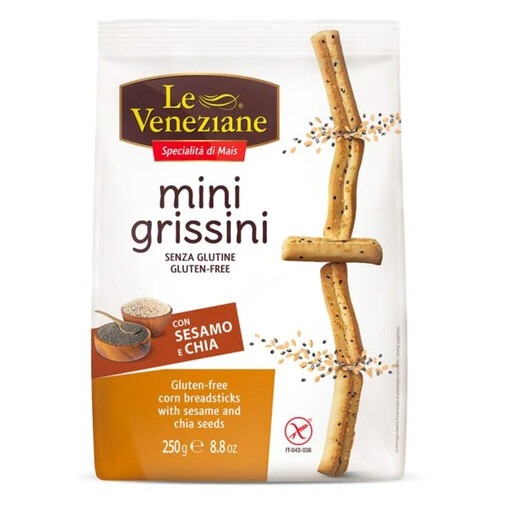 Image unavailable
LA VENEZIANE Mini Sesame Grissini gluten-free, 250 g
These savoury mini grissini can be portioned for a lunchbox if sesame is suitable for your child. The pack contains 250 g. Check the pack for the “gluten-free” claim, any trace warnings and the school’s guidance.
View on Joybuy
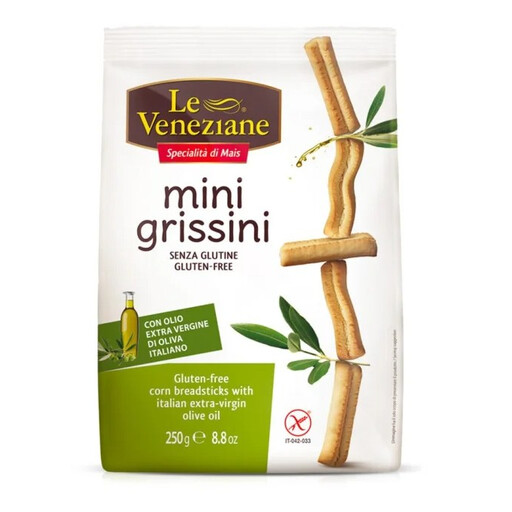 Image unavailable
LA VENEZIANE Mini olive oil grissini gluten-free, 250 g
These savoury mini grissini with olive oil can be portioned out before school. The pack contains 250 g. Check the pack you’re buying for the “gluten-free” claim, allergens and any trace warnings, as well as the school’s guidance.
View on Joybuy
Frequently asked questions
Is a rice- or maize-based biscuit suitable for a child with coeliac disease?
No. If your child needs to avoid gluten strictly, look for the “gluten-free” claim on the specific product you choose. Regulation (EU) No 828/2014 governs this claim for food sold to the final consumer, setting a maximum gluten content of 20 mg/kg. The main ingredient alone isn’t enough.
Is a gluten-free biscuit suitable for a child with other allergies?
Not necessarily. The product listings from Carrefour France show that the Schär and TOOGOOD products mentioned here contain soya, while the N.A! crackers contain soya and sesame. Check the ingredients and any trace warnings on the pack you’re buying against the relevant allergens.
Can you take any gluten-free snack to school?
Check the school’s guidance first. According to France’s Ministry of National Education, an individualised support plan can set out adjustments, including dietary ones, for a pupil with specific health needs. Make sure you follow the arrangements that apply to your child.
Is the Nutri-Score compulsory on savoury biscuits in France?
No. France’s DGCCRF describes the Nutri-Score as a voluntary labelling system. When displayed, it can be a useful additional guide, but it doesn’t tell you whether a product contains gluten or other allergens. Check the ingredients and nutritional information separately.


