People hosting someone with coeliac disease
If you’re sharing dessert, check that the fruit in syrup you actually serve is labelled “gluten-free”, then check every other part of the dessert separately.


To serve an Epiphany dessert to someone with coeliac disease, choose fruit in syrup whose packaging clearly states “gluten-free”, rather than relying on the fact that it is fruit. As AFDIAG points out, a product that is naturally gluten-free can be contaminated during preparation or packaging. Check the pastry, other ingredients and utensils too: the fruit alone won’t make the whole dessert gluten-free.
If you’re sharing dessert, check that the fruit in syrup you actually serve is labelled “gluten-free”, then check every other part of the dessert separately.
If you’re looking for a topping with no added sugars, distinguish this claim from the amount of sugars listed in the nutritional information. It doesn’t tell you whether the product contains gluten.
A large container lets you divide the fruit between several portions, while individual pots are handy for serving one person at a time. In either case, the format doesn’t replace checking the label.
If someone with coeliac disease will be sharing the dessert, first check that the product you’ve chosen is labelled “gluten-free”. Then compare the recipe and the drained fruit weight according to how you plan to use it.
| Criteria | What to check | Who is it for? |
|---|---|---|
| Gluten-free claim | The claim on the packaging of the product you’re buying, along with the ingredients list and any allergens highlighted. | If I’m serving someone with coeliac disease, I want to confirm the status of the fruit rather than infer it from its apparent ingredients. For around 50% of consumers, this would be the top priority. |
| Recipe and sugars | The “no added sugars” claim, the ingredients and the “sugars” line in the nutritional information per 100 g. | If I want to top the dessert without choosing a recipe with added sugars, I need to distinguish this claim from naturally occurring sugars. Around 30% of consumers would put this recipe consideration first. |
| Quantity and serving | The drained net weight and number of portions, depending on whether the fruit will be divided between servings or served individually. | If I’m topping several portions, I need enough drained fruit; for individual servings, small pots may be more practical. Format would be the top criterion for around 20% of consumers. |
AFDIAG points out that a product that is naturally gluten-free can be contaminated before it reaches its packaging. The fact that it is fruit isn’t enough to establish that a particular product is suitable for someone with coeliac disease.
Look for the “gluten-free” claim or the crossed-grain symbol on the product you buy, and check its label.
These claims answer two different questions. Carrefour’s product page for a St Mamet fruit cocktail says “no added sugars”, but this doesn’t mean it’s gluten-free.
Check the gluten information, ingredients and nutritional information separately.
The total weight includes the liquid the fruit is packed in. When choosing a topping, the amount of fruit after draining helps you compare two containers. The DGCCRF states that the drained net weight must be shown for a product sold in liquid.
Compare drained net weights if you’re preparing several portions, or choose the pack size to suit the way you plan to serve the fruit.
Fruit labelled “gluten-free” doesn’t change the ingredients in the pastry, cream or decorations. Contact with utensils used for other food preparation also matters.
Check every component and use clean, separate utensils to prepare dessert for someone with coeliac disease.
The information below applies to specific products: a claim on one product doesn’t apply to other products from the same brand.
Carrefour lists St Mamet peaches labelled “GLUTEN-FREE”, as well as a separate fruit cocktail labelled “no added sugars”.
Carrefour’s orchard fruit cocktail with no added sugars contains peaches, pears and grape juice from concentrate, among other ingredients.
ALDI sells pots of fruit and a larger container of fruit cocktail under this brand.
This product of cherries in syrup can accompany or decorate an Epiphany dessert. If you’re serving it to someone with coeliac disease, check that the jar you actually buy is labelled “gluten-free” before serving.
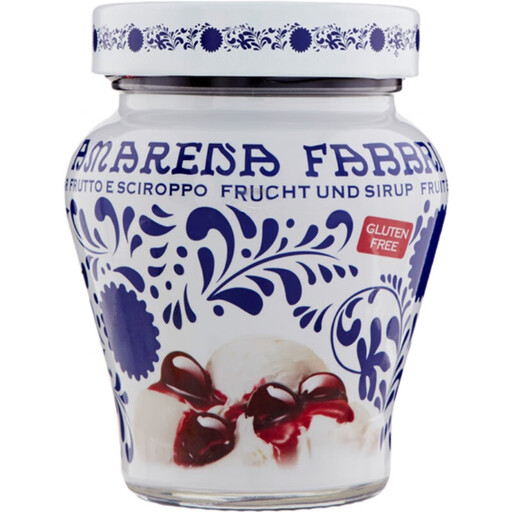 Image unavailable
Cherries in syrup to consider for serving alongside or decorating your Epiphany dessert. The product comes in a 230 g glass jar.
If you’re serving it to someone with coeliac disease, check the “gluten-free” claim and ingredients on the jar you buy. Check the other components of the dessert too.
No. The fact that it’s made from fruit isn’t enough to establish that it’s gluten-free. AFDIAG warns that a product that is naturally gluten-free can be contaminated. Look for the “gluten-free” claim or the crossed-grain symbol on the product you buy.
According to AFDIAG, this claim means the labelled product contains less than 20 mg/kg of gluten. Check that it applies to the fruit in syrup you’re going to serve, rather than another product from the same brand.
No. It can be used as a topping or served alongside the galette, but it doesn’t change the ingredients in the pastry. If the dessert is for someone with coeliac disease, check the pastry, other ingredients and preparation conditions separately.
No. Naturally occurring sugars may still be present. Carrefour’s product page for the St Mamet fruit cocktail distinguishes between no added sugars and being sugar-free. Check the “sugars” line in the nutritional information to compare products.
Compare the drained net weight, which is the weight of the fruit without the liquid it’s packed in. The DGCCRF states that this weight must be shown on the label of products sold in liquid.