When preparing desserts in advance for someone with coeliac disease, first choose a product labelled ‘gluten-free’ or bearing the crossed-grain logo. The ingredients list alone cannot rule out risks during transport or packaging, as AFDIAG points out. Next, choose a large tin if you can follow the storage instructions after opening, or individual pots so you can open portions as you need them. ‘No added sugar’ is a separate claim and does not prove that a product is gluten-free.
Who are these options for?
People with coeliac disease who prepare desserts in advance
Before preparing several portions, check that the exact product is labelled ‘gluten-free’ or bears the crossed-grain logo. AFDIAG describes this logo as a guarantee for people with coeliac disease, so check this before choosing a format.
People who want to avoid leftover opened products
If you’ll be eating the portions at different times, individual pots mean you only need to open what you need. For a large tin, plan your desserts around the product’s storage instructions after opening.
People comparing recipes and sugar content
Fruit in syrup, fruit in juice and products labelled ‘no added sugar’ offer different options for dessert. Compare their ingredients and nutritional information, and check gluten separately.
What should you check before buying?
When choosing fruit in syrup for desserts prepared in advance for someone with coeliac disease, first check the exact product. Then choose a pack size to suit your portions and compare recipes separately.
| What to consider |
What to check |
Who is it for? |
| Gluten-free confirmation |
Look for ‘gluten-free’ on the flavour and format you’re buying, or check that it bears the crossed-grain logo. Don’t rely on the ingredients list alone. |
If I’m preparing several desserts for someone with coeliac disease, I want to choose a product that is clearly labelled before I start cooking. Around 42% of consumers would prioritise this confirmation. |
| Portions and storage |
Compare the drained net weight, the number of portions you expect to serve and the storage instructions after opening. |
If my portions are for different days, I’d rather not leave a large tin open for too long. Around 33% of consumers would put portion management first. |
| Recipe and sugar |
Compare the ingredients list and the ‘of which sugars’ line in the nutritional information per 100 g. Check for gluten separately. |
To choose fruit that suits my dessert, I want to distinguish between fruit in syrup, fruit in juice and fruit with no added sugar. This would be the top priority for around 25% of consumers. |
Mistakes to avoid
-
Relying only on fruit, water and sugar
A short ingredients list isn’t enough to confirm that a product is suitable for someone with coeliac disease. AFDIAG points out that transport and packaging can pose a risk of contamination.
Check that the exact product is labelled ‘gluten-free’ or bears the crossed-grain logo, including the flavour and format.
-
Opening a large tin without planning how you’ll use it
For its 825 g POUCE four-fruit cocktail, the storage instructions say to keep it in an airtight container in the fridge and consume it within two days of opening. Another product may have different instructions.
Plan your portions before buying and choose a pack size whose storage instructions you can follow after opening.
Any leftovers may have to be thrown away if they aren’t used within the stated time.
-
Confusing ‘no added sugar’ with ‘gluten-free’
These claims relate to two different product features. Choosing a recipe because it has no added sugar doesn’t mean it is labelled as suitable for someone with coeliac disease.
Check the gluten information, ingredients list and ‘of which sugars’ line in the nutritional information separately.
Brands to consider, depending on the product
ST MAMET
The Carrefour product listing for ST MAMET peaches in a tin with a drained net weight of 475 g is labelled ‘Gluten-free’.
- This claim applies to a specific product, whose listing also provides the ingredients.
- It doesn’t automatically apply to ST MAMET fruit cocktails, individual pots or other recipes: check each product.
Carrefour Classic'
The range includes different fruits and pack sizes, including individual pots and products labelled ‘no added sugar’.
- These formats make it easy to compare portions and recipes for the dessert you have in mind.
- ‘No added sugar’ doesn’t confirm that a product is gluten-free: check the product you choose.
AUCHAN / POUCE
These ranges include large packs and individual pots. The listing for the 825 g POUCE four-fruit cocktail gives its ingredients, drained net weight and storage instructions after opening.
- The instructions for this POUCE product make it easier to plan how you’ll use it after opening.
- If you’re buying for someone with coeliac disease, check the gluten information on the exact product separately.
A Joybuy product for desserts you can prepare in advance
This jar of cherries in syrup could be a good option for desserts prepared in advance. If the desserts are for someone with coeliac disease, check that the jar you buy is labelled ‘gluten-free’ before using it.
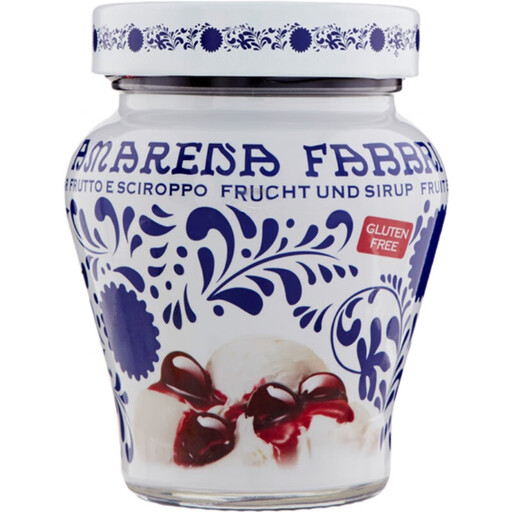 Image unavailable
FABBRI Amarena (Morello Cherries in Syrup), 230 g glass jar
Cherries in syrup in a jar for dessert-making. If you’re buying this product for someone with coeliac disease, check that the exact product you buy is labelled ‘gluten-free’.
230 g glass jar. Before dividing the contents between several recipes, check the storage instructions after opening on the product.
View on Joybuy
Frequently asked questions
Is a wheat-free ingredients list enough for someone with coeliac disease?
No. The absence of wheat from the ingredients list alone doesn’t confirm that fruit in syrup is suitable for someone with coeliac disease. AFDIAG points out that transport and packaging can pose a risk of contamination, so look for ‘gluten-free’ or the crossed-grain logo on the exact product.
How long can you keep fruit in syrup after opening?
Follow the storage conditions and use-by time stated on the product you buy. For its 825 g four-fruit cocktail, POUCE says to transfer the contents to an airtight container, keep it in the fridge and consume it within two days of opening. Another product may have different instructions.
Does ‘no added sugar’ mean ‘gluten-free’?
No. ‘No added sugar’ describes a separate feature of the recipe. If you’re cooking for someone with coeliac disease, check the exact product separately for a ‘gluten-free’ claim or the crossed-grain logo.


