People with coeliac disease at work
You’re looking for a packaged fruity dessert with a ‘gluten-free’ label you can check before eating. AFDIAG points out that coeliac disease requires you to avoid gluten.


If you have coeliac disease, first choose fruit in syrup with a ‘gluten-free’ label on the packaging you buy. Then pick a format that suits your lunch arrangements at work. Regulation (EU) No 828/2014, published in the Official Journal of the European Union, reserves this claim for foods containing no more than 20 mg/kg of gluten. So, even if a pot is easy to take with you, you still need to check the label.
You’re looking for a packaged fruity dessert with a ‘gluten-free’ label you can check before eating. AFDIAG points out that coeliac disease requires you to avoid gluten.
You’d rather take a ready-to-go pot than open, serve and store a large tin after your meal. E.Leclerc, Auchan and Aldi offer fruit in smaller formats.
You want to compare fruit in syrup, fruit in juice and products labelled ‘no added sugar’. If you also need to avoid gluten, check this separately.
If your lunch needs to be gluten-free, start by checking the packaging. Then compare the format and nutritional information according to what matters for your meal.
| Criteria | What to check | Who it matters to |
|---|---|---|
| Gluten-free label | Check for a ‘gluten-free’ label on the packaging you buy, and read the ingredients and highlighted allergens. | If I need to avoid gluten strictly, I want to see an explicit label before taking the product with me. Around 50% of people concerned would put this check first. |
| Portable portion | Compare the drained weight, number of portions and storage instructions after opening. | If there’s nowhere practical to serve and store an opened tin, a ready-to-eat pot meets my main need. This convenience would come first for around 30% of people concerned. |
| Sugars and ingredients | Read the ingredients, check for a ‘no added sugar’ label and look at the sugars listed in the nutritional information per 100 g. | When comparing a recipe in syrup with one in juice, I look at their ingredients without assuming this tells me whether they’re gluten-free. Around 20% of people concerned would prioritise this comparison. |
These labels refer to two different things: information about sugars doesn’t tell you whether a product is gluten-free.
Check for a ‘gluten-free’ label separately, then compare the ingredients and sugars if they’re relevant to your choice.
A recipe made with fruit, water and sugar isn’t a substitute for a ‘gluten-free’ label when you need to avoid gluten strictly.
If you have coeliac disease, check for this label on the specific product and packaging you buy.
An opened tin means serving the fruit and following the storage instructions after opening, which can make lunch at work more complicated.
Check whether you’ll have a container, cutlery and a suitable way to store the leftovers. If not, compare individual pots.
If you have coeliac disease, contact with crumbs or utensils used for foods containing gluten matters too. AFDIAG recommends avoiding this kind of contamination when preparing meals.
Serve the fruit with a clean container and cutlery, away from foods containing gluten.
Carrefour lists St Mamet tinned peaches, while Auchan also offers the brand’s fruit in individual pots.
The Carrefour range includes fruit in syrup in tins and smaller formats.
E.Leclerc offers Marque Repère fruit in syrup, including packs of 4 × 70 g pots.
Auchan offers fruit in syrup in tins and pots, including a tin of POUCE fruit cocktail.
Aldi France offers Baccara fruit, including fruit cocktails and individual pots.
This jar of cherries in syrup could make a fruity dessert to take to the office if you can serve and store an opened jar. If you need to avoid gluten strictly, check the packaging before eating.
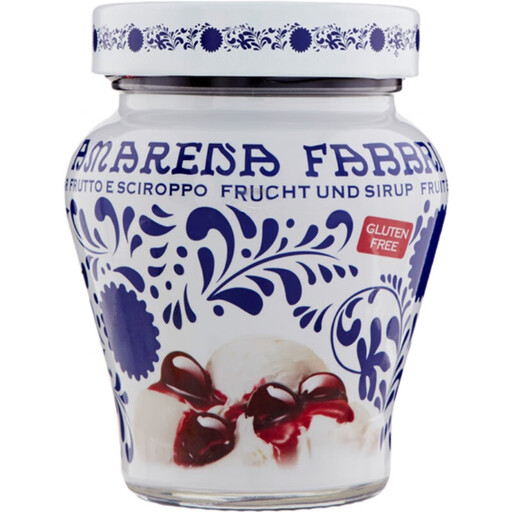 Image unavailable
This jar of cherries in syrup is suited to a fruity dessert to serve, rather than an individual portion in a pot.
The description says ‘Gluten free’. If you need to avoid gluten strictly, check the jar you buy for a ‘gluten-free’ label before eating.
No. If you need to avoid gluten strictly, choose a product labelled ‘gluten-free’ and check the packaging you buy. Regulation (EU) No 828/2014, published in the Official Journal of the European Union, sets a limit of 20 mg/kg of gluten for this claim.
No, these labels describe different things. Check for a ‘gluten-free’ label separately if you need one.
If you need to, check for a ‘gluten-free’ label, as well as the ingredients, highlighted allergens and storage instructions. To compare portions and recipes, also look at the net drained weight and nutritional information per 100 g.
A pot is a good choice if you want to take a portion with you without serving or storing a large, opened tin. A tin can also work if you have a clean container and can follow the storage instructions. Either way, check for a ‘gluten-free’ label separately if you need one.
Yes. If you have coeliac disease, make sure your food doesn’t come into contact with foods containing gluten. AFDIAG recommends preventing cross-contamination: use clean cutlery and a clean container, and avoid surfaces covered in crumbs.