What should you check before choosing?
If the meal is for someone with coeliac disease, first check that the exact product is labelled gluten-free. Then choose a format based on how you can store it at the office, and compare the ingredients.
| Criteria |
What to check |
Who is it for? |
| Gluten-free |
Look for a ‘gluten-free’ label or crossed grain symbol on the exact product and format you’re buying. In the European Union, Implementing Regulation (EU) No 828/2014 sets the maximum gluten threshold for a ‘gluten-free’ claim at 20 mg/kg. |
If I have coeliac disease, I want a clear indication on my jar rather than relying on a recipe that looks simple. This would be the top priority for around 42% of consumers. |
| Portion for the office |
Compare the number of individual portions and their drained weight. For a large container, check the storage instructions for after opening. |
Without a fridge available, I’d rather open one portion and not have to take leftovers home. Format would come first for around 33% of consumers. |
| Ingredients |
Read the ingredients and compare nutritional information on the same basis, particularly per 100 g. Check separately that it’s gluten-free if necessary. |
To choose between fruit in syrup and a ‘no added sugar’ option, I want to know what each product contains. Ingredients would be the main consideration for around 25% of consumers. |
A product to consider on Joybuy
This jar of FABBRI cherries in syrup is an option for dessert at the office: its product listing says ‘Gluten free’. Check this label on the jar you receive and plan how to store any leftovers.
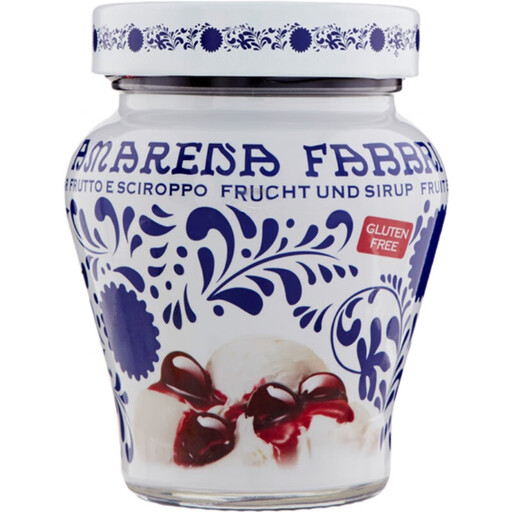 Image unavailable
FABBRI Amarena Morello cherries in syrup, 230 g glass jar
If you need a gluten-free dessert, this product’s listing says ‘Gluten free’. Check the label on the packaging you receive.
The glass jar contains 230 g. If you don’t finish it at the office, follow the storage instructions on the packaging.
View on Joybuy
Frequently asked questions
Is an ingredients list that doesn’t include wheat enough for someone with coeliac disease?
No. On its own, it can’t rule out contamination during transport or packaging. AFDIAG recommends looking for a ‘gluten-free’ label or crossed grain symbol on the product in question.
What does ‘gluten-free’ mean in France?
Implementing Regulation (EU) No 828/2014 reserves this claim for foods containing no more than 20 mg/kg of gluten when sold to the final consumer in the European Union. Check that the label applies to the exact product and format you’re buying.
Does ‘no added sugar’ also mean ‘gluten-free’?
No. These labels relate to different criteria. For Carrefour Classic’ peach pots, compare the ingredients if you’re keeping an eye on added sugars, then check the gluten-free labelling separately if necessary.
Is fruit in syrup enough for lunch at the office?
It can make a dessert or add fruit to your meal, but it isn’t a complete lunch on its own. Anses points out that a balanced diet provides a range of macronutrients and micronutrients. Make up the rest of your meal with foods suited to your needs, checking their labels too if you need to avoid gluten.
How should you store fruit in syrup after opening?
Follow the instructions for the product you’ve bought rather than assuming the same storage time applies to every jar. For St Mamet cocktail 3 × 125 g, the Joybuy listing says to keep it in a suitable container in the fridge for 3 to 4 days after opening.


