People who need to avoid gluten
Look for a ‘gluten-free’ label on the packet you choose. Check separately for any other allergens and look at the sandwich ingredients.


Choose crisps according to what you need to avoid: a ‘gluten-free’ label relates to gluten, but doesn’t guarantee that other allergens are absent. If you’re having them with a bakery sandwich, check the exact packet as well as the allergen information for the bread and filling. A short ingredients list can make things easier to check, but it doesn’t replace these checks.
Look for a ‘gluten-free’ label on the packet you choose. Check separately for any other allergens and look at the sandwich ingredients.
A ‘gluten-free’ filter isn’t enough if you need to avoid milk, soya or another allergen. Your choice depends on the ingredients and any ‘may contain’ warnings on the product you buy.
Plain or lightly seasoned crisps may be easier to compare with your sandwich. Even so, check the allergens listed and the salt content if that matters for your meal.
| What to check | Check for | Who is it for? |
|---|---|---|
| ‘Gluten-free’ label | Look for this label on the exact packet you’re buying, then also read the ingredients list and any allergen information. | If I need to avoid gluten, I want to be able to check this information before choosing my crisps; around 36% of consumers prioritise this label. |
| Other allergens | Identify the allergen in question in the ingredients and check any ‘may contain’ warnings, following the guidance that applies to you. | If I’m allergic to milk, soya or another specific ingredient, I can’t rely on the ‘gluten-free’ label alone; avoiding another allergen comes first for around 29% of consumers. |
| Recipe and seasoning | Compare the ingredients and seasoning in plain and flavoured varieties. A short ingredients list doesn’t mean a product is allergen-free. | With a sandwich that already has a filling, I’m mainly looking for crisps that suit me as a side; this is the priority for around 21% of consumers. |
| Salt and portion size | Compare the salt per 100 g and, where provided, per portion; also take the packet size into account. | If my sandwich also contains cheese or cold meat, I want to see how much the crisps add to the meal; around 14% of consumers put salt and portion size first. |
In the European Union, Regulation (EU) No 828/2014 reserves the ‘gluten-free’ label for foods sold to the final consumer that contain no more than 20 mg/kg of gluten. This label alone doesn’t tell you whether other allergens are present.
Tortilla crisps labelled gluten-free may still carry a warning that they could contain milk, soya or other allergens, depending on the product.
If you need to avoid something else, check for that allergen in the ingredients and on the packet’s warnings, even if ‘gluten-free’ appears on the front.
A short ingredients list doesn’t tell you whether there may be traces. Vico, for example, warns that its Extra Craquantes crisps may contain milk and peanuts.
Check the information on the packaging of the product you buy, even when the crisps are plain.
Check the bread, sauce and fillings separately from the packet of crisps. In France, Decree No 2015-447 sets out requirements for allergen information on non-prepacked foods.
Ask the bakery for the available allergen information before choosing the whole meal deal.
The salt listed for the crisps is only part of the meal’s total salt content, especially if the sandwich also contains salty ingredients.
Compare like-for-like crisps by salt per 100 g, then consider how much you plan to eat.
The brand makes it possible to compare plain potato crisps with more complex lentil crisp recipes.
Recette Paysanne Nature is a ridged potato crisp that’s worth checking as a side for a sandwich.
Flavoured crisps need to be checked individually, as ingredients vary by flavour.
The retailer lists Schär Curvies and Socca Chips among its products labelled ‘gluten-free’.
The Chaque Jour Sans Gluten range includes paprika-flavoured crisps.
The retailer stocks gluten-free tortillas and snacks from a range of brands.
These two products are worth considering as a side for a sandwich if you’re looking for a simple recipe. Their inclusion here doesn’t confirm that they’re suitable if you need to avoid gluten or another allergen, so check the exact packaging before choosing.
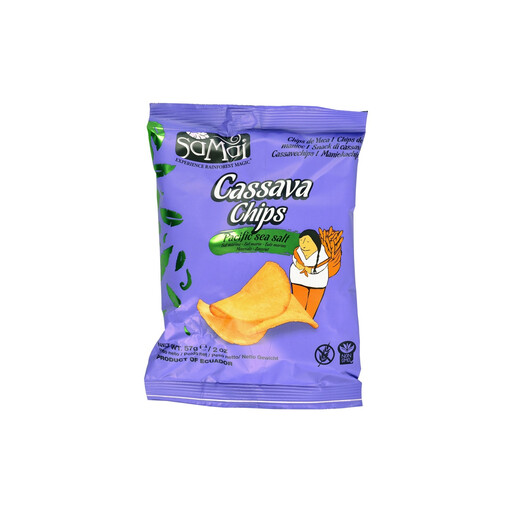 Image unavailable
Worth considering as a side for a sandwich if you’re looking for a 57 g packet of cassava crisps. If you need to avoid gluten or another allergen, check the packaging for the information that applies to this product, including any trace warnings.
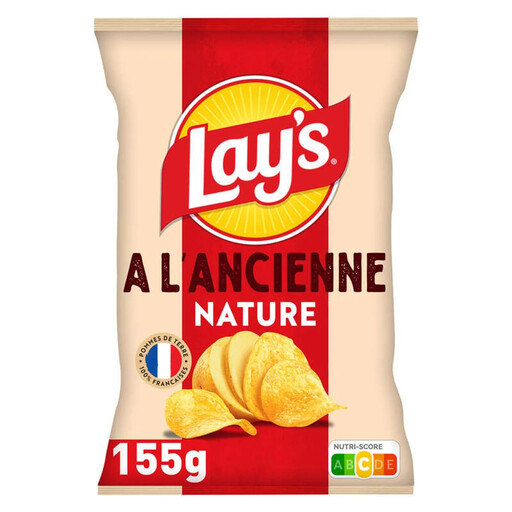 Image unavailable
The 155 g packet may be worth considering if you’d like to serve potato crisps with several sandwiches. If you need to avoid an ingredient, check the ingredients, gluten information and any trace warnings on the packet you buy.
No. In the European Union, the ‘gluten-free’ label is linked to the 20 mg/kg threshold set by Regulation (EU) No 828/2014; it doesn’t guarantee that milk, soya or other allergens are absent. Read the ingredients and any trace warnings for the product you choose.
Yes. Check the sandwich and crisps separately. Ask the bakery for the available allergen information about the bread, sauce and fillings; French Decree No 2015-447 sets out requirements for this information on non-prepacked foods.
For Tortillas Nature Jardin BiO étic, Auchan advises resealing the packet after opening and storing it in a cool, dry place. For other products, follow the instructions on the packaging.
Compare the salt per 100 g in similar crisps, then consider your portion size and what’s in the sandwich. Manger Bouger recommends limiting salty foods, so remember that crisps are only part of the meal.